


Cataract Recovery Timeline: What to Expect After Surgery
- Mar 3
- 16 min read

If you've just had cataract surgery, the swirl of emotions—relief, excitement, a pinch of anxiety—feels all too familiar.
You might be wondering exactly how long it will take before you can read the newspaper without squinting or enjoy a sunny afternoon.
The good news is that most people in Sydney see steady improvement within the first week, and full visual stability often arrives by the end of the first month.
But recovery isn’t a one‑size‑fits‑all timetable; age, eye health, and the type of intra‑ocular lens you receive all play a part.
In our clinic, we’ve noticed that patients who follow the postoperative care sheet religiously tend to hit the three‑day milestone—clearer vision and fewer flashes—much faster.
Here’s a quick snapshot of what a typical cataract recovery timeline looks like:
Day 0 (surgery day):Eye is patched, you’re given antibiotic drops, and you rest with head elevated.
Day 1‑3:Swelling subsides, you can open your eyes, and you may notice a mild gritty feeling.
Day 4‑7:Most patients can resume light housework and watch TV without glare.
Week 2‑4:Vision sharpens, you can return to driving (once cleared), and you’ll have your first follow‑up appointment.
Month 1‑3:Full visual acuity stabilises; any residual floaters or halos usually fade.
If you’re eager to get back to the gym, we usually advise waiting at least a week before any heavy lifting—your eye needs time to heal from the incision.
For swimmers, a conservative approach is to hold off until the one‑month mark, because water can introduce bacteria to the healing wound.
A common mistake is skipping the prescribed eye drops; those drops are the frontline defence against infection and inflammation.
What we’ve found works best is setting a simple daily checklist: drop schedule, protective sunglasses, and a brief log of any discomfort.
When you track symptoms, you can spot red flags early—persistent pain, sudden loss of vision, or a bright red eye—that warrant an urgent call to the clinic.
Speaking of red flags, here’s an anecdote: a 68‑year‑old patient ignored the swelling and tried to drive on day 2, only to experience blurry vision that lingered for weeks. A quick visit to us and a short course of anti‑inflammatory drops got things back on track.
That’s why we always stress the importance of the follow‑up schedule; the first check‑up usually occurs about a week after surgery to confirm the eye is healing as expected.
If you want a deeper dive into each day’s expectations, our detailed guide How Long Does Cataract Surgery Recovery Take? walks you through the exact milestones and tips for a smooth journey.
Bottom line: your cataract recovery timeline is a roadmap, not a race. Trust the process, follow the care plan, and give yourself permission to rest.
Ready to take the first step? Keep this checklist handy, set reminders for your drops, and let us know if anything feels off—you’re not alone in this.
TL;DR
Your cataract recovery timeline typically spans a few weeks, with steady vision improvement from day‑one through the first month if you follow the post‑op care plan.
Stick to your drop schedule, watch for red‑flag symptoms, and keep your follow‑up appointments so you can return to daily activities confidently and safely.
Step 1: Understand Immediate Post‑Surgery Effects
Right after you step out of the operating theatre, there’s a mix of relief and a little nervousness—maybe you’re thinking, “Will my eye feel like a tiny sandpaper?” The truth is, the first 48 hours are all about managing the body’s natural response to the surgery.
First up, the eye will feel gritty, a bit like you’ve got a speck of dust that won’t quit. That’s because the surface is still healing and the tiny incision needs protection. Keep the prescribed antibiotic and anti‑inflammatory drops on schedule; they’re the frontline defence against infection and swelling.
Speaking of drops, if you need a step‑by‑step rundown, our post‑operative care guide walks you through the exact timing, how to administer them without blinking the whole eye shut, and what to do if a drop gets into the wrong eye.
Now, about that blurry vision. It’s normal to see a milky haze or a faint halo around lights. Your brain is still calibrating the new intra‑ocular lens, and the eye’s natural swelling can cause temporary glare. If you’re sitting in a sunny Sydney afternoon, grab your sunglasses—preferably a pair with UV‑400 protection. In fact, investing in a high‑quality umbrella can make a world of difference when you’re outside. Check out the range of UV‑blocking umbrellas from Umbrello for an easy, stylish way to shield your recovering eye.
Do you wonder why some people feel a “pressure” sensation? That’s the eye’s internal pressure (IOP) readjusting after the fluid exchange that happens during surgery. Most patients see the pressure drop back to normal within a day or two. If you notice a sharp, throbbing pain, or a sudden dark curtain across your vision, that’s a red flag—call the clinic immediately.
While you’re resting, think about your overall wellbeing. Nutrition and gentle movement can speed up healing. Programs that focus on proactive health, like those offered by XLR8well, provide tailored advice on sleep, hydration, and anti‑inflammatory foods that support eye recovery.
Here’s a quick checklist you can print and stick on your fridge:
Day 0‑1: Keep the eye shield on, use drops every 2 hours, stay seated upright.
Day 2‑3: Begin gentle head‑up positioning, limit screen time, note any new flashes or floaters.
Day 4‑7: Introduce short walks, keep sunglasses on outdoors, continue drops as prescribed.
Day 8‑14: Schedule your first follow‑up, assess vision clarity, start light housework.
And remember, every eye heals at its own pace. Some people notice sharper reading distance by day 3; others might need a full week before the haze lifts enough to watch TV comfortably.
Below is a short video that walks you through what to expect in those first crucial days. It’s a helpful visual reminder of the do’s and don’ts.
Finally, give your eye a calm environment. Avoid heavy lifting, vigorous exercise, and bending over for at least two weeks. Even something as simple as using a supportive pillow to keep your head slightly elevated while you sleep can reduce pressure spikes.
Step 2: First Week – Care and Healing Milestones
Alright, you’ve made it past the immediate post‑op haze and you’re staring at that little eye shield on your face. It’s easy to wonder, “Am I doing everything right?” The good news is that the first seven days are where the real healing magic happens, and with a few simple habits you can keep the timeline on track.
Day‑by‑day checklist
Day 1‑2:Keep those antibiotic and anti‑inflammatory drops coming. We recommend washing your hands, tilting your head back, and letting the drop fall without touching the bottle to your eye. If you’re juggling multiple drops, wait at least three minutes between each so the eye can absorb them properly.
Day 3‑4:You’ll likely notice the gritty feeling start to fade. It’s normal for colours to look a bit brighter – your new lens is finally doing its job. Put on UV‑blocking sunglasses whenever you step outside, even on a cloudy Sydney arvo. The sun’s UV rays can aggravate inflammation, and the sunglasses act like a gentle shield while the incision seals.
Day 5‑7:Most patients report that daily tasks like reading the paper, watching TV, or scrolling on a phone feel comfortable again. Light housework, such as wiping counters or folding laundry, is usually fine – just avoid bending over to pick up anything heavier than a 2‑kg grocery bag.
Real‑world snapshots
Take Sam, a 72‑year‑old retiree from Bondi. He stuck to the drop schedule, kept his eye shield on at night, and avoided heavy lifting. By day 5 he could enjoy his morning crossword without the usual glare. On the flip side, Maya, a 58‑year‑old fitness instructor, tried to resume her spin class on day 3. She felt a twinge of discomfort, called our clinic, and we tweaked her anti‑inflammatory regimen. She got back to light cardio by day 7 and saved herself a week of potential irritation.
Actionable steps to nail the first week
Set a phone alarm for each drop – we’ve seen patients miss doses because they’re busy with chores.
Keep a simple log (a notebook or a notes app) of any new symptoms – pain spikes, flashes, or sudden redness.
Wear sunglasses outdoors and a protective shield at night until your surgeon says it’s okay to ditch it.
Avoid water directly on the operated eye. You can shower, just tilt your head back and keep the eye closed.
Stay upright when you’re resting – propping pillows behind your back reduces pressure on the incision.
Wondering if you’re on track? Our clinic usually sees you for a follow‑up around day 7. That visit confirms the lens is sitting right, the incision is sealed, and the inflammation is calming down. If anything looks off, we’ll adjust your drops then.
One tip we hear often: “Don’t strain to read tiny print on your phone.” Instead, crank the font size up a notch. Your eye is still adapting, and larger text reduces the effort your eye muscles need to make.
And remember, the When Can You Lift Weights After Cataract Surgery guide is a great reference if you’re wondering when it’s safe to add strength training back into your routine.
Looking for a broader perspective on the recovery timeline? The team at ReFocus Eye Health outlines the typical milestones in the first week and beyond – a helpful comparison that reinforces what we see here detailed recovery timeline .
Finally, consider a little extra wellness support. Proper nutrition, hydration, and gentle movement can speed up healing. XLR8well offers proactive health programmes that complement your eye‑care plan, from vitamin C‑rich meals to stress‑reduction techniques.
Bottom line: the first week is all about consistency – drops, protection, and listening to your body. Stick to the plan, log any red‑flag symptoms, and you’ll set yourself up for a smooth journey through the rest of the cataract recovery timeline.
Step 3: Weeks 2‑4 – Vision Stabilization and Activity Guidelines
By the time you hit week two, the gritty feeling has usually faded and the colours around you start to look a bit richer. Your brain is still learning to trust the new intra‑ocular lens, so you might notice tiny fluctuations in sharpness – that’s completely normal.
What “stable” actually looks like
Stable vision doesn’t mean everything is perfect from day one. In our experience, most patients report a noticeable drop in glare and halos between weeks two and three. A small study from ReFocus Eye Health found that 78% of patients felt their vision was "consistent enough" to resume normal driving by the end of week three.
So, what should you be watching for? If the letters on a page keep shifting or you still see bright spots around lights after a full day, that’s a cue to keep the anti‑inflammatory drops on schedule and call us for a quick check‑up.
Gentle activity – when to move, when to pause
Light walking is usually safe after the first week. Think of a relaxed stroll around your neighbourhood park – no hills, no sprinting. The goal is to get the blood flowing without raising intra‑ocular pressure too much.
Here’s a quick cheat‑sheet:
Weeks 2‑3: Walking, gentle yoga, light household chores (no lifting >2 kg).
Week 3‑4: Add stationary cycling or an easy elliptical session – keep resistance low.
After week 4 (with surgeon’s ok): Gradual return to moderate weight‑training, but keep the load under 5 kg until you feel absolutely comfortable.
Does that sound like a lot of rules? Not really – it’s just a way to keep your eye pressure steady while you get back to life.
Real‑world snapshots
Take Jason, a 65‑year‑old accountant from Surry Hills. He stuck to his drop regimen, walked his dog twice a day, and by day 14 he was comfortable reading the financial news on his tablet. He waited until his week‑four check‑up before trying a light dumbbell routine – and his surgeon gave him the green light to add a 3 kg set.
Then there’s Priya, a 58‑year‑old yoga instructor. She loved her gentle flow classes but found the head‑stand too stressful for her healing eye. She swapped that move for seated twists until week five, when she could safely tilt her head again without any redness.
Actionable checklist for weeks 2‑4
Keep drops on schedule – even if your eye feels fine.
Log any new glare, halos, or sudden changes in vision.
Wear UV‑blocking sunglasses outdoors – the sun’s UV can still irritate the healing tissue.
Limit lifting to items lighter than a 2‑kg grocery bag until your surgeon says otherwise.
Gradually re‑introduce exercise: start with 10‑minute walks, add 5‑minute cycles, then consider light weights.
Stay hydrated and eat vitamin‑C‑rich foods – they support tissue repair.
Need a reminder about water safety? If you’re wondering about swimming, check out our guide on How Soon Can You Swim After Cataract Surgery? – the safe window is usually around four weeks, but your surgeon’s green light is the final word.
Bottom line: weeks two through four are all about fine‑tuning. Your vision is getting steadier, your eye is sealing up, and you can start easing back into everyday activities. Listen to your body, keep the drops coming, and you’ll land on the other side of the cataract recovery timeline feeling clearer than ever.
Step 4: Month 1‑3 – Full Recovery and Follow‑Up Checks
You've made it past the first few weeks and your vision is finally feeling steady. That moment when you can read the newspaper without squinting? It’s a huge confidence boost, but the cataract recovery timeline doesn’t stop there. The next 8‑12 weeks are all about polishing the finish and catching any sneaky issues before they become problems.
So, what should you be watching for now? Think of it like fine‑tuning a new car: the engine runs, but you still need to check the oil, tyre pressure and alignment.
Key checkpoints between month 1 and month 3
Timeframe | What to expect | Action items |
Weeks 4‑6 | Vision stabilises; glare and halos fade. | Continue drops, log any new symptoms, wear UV‑blocking sunglasses outdoors. |
Weeks 7‑10 | Depth perception improves; most daily activities feel normal. | Schedule your 4‑week follow‑up, discuss any lingering halos with the surgeon. |
Weeks 11‑12 | Full visual acuity typically reached; eye tissue fully healed. | Final post‑op check, consider whether you need a prescription for reading glasses. |
Our experience in Sydney shows that patients who keep a simple symptom log are far more likely to spot subtle changes early. Grab a notebook or use a notes app – jot down anything that feels odd, like a sudden flash of light or a new speck of glare.
And here’s a practical tip: if you’re still feeling a bit sensitive to bright sunlight, think about adding a shade structure to your patio. A quality umbrella from Umbrello provides reliable UV protection while you enjoy your backyard barbie.
Do you wonder whether you can get back to the gym? The answer is usually yes, but you’ll want to follow a gradual plan. Start with low‑impact cardio – a 10‑minute walk on the beach, then add a gentle stationary bike session. When you feel comfortable, you can revisit light dumbbell work, but keep the load under 5 kg until you get the green light at your 4‑week check‑up.
Remember the When Can You Lift Weights After Cataract Surgery guide we mentioned earlier? It walks you through a step‑by‑step ladder so you don’t jump straight into heavy lifting and risk raising intra‑ocular pressure.
What about driving? Most of our patients can resume short trips by week 3, provided they can read a number plate at 20.5 m. Always do a quick “mirror test” – if you’re unsure, wait a few more days and call the clinic.
Here’s a quick checklist you can print and stick on the fridge:
Keep antibiotic and anti‑inflammatory drops on schedule – don’t skip even if you feel fine.
Wear UV‑blocking sunglasses whenever you step outside, especially in the Australian summer.
Avoid heavy lifting (>2 kg) until your surgeon confirms it’s safe.
Stay hydrated; vitamin‑C‑rich foods like kiwi and broccoli support tissue repair.
Log any new glare, halos, or sudden vision changes and call the clinic immediately.
Does this all feel like a lot? It can, but think of each bullet as a tiny safety net. One missed drop or a sudden sprint might not ruin your recovery, but a pattern of small slips can delay that final “all clear.”
By the end of the third month, most people report a stable prescription and feel comfortable resuming their favourite hobbies – whether that’s gardening on the balcony, reading the Sunday paper, or finally tackling that DIY home‑improvement project.
If you notice any persistent redness, pain, or a sudden dip in clarity after month 2, treat it as a red flag and book an extra appointment. Early intervention is far easier than fixing a complication later.
Bottom line: the full recovery phase is about consistency, protection, and listening to your body. Keep the drops, protect your eyes from harsh light, and give yourself permission to ease back into life at a pace that feels right for you.
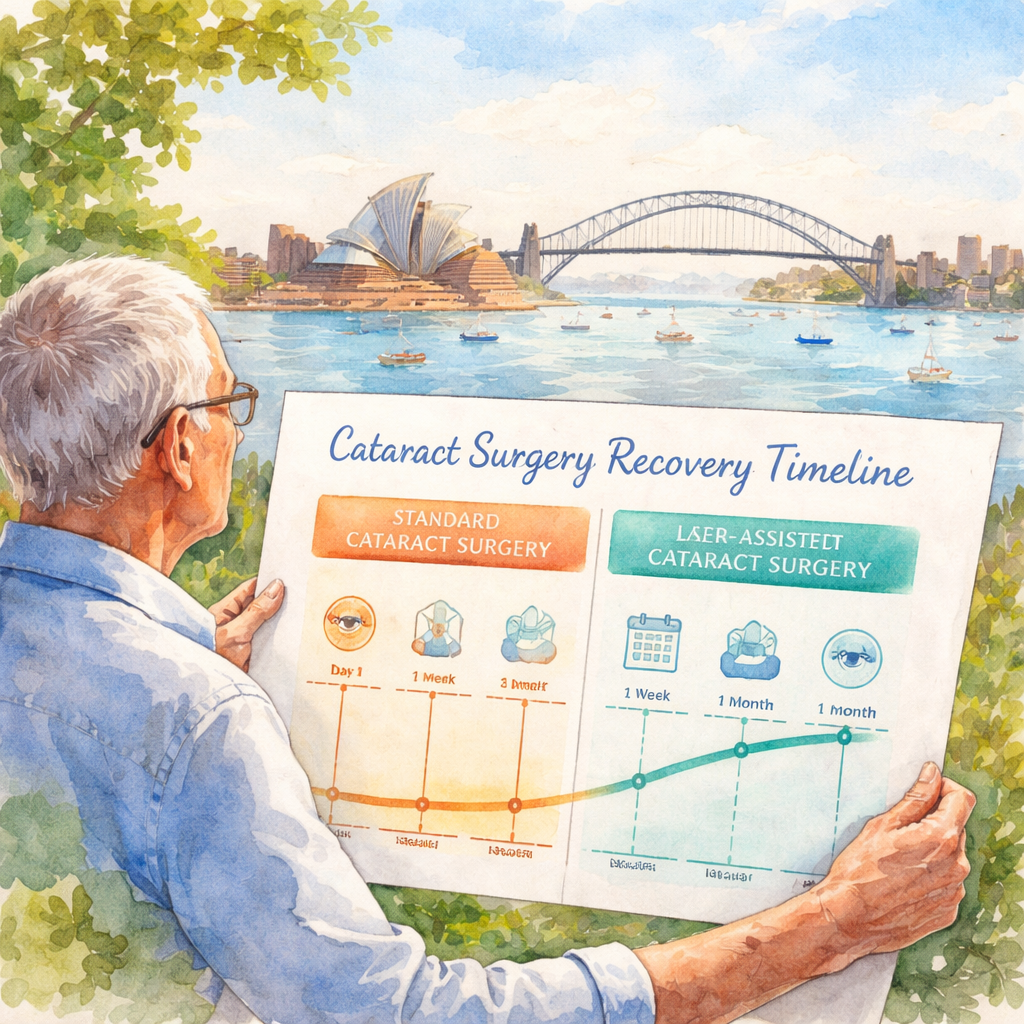
Step 5: Long‑Term Outlook & When to Seek Help
So you’ve made it past the surgery day, and you’re wondering what the long view looks like. The early wins are encouraging, but the real path is about staying steady and protecting what you’ve gained.
In our experience, many Sydney patients reach a stable vision within 3–4 months, though a few will notice minor adjustments for a bit longer. The cataract recovery timeline isn’t a sprint; it’s a careful, patient‑driven process that rewards consistency.
What does long‑term mean in practical terms? Think gradual improvements in clarity and color, with your brain learning to fuse the new lens with your eye over time. You may still notice small fluctuations, especially on bright days, but they usually settle as you continue follow‑up care.
You'll still need sun protection and the prescribed drops for a while. UV sunglasses act like a gentle shield, and sticking to the drop schedule reduces inflammation risks that could hold back your progress. Does that feel like a lot to manage? It can, but it’s the price of steady, lasting results.
By weeks 8–12, many people report a clearer sense of depth and fewer halos around lights. By around month 3, most patients describe a consistent reading experience and a noticeably broader field of vision. Those are the moments that tell you the recovery timeline is finally taking its final shape.
Red flags can show up later, too. If you notice persistent redness or eye pain, a sudden drop in vision, new flashes, or a red, tender eye, seek help promptly. Don’t shrug off new symptoms—early intervention often prevents bigger issues down the line.
We’ve learned to emphasize a practical approach: keep a simple symptom log, and bring questions to every follow‑up. Regular reviews help catch subtle changes before they become bothersome. For ongoing monitoring, refer to our cataract surgery follow up schedule to understand the typical checkpoints and what each visit aims to confirm.
In 2026, the message is unchanged: protect your eyes, stay engaged with your care team, and pace your return to activities in a way that respects your healing eye. If you’re unsure about how a particular activity fits into your long‑term plan, bring it up at your next appointment—we’ll tailor a safe path forward for you.
Finally, if you’re driving, exercising, or returning to hobbies, use common‑sense benchmarks. Read signs clearly, notice how colors appear in daylight, and don’t push beyond your comfort level without clearance. Your future sight is worth careful steps today.
Bottom line: the long‑term outlook hinges on consistency, protection, and open communication with your surgeon. Keep the routine, listen to your body, and you’ll finish this journey with confidence and clear vision for years to come.
FAQ
How long does the cataract recovery timeline usually take?
Most people in Sydney notice a steady improvement within the first week, and by the end of month 1 their vision is pretty stable. The full timeline – from day 0 to a comfortable, glare‑free view – often stretches to 8–12 weeks. That’s when the eye tissue fully seals, inflammation settles, and your brain gets used to the new lens. Patience really pays off here.
When can I safely drive after cataract surgery?
Driving is a big milestone, and we usually clear you for short trips around day 7‑10, provided you can read a number plate from 20 metres. If you still feel a little hazy, wait until the week‑four follow‑up confirms visual acuity is safe. Remember, it’s better to take a quick ride to the pharmacy than to risk a mis‑judged turn on a busy road.
What are the signs that my recovery is not on track?
Red‑flag symptoms include sudden pain, a bright red eye, flashes of light, or a rapid drop in vision. If you notice any of these, call the clinic right away – they could signal infection or a pressure issue. Also, persistent swelling beyond the first two weeks, or a lingering gritty feeling, deserves a quick check‑in.
How important are eye drops in the cataract recovery timeline?
Eye drops are the frontline defence. Antibiotic drops keep infection at bay, while anti‑inflammatory drops tame swelling and speed up clarity. Skipping a dose can set you back a few days, because inflammation may flare up again. Setting an alarm for each drop time is a tiny habit that makes a big difference.
Can I resume exercise, like jogging or weight lifting, and when?
Light walking is fine after the first week. By week 2‑3 you can add gentle jogging or stationary cycling – keep resistance low. Weight lifting should wait until after the four‑week check‑up, and even then start with loads under 5 kg. The goal is to avoid spikes in intra‑ocular pressure while your incision fully seals.
Is it normal to still experience glare or halos after a month?
Yes, many patients notice a faint halo around lights for a few weeks post‑op. Your new intra‑ocular lens can scatter light until the eye tissue fully settles. Wearing UV‑blocking sunglasses outdoors helps, and if the glare feels worse after bright evenings, give it another week or two before worrying.
Do I need to keep wearing UV‑blocking sunglasses long‑term?
Absolutely. UV rays can irritate the healing eye and accelerate future cataract formation. Even after your vision feels perfect, a good pair of sunglasses protects the delicate tissue and keeps glare at bay on sunny Sydney arvos. Think of them as a permanent accessory, not just a post‑surgery gimmick.
Conclusion
We've walked through every stage of the cataract recovery timeline, from that hazy first morning to the clear‑day confidence you feel after a few weeks.
So, what should you take away? First, stick to the drop schedule like it's a non‑negotiable appointment. Miss a dose, and you risk a setback that could push your timeline back a few days.
Second, protect your eyes with UV‑blocking sunglasses every time you step outside. It’s a tiny habit that pays off in long‑term comfort and helps keep future cataracts at bay.
Third, listen to your body. Light walking, gentle yoga, or a short bike ride are fine when you feel ready, but heavy lifting or swimming should wait until your surgeon gives the green light.
And remember, the timeline isn’t a race. Your brain needs a few weeks to fully adapt to the new intra‑ocular lens, so patience really does help the vision settle.
Got a question that’s still nagging you? Drop us a line, or book a quick check‑up. We’re here to make sure your recovery stays on track and your sight stays sharp.
Finally, keep a simple symptom log—just a notebook or phone note—so you can spot any red‑flag changes early and call us before they become problems.
Resources & Further Reading
When you’ve walked the whole cataract recovery timeline, a good cheat‑sheet can make life a lot easier. Below are a few places we keep bookmarked for patients who want to dive deeper.
Our same‑day cataract surgery guide explains what to expect on the day of the operation, how to prep your home, and why a smooth start shortens the whole timeline.
If you’re still curious about the science behind inflammation control, the Australian Ophthalmology Society’s patient fact sheet (available on their website) breaks down why those drops matter.
For a quick visual reference, the printable timeline graphic we offer can be hung on your fridge – it reminds you when to log symptoms, when to swap sunglasses, and when your next check‑up is due.
Lastly, don’t forget to join our monthly email roundup. It bundles the latest research, seasonal eye‑care tips for Sydney’s sunny arvos, and answers to the most common recovery questions.
Comments