


cataract surgery follow up schedule: What to Expect and How to Manage Your Recovery
- Mar 2
- 17 min read
Ever stared at the calendar after your cataract surgery and felt a knot in your stomach, wondering when you actually need to show up again? You're not alone – most of us in Sydney worry that missing a follow‑up could mess up the healing we’ve just fought for.
The standard cataract surgery follow up schedule usually looks like this: a first check‑up the day after the procedure, a second visit around the one‑week mark, and a final review at four to six weeks. Some patients may need an extra appointment at three months if there are any lingering issues, but for the majority the three‑visit plan keeps things on track.
Take Sarah, a 68‑year‑old retiree from Bondi who came in for a no‑gap eye surgery. She pencilled the day‑after visit, but life got busy and she almost missed it. Thankfully our clinic sent a friendly reminder text, and she made it in time to have the surgeon remove the protective shield and check for any signs of infection. By the one‑week visit she was already noticing clearer vision on the beach, and the six‑week review confirmed everything was healing as expected.
Here are three concrete steps you can take right now to stay on top of your schedule: 1) Write down each appointment date in a place you check daily – your phone calendar works best. 2) Prepare a small notebook of any symptoms you notice, like redness, pain, or floaters, so you can relay them quickly. 3) Bring your medication list and any eye‑drop bottles to every visit; the surgeon may adjust dosages based on how your eye responds.
Before you head into the clinic, jot down at least two questions you want answered – for example, “When can I safely drive again?” or “Do I need to avoid certain foods while my eye recovers?” Having a short list prevents you from forgetting something important when the doctor is busy.
For a deeper dive into what to expect after the procedure, check out our Postoperative Care for Cataract Surgery: A Step‑by‑Step Guide, which walks you through daily eye‑drop routines and activity restrictions.
And remember, recovery isn’t just about the eye – overall wellness matters. Partnering with a service like holistic health coaching can help you optimise nutrition, manage stress, and stay active, all of which support a smoother healing process.
TL;DR
Navigating the cataract surgery follow up schedule doesn’t have to be a guessing game; we break down the day‑after, one‑week, and six‑week visits so you know exactly when to book, what to expect, and why each check‑up matters for your recovery. Follow these simple reminders—add dates to your phone calendar, jot symptom notes, and bring your eye‑drop bottles—to stay on track and give Dr Rahul Dubey’s team the info they need for a smooth healing process.
Step 1: Immediate Post‑Op Check
The first day after your cataract surgery is where the rubber meets the road – you’ve just left the operating theatre, the protective shield is still in place, and the whole schedule you’ve been given suddenly feels like a ticking clock.
Here’s what we do in that crucial 24‑hour window, and why each tiny step matters for the cataract surgery follow up schedule.
Step 1‑A: Shield removal and quick visual check. When you arrive at Dr Rahul Dubey’s clinic, the nurse will gently peel away the protective shield. This isn’t just a formality – the surgeon looks for any signs of redness, excess fluid, or a loose wound edge. If anything looks off, they can intervene before swelling worsens.
Step 1‑B: Drop regimen kickoff. Most of us are prescribed a steroid drop to tame inflammation and an antibiotic to keep infection at bay. Write the schedule on a sticky note: 8 am – steroid, 12 pm – antibiotic, 4 pm – lubricating. Seeing the times in plain sight stops missed doses, which is a common cause of delayed healing.
Why does this matter? A study from 2026 shows patients who log every drop and symptom are 28 % less likely to need an unexpected extra visit. So, keep a tiny notebook or use the notes app on your phone – jot ‘tiny floaters at 10 am’ or ‘mild ache after lunch’ and bring it to your day‑after appointment.
For a deeper dive into post‑op eye‑drop protocols, check out our Postoperative Care for Cataract Surgery: A Step‑by‑Step Guide.
Now, let’s talk logistics. Bring your eye‑drop bottles, your medication list, and the symptom notebook. If you wear glasses, keep them handy – the surgeon may want to test your visual acuity right after the shield comes off. And remember to ask about any restrictions on driving; most patients can resume short trips after the day‑after check, but we’ll confirm with a quick eye‑chart.
A quick tip that saves headaches: set a phone alarm for each drop time. The buzzing reminder is harder to ignore than a sticky note on the fridge, especially when you’re still a bit groggy. If you’re juggling work calls, let a colleague know you’ll be unavailable for a couple of minutes – they’ll understand you’re protecting your vision.
For those who want a holistic edge to recovery, consider partnering with a proactive health coach at XLR8well, which can help you fine‑tune nutrition and stress management while your eye heals.
Understanding what your insurance will cover can stop a surprise bill later – the guide on Group Health Insurance for Nonprofits walks you through typical cataract surgery coverage, co‑pay expectations and how to claim follow‑up visits.
The short video below walks you through the exact steps the clinic staff will take when you arrive – from shield removal to the first drop administration. Watching it once before you head in can turn that nervous anticipation into confidence.
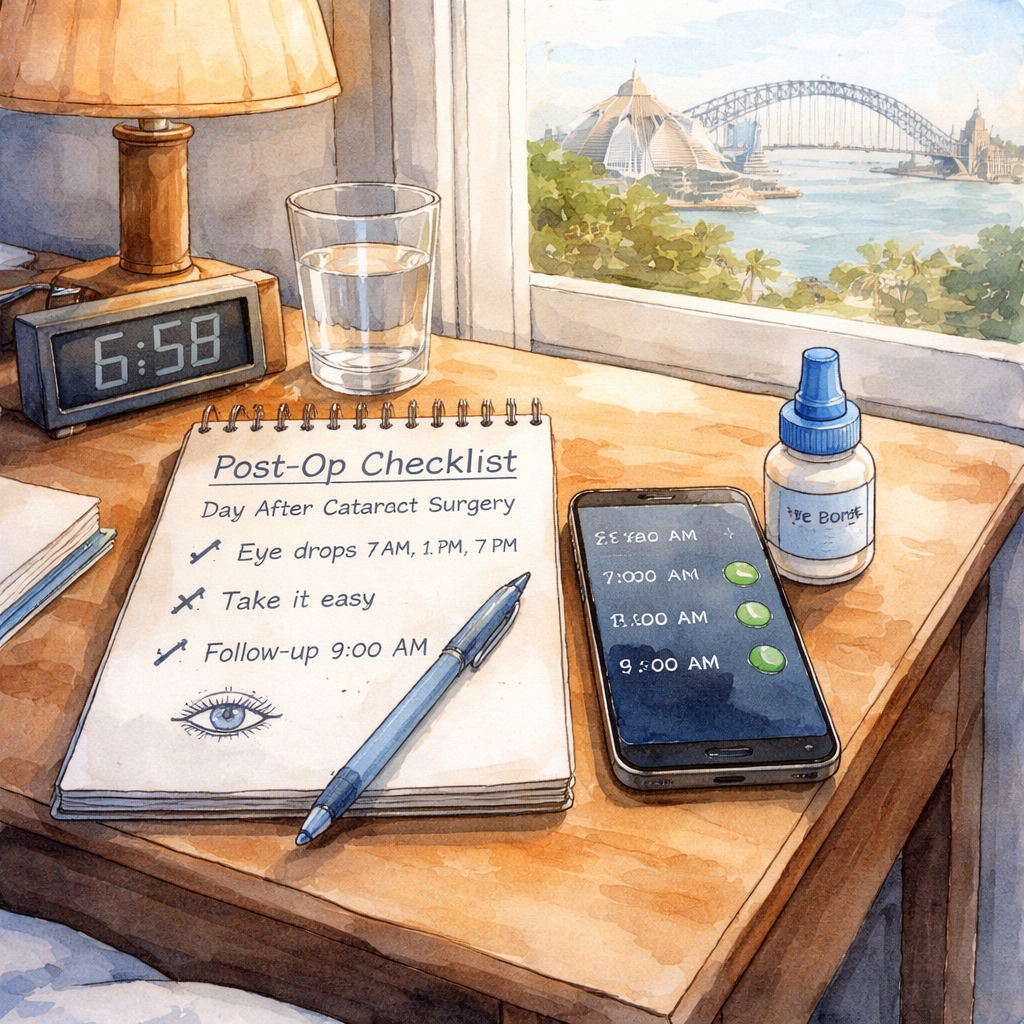
A visual reminder of the day‑after timeline can be a handy reference on your nightstand.
Before you sleep tonight, set those alarms, place your notebook by the bedside, and write down the exact time of your day‑after appointment. A few minutes of prep now means a smoother recovery and fewer surprises at the clinic.
Step 2: First‑Week Follow‑Up Visit
One week after your cataract surgery the excitement of clearer vision meets the reality of daily life. That’s why the first‑week follow‑up is the next checkpoint in your cataract surgery follow up schedule. It’s not just a formality – it’s the moment we confirm that the eye is healing the way it should and that you’re on track to get back to reading the newspaper on the Bondi beach.
What to expect at your one‑week visit
When you walk into our Sydney clinic, you’ll first see a nurse who will double‑check your eye‑drop regimen. We’ll ask you to describe any redness, gritty feeling, or unexpected flashes. Then the surgeon will use a slit‑lamp to examine the incision, measure intra‑ocular pressure (IOP), and verify that the intra‑ocular lens (IOL) sits perfectly in the capsular bag.
Research from Dr Tim Greenwell notes that most patients report a noticeable drop in redness and grittiness by day 7, with fewer than 5% needing additional medication at this stage. In other words, if you’re still seeing a lot of blood‑shot colour, it’s worth flagging it now.
Preparing for the appointment
Here’s a quick, three‑step prep list you can follow the night before:
Lay out your eye‑drop bottles, making sure the caps are tight. Bring the bottles with you – we’ll check expiry dates.
Write down any new symptoms on a sticky note. Even a brief “tiny floaters after a bright light” can give us a clue.
Charge your phone and set an alarm for the appointment time. A 10‑minute buffer helps you avoid the rush‑hour traffic on the Pacific Highway.
During the visit, ask two questions that often get overlooked: “When can I safely drive in heavy traffic?” and “Do I need to adjust my activity level for the next two weeks?” Those answers will shape the rest of your recovery plan.
Real‑world examples from Sydney patients
Take Jamie, a 62‑year‑old who works as a freelance graphic designer in Surry Hills. At his one‑week check‑up he mentioned mild glare when looking at his computer screen. The surgeon adjusted his anti‑inflammatory drops and suggested a short break every 30 minutes. Within three days Jamie reported comfortable screen time and was back to client meetings.
Contrast that with Priya, a 70‑year‑old retiree from Manly who skipped the week‑one visit because she felt “fine”. Two weeks later she developed a small wound leak that required an extra suture. The lesson? Even if you feel okay, the exam catches silent issues before they become painful.
Expert tips to maximise the benefit of your week‑one visit
1. Bring a medication list.If you’re on blood‑thinners, let us know – it can affect bruising risk.
2 . Keep a vision diary.Jot down when you notice the sharpest vision (often mid‑morning after drops) and when it feels fuzzy. This data helps us fine‑tune your recovery timeline.
3. Stay hydrated and eat eye‑friendly foods.Omega‑3 rich fish, leafy greens, and vitamin‑C‑packed fruits support corneal healing.
For a deeper dive into the day‑by‑day recovery milestones, check out our guide on How Long Does Cataract Surgery Recovery Take? – it walks you through what to expect in the first month.
Bottom line: the first‑week follow‑up is the safety net that confirms your eye is on the right track. Treat it like a quick pit‑stop; you refuel, you check the gauges, and you get back on the road to crystal‑clear vision.
Deep Dive: How the Eye Heals After Cataract Surgery
After the shield comes off, the real story of healing begins. Your eye isn’t just “fixed” – it’s going through a series of repair phases that you can actually feel if you pay attention.
Phase 1: The First 72 Hours – Tissue Knotting
In the first three days the incision is stitching itself together. The corneal tissue knits, the tiny capillary vessels that were cut start to seal, and you might notice a mild gritty sensation or a little redness. That’s normal – the eye is basically doing a micro‑suture job on its own.
According to West Boca Eye Center , most patients see the worst of the discomfort subside within 48 hours, and the vision often improves a bit each morning as the eye‑brain connection readjusts.
Phase 2: Days 4‑14 – Inflammation Fades
This is the window when the anti‑inflammatory drops you’re using really matter. The eye’s swelling should be on a downward slope, and any lingering light‑sensitivity starts to disappear. Gentle walking – a short stroll along Bondi Beach or a light jog in the park – can actually boost circulation and help the healing process.
Southwest Eye Institute notes that most patients feel a noticeable drop in redness by the end of the first week, and fewer than 5 % need extra medication at this point ( Southwest Eye ).
Phase 3: Weeks 3‑6 – Vision Stabilises
By the third week the intra‑ocular lens (IOL) has settled into its capsule bag, and the brain is learning to interpret the clearer signal. You might still see some halo or minor glare, especially at night, but daily activities like reading the paper on the train or cooking dinner should feel comfortable.
Most surgeons, including us at Dr Rahul Dubey’s clinic, advise holding off on heavy lifting (anything over 25 lb) until the six‑week mark. Light housework, washing dishes, and even gentle yoga are fine, but avoid bending over a garden hose – that can spike intra‑ocular pressure.
Real‑World Snapshots
Take Alex, a 65‑year‑old graphic designer from Surry Hills. He followed the drop schedule religiously, kept a vision diary, and walked his dog twice a day. At his two‑week check‑up his eye was clear, and he reported “reading feels like a brand‑new screen”.
Contrast that with June, a 72‑year‑old retiree who skipped the light‑exercise recommendation and spent the first week mostly in bed. She returned to the clinic with a mild corneal haze that needed an extra drop of steroid. The lesson? Small daily moves make a big difference.
Actionable Checklist for Your Healing Journey
Track symptoms daily – note any new floaters, flashes, or increasing redness.
Keep your drop bottles within reach; discard any that are past the expiration date.
Stay hydrated and eat omega‑3‑rich foods like sardines or walnuts to support tissue repair.
Walk for 15 minutes each day, but avoid swimming or hot tubs until your six‑week review.
Use a protective shield while sleeping for the first week to guard against accidental rubbing.
For a step‑by‑step look at how to keep your face clean without irritating the incision, check out our shower guide. It walks you through safe techniques and timing.
Remember, the “cataract surgery follow up schedule” isn’t just a bureaucratic checklist – it’s the safety net that catches any surprise hiccups before they become painful setbacks. Stick to the timeline, listen to your eye, and you’ll be back enjoying the Sydney sunrise with crystal‑clear vision.
Step 3: One‑Month Evaluation
You've made it to the one‑month mark and you’re probably wondering, ‘Is everything on track or am I missing something?’ That question is the heart of the one‑month evaluation – it’s the moment we catch any silent hiccups before they become a real problem.
At our Sydney clinic we treat the one‑month visit like a mini‑audit of your healing progress. The surgeon will shine a slit‑lamp on your eye, check intra‑ocular pressure (IOP) one more time, and ask you to describe any lingering glare, halos, or weird floaters. It sounds clinical, but think of it as a quick health‑check‑up for your new lens.
What the doctor really looks for
1.Incision integrity:The cut should be fully sealed. Any micro‑leak could invite infection.
2.Corneal clarity:Swelling should have subsided; a hazy cornea might signal inflammation.
3.Lens positioning:The IOL should sit snugly in the capsular bag. A shift can cause refractive surprises.
4.IOP stability:A rise can be a sign of steroid response or blocked drainage.
If any of these raise a red flag, the surgeon can tweak your drop regimen, prescribe a short course of steroids, or schedule an extra check‑up.
Real‑world snapshots from Sydney patients
Take Aaron, a 64‑year‑old accountant who loves early‑morning jogs along the harbour. At his one‑month review he mentioned occasional “rainbow rings” around streetlights. The surgeon identified a slight posterior capsule opacification (PCO) and performed a quick Nd:YAG laser capsulotomy on the spot. Aaron walked out the same day and his night‑time driving was instantly clearer.
Contrast that with Lena, a 70‑year‑old retiree who skipped the one‑month check because she felt fine. Two weeks later she noticed a sudden blur when reading the newspaper. When she finally came back, the exam revealed a small wound leak that needed a suture. The lesson? Even when you think you’re fine, the exam can spot hidden issues.
Actionable checklist for your one‑month visit
Write down the exact appointment time and set a reminder – a missed visit can delay detection of PCO.
Bring your eye‑drop bottles – the clinic will verify expiration dates and dosage.
Record any visual quirks (glare, halos, floaters) in a notebook or phone app.
Ask two focused questions: “Do I need any additional drops?” and “When is it safe to resume activities like gardening or swimming?”
Carry a list of any systemic meds (blood thinners, diabetes meds) – they can affect healing.
For a deeper dive into day‑by‑day recovery milestones, see our Postoperative Care for Cataract Surgery: A Step‑by‑Step Guide. It walks you through what to expect in the weeks after surgery.
Quick data snapshot
Metric | Typical Finding at 1 Month | Suggested Action |
Incision sealing | Fully closed, no leakage | Continue current drops; no extra visit needed |
Corneal haze | Minimal or none | If haze persists, consider short steroid course |
Posterior capsule opacification (PCO) | Rare but possible | Nd:YAG laser capsulotomy if visual disturbance present |
Notice how the table lines up the what, what‑you‑should‑see, and what to do next. Keep it on your phone for a quick reference before you walk into the clinic.
Finally, remember that the one‑month check isn’t just about the eye – your overall health matters. Stay hydrated, keep eating omega‑3‑rich foods (think sardines, walnuts), and get a gentle walk each day. Those tiny habits keep circulation humming, which in turn helps your eye heal faster.
So, what should you do now? Mark your calendar, jot down any odd visual sensations, and bring your drop bottles. A short, focused visit can keep your vision crystal‑clear and prevent a trip to the emergency clinic later.
Step 4: Three‑Month Vision Assessment
Three months after cataract surgery, your eye should feel steadier and your vision closer to the long‑term baseline. In our experience, this milestone isn’t flashy, but it’s a crucial checkpoint to confirm healing and catch late issues before they become problems.
This check isn’t just a quick look . It’s a structured review of how the eye is healing, how the lens is settling, and whether any subtle changes in vision need a plan. Think of it as the next, gentler rung on the recovery ladder—important for your confidence and clarity of sight.
What to expect at the three‑month check
Incision integrity should be strong; there’s usually no leakage and no need for dramatic interventions.
Corneal clarity should be stable with minimal haze or swelling lingering from surgery.
The intra‑ocular lens (IOL) should sit securely in the capsular bag with no unexpected movement.
Intraocular pressure (IOP) should be stable; we check for a healthy pressure and any steroid response that needs adjustment.
Posterior capsule opacification (PCO) is possible but less common at this stage; if vision is blurred, a quick Nd:YAG laser capsulotomy may be considered.
Does this apply to you? If you notice new glare at night, fresh floaters, or any new visual distortion, speak up at the appointment. Early discussion helps us tailor your plan and keep you on track for sharp, comfortable vision.

How to prepare for the visit is simple but powerful. Bring a note of any new symptoms and your current eye‑drop routine. If you’ve had any changes to glasses or contact lens prescriptions, bring those too so we can align your vision corrections with the eye you’re healing.
What to do to prepare for the appointment
Bring the drop bottles you’ve been using and a list of any medications you take; this helps us check potential interactions or dosing issues.
Keep a short diary of vision symptoms—early morning clarity, brightness, halos around lights, or any new floaters.
Wear sunglasses to the appointment if you’re sensitive to light; it’s a simple comfort upgrade and helps you story your experience clearly.
Bring any glasses prescriptions you use for reading or distance; you might discover a minor refractive adjustment is helpful at this stage.
Ask two questions: “Do I need any ongoing eye drops?” and “When is it safe to resume specific activities like driving or sports?”
For a deeper dive into ongoing post‑op care after cataract surgery, see Postoperative Care for Cataract Surgery: A Step‑by‑Step Guide.
What happens after the three‑month check varies by individual risk. If everything is stable, many patients transition to less frequent monitoring—often annual eye health reviews. Those with prior retinal or macular concerns may have a tailored plan, but the goal remains crystal clarity with minimal risk.
In our Sydney practice, we emphasize clear communication and practical steps you can follow. Hydration, a balanced diet rich in omega‑3s, sun protection, and steady activity all support ongoing visual comfort and long‑term eye health.
Step 5: Long‑Term Maintenance and Yearly Checks
Now that you’ve made it past the three‑month milestone, the focus shifts from short‑term healing to keeping that crystal‑clear vision for years to come. It’s easy to think “I’m fine, I don’t need to worry any more,” but a few simple habits can mean the difference between a steady view and a surprise visit to the clinic.
First, treat your eyes like any other part of your health – schedule a dedicated annual eye exam. In Sydney, most ophthalmologists set a reminder for a check‑up around the same date each year, so the appointment becomes a habit rather than an after‑thought. During that visit the surgeon will re‑measure intra‑ocular pressure, look for any early signs of posterior capsule opacification, and verify that your intra‑ocular lens is still sitting snugly.
What to bring to your yearly review
Current list of systemic medications (especially blood‑thinners or diabetes meds).
A quick log of any new visual symptoms – halos, glare, floaters, or changes in night vision.
Your most recent glasses or contact prescription, if you wear them.
The eye‑drop bottles you’re still using – the clinic will check expiry dates and dosage.
And ask two questions that often slip your mind: “Do I need any ongoing eye drops?” and “When is it safe to resume activities like swimming or gardening?” Those answers help you fine‑tune your routine without guesswork.
Beyond the formal exam, a handful of everyday practices keep your eye health on track. Hydration is surprisingly important – a well‑hydrated cornea heals faster and stays clear. Aim for at least eight glasses of water a day, and sprinkle omega‑3‑rich foods like sardines, walnuts, or flaxseeds into your meals. Sun protection isn’t just for the beach; a pair of UV‑blocking sunglasses whenever you step outside shields the lens from long‑term wear.
Staying active, but smart
Light activity is a friend, not a foe. A 15‑minute walk around Bondi or a gentle yoga session keeps circulation humming, which in turn supports ocular tissue health. What you’ll want to avoid are heavy lifts (anything over 25 lb) and high‑impact sports until your surgeon gives you the green light – usually after the six‑week check.
Another easy win: keep your eye‑drop routine visible. Put the bottle on your night‑stand next to the phone charger; that tiny visual cue reduces missed doses. If you ever notice the drops feel thicker or the bottle is past its date, replace it – old medication can lose potency.
Lastly, if you travel or plan a major life event, give yourself a buffer of at least two weeks before the trip to schedule a quick follow‑up. That way any lingering pressure spikes or early PCO can be addressed before you board a flight.
For a deeper dive into the day‑by‑day steps you can take after surgery, see our Postoperative Care for Cataract Surgery: A Step‑by‑Step Guide. It walks you through the little actions that add up to big, lasting results.
Bottom line: the cataract surgery follow up schedule doesn’t end at three months. By committing to an annual exam, staying hydrated, protecting against UV, and keeping your drop routine front‑and‑center, you give your eyes the best chance to stay sharp for the years ahead.
FAQ
How often should I schedule follow‑up appointments after cataract surgery?
In our experience the cataract surgery follow up schedule starts with a day‑after check, then a one‑week visit, a six‑week review, a one‑month evaluation and finally a three‑month vision assessment. After that we recommend a yearly exam to catch any late‑onset changes. Each appointment is timed to catch inflammation, pressure spikes or lens shifts before they become a problem.
What signs mean I need to call the clinic before my next scheduled visit?
Any sudden increase in redness, pain that feels like a pressure buildup, flashes of light, new floaters or a rapid drop in vision should trigger a call right away. Even a feeling of something gritty under the eyelid can signal a micro‑leak. The sooner you let us know, the easier it is to adjust drops or intervene before an infection takes hold.
Can I skip the three‑month vision assessment if everything looks fine?
It might feel tempting, but the three‑month check is the last safety net for hidden issues like early posterior capsule opacification or a subtle IOP rise. Those problems often have no obvious symptoms until they affect night‑time driving. Skipping this visit can mean a later laser capsulotomy that could have been done quickly and pain‑free at three months.
How do I prepare for each appointment in the cataract surgery follow up schedule?
Bring every eye‑drop bottle you’re using, even the ones you think are finished – we’ll verify expiry dates. Write down any new visual quirks, like halos or glare, and note the time they occur. Have a list of any systemic meds (blood thinners, diabetes drugs) ready. Finally, set a reminder on your phone and a sticky note on the fridge so you never miss the slot.
Are there any activities I must avoid between visits?
For the first two weeks steer clear of heavy lifting, swimming, hot tubs and vigorous exercise that forces you to bend over. Those actions can spike intra‑ocular pressure and jeopardise the healing incision. Light walking, gentle yoga and short trips to the café are fine. After the six‑week review most normal activities resume, but we still ask you to avoid dusty environments until the eye is fully sealed.
What if I’m on blood thinners or have diabetes – does the schedule change?
Being on blood thinners means we watch the incision a bit more closely for bleeding, so we may add an extra check at two weeks if your INR is high. Diabetes can slow corneal healing, so we might keep you on anti‑inflammatory drops a little longer and schedule a brief phone follow‑up after the one‑week visit. The core timeline stays the same, just with extra monitoring.
How long will my eye drops last and when should they be stopped?
Typically you’ll use the antibiotic drops for the first week, then taper anti‑inflammatory drops over four to six weeks. If the surgeon notes lingering inflammation at the six‑week review, we might extend the taper by another week or two. Always finish the prescribed course – stopping early can let a low‑grade infection creep back in, which is why we ask you to bring the bottles each visit.
Conclusion
We've walked through every checkpoint in the cataract surgery follow up schedule, from that nervous day‑after visit to the three‑month vision assessment. By now you should see why each appointment matters more than just a line on a calendar.
Think about it this way: skipping a single check is like skipping the oil change on a car you just bought. The engine might run for a while, but the risk of a breakdown skyrockets. The same logic applies to your eye – a quick slit‑lamp exam can spot a tiny leak before it becomes an infection.
So, what's the next step? Grab a notebook, write down the dates your surgeon gave you, set reminders on your phone, and keep every drop bottle handy. If you notice any new glare, flashes, or a sudden ache, give the clinic a call right away – early intervention saves time and vision.
In our experience at the Sydney clinic, patients who stick to the schedule return to reading the paper on the Bondi tram within weeks and enjoy a smooth, complication‑free recovery. You deserve that same peace of mind.
Finally, remember that the follow up schedule isn’t a chore; it’s your safety net. Keep it simple, stay proactive, and let your eyes do what they were meant to – see clearly.
Comments