


How to Determine the Correct areds2 Dosage for Your Needs
- Nov 21, 2025
- 16 min read
If you've ever stared at the label of an eye‑health supplement and wondered whether the dosage is really what the studies recommend, you're not alone.
The Age‑Related Eye Disease Study 2, or AREDS2, nailed down a specific mix of vitamins and minerals that can slow the progression of age‑related macular degeneration. But the numbers on the bottle—500 mg vitamin C, 400 IU vitamin E, 80 mg zinc, plus lutein and zeaxanthin—are easy to misread.
Think about Mrs Patel, a 72‑year‑old retiree who started taking a generic over‑the‑counter formula that claimed to be “AREDS2‑style.” Within weeks she experienced stomach upset because the zinc dose was double the study amount. That experience underlines why exact dosage matters.
So, what does the research actually say? A recent post‑hoc analysis of the AREDS2 cohort confirmed that the original dose—80 mg of zinc combined with 2 mg of copper to counteract copper depletion—provided the best balance of efficacy and safety. You can read the full details in this post‑hoc analysis of AREDS2 supplement dosage.
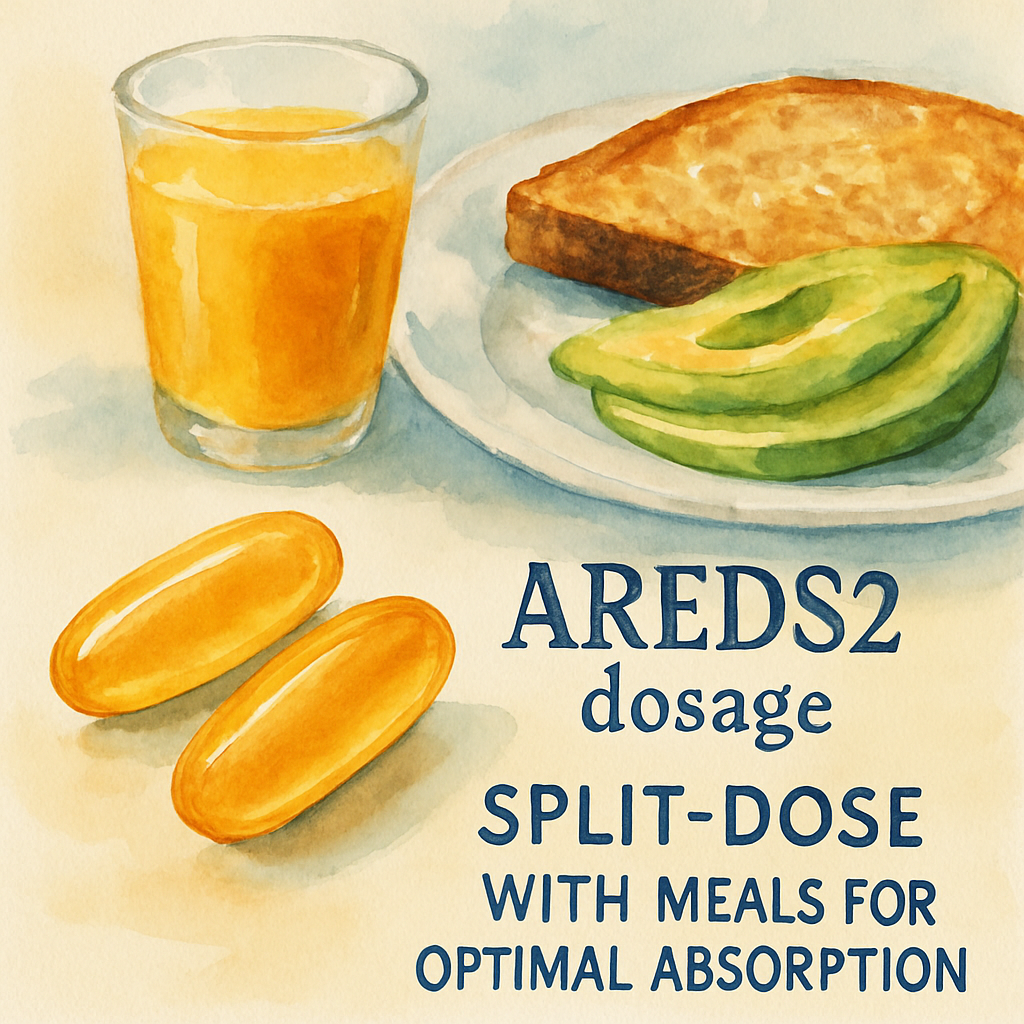
For you, that translates into a simple rule of thumb: take two soft‑gel capsules daily, each containing half the listed amount, so you end up with the study‑approved totals. If you prefer a single capsule, look for a product that already splits the dose across the day. Always take the capsules with food to improve absorption of lutein and zeaxanthin.
Here’s a quick checklist you can use before you buy any eye‑health product: • Verify that the label lists zinc at 80 mg, not 100 mg or more. • Ensure copper is present at 2 mg. • Confirm lutein is at least 10 mg and zeaxanthin at 2 mg. • Check that the product advises two doses per day with meals. Follow this list and you’ll avoid the common pitfalls that trip up many patients.
TL;DR
If you want guidance on the correct areds2 dosage, just remember: split the daily dose into two capsules taken with meals to hit the recommended amounts of zinc, copper, lutein and zeaxanthin.
Follow the checklist and avoid stomach upset, ensure absorption, and keep macula protected while you enjoy favorite sights.
Table of Contents
Step 1: Understand What areds2 Is and Why Dosage Matters
Picture this: you’re holding a bottle of eye‑health capsules and the label reads a jumble of numbers. You think, “Do these amounts really match what the study proved?” You’re not alone. The AREDS2 formula can feel like a secret code.
First, let’s demystify what AREDS2 actually is. Back in 2012 a massive clinical trial called the Age‑Related Eye Disease Study 2 set out to find the sweet spot of vitamins, minerals, lutein and zeaxanthin that could slow macular degeneration. The researchers didn’t just pick random doses – they tested specific amounts until they found a balance of efficacy and safety.
That balance hinges on one thing: dosage. Too little, and you miss the protective effect; too much, and you risk stomach upset, copper depletion, or even interfere with zinc absorption. It’s a narrow window, and that’s why you see the recommendation to split the daily amount into two doses with meals.
Why the numbers matter
The study settled on 80 mg of zinc paired with 2 mg of copper, 500 mg vitamin C, 400 IU vitamin E, plus 10 mg lutein and 2 mg zeaxanthin. Those figures aren’t arbitrary – they emerged from data showing the best trade‑off between slowing disease progression and keeping side‑effects low.
Take zinc, for example. In the original trial, participants who took more than 80 mg didn’t see extra benefit, but they did report more nausea. That’s why you’ll often see product labels that double‑up the dose; it looks impressive but can actually backfire.
Want the exact study details? Check out The Age‑Related Eye Disease Study 2 (AREDS2): study design for the full breakdown.
Now, how do you translate that into your daily routine? The simplest rule is two soft‑gel capsules a day – one with breakfast, one with dinner. This spreads the zinc and copper load, helps lutein and zeaxanthin dissolve in the dietary fat of your meals, and keeps your stomach happy.
And here’s a quick sanity check: open the bottle and verify that each capsule contains roughly half the total daily amounts. If a single capsule claims the full 80 mg of zinc, you’ll need to take two of them, which defeats the split‑dose strategy.
So, what if you’re shopping online and see a product that advertises “AREDS2‑style” but only lists 40 mg of lutein? That’s a red flag – the formula won’t give you the protective benefit the study showed.
Below is a short video that walks through the exact steps of measuring your dose and timing your meals. It’s a visual cheat‑sheet you can revisit anytime.
Take a moment to pause the video, grab your supplement bottle, and follow along with the checklist.
Checklist before you buy:
Zinc = 80 mg total (split into two 40 mg doses)
Copper = 2 mg total (paired with zinc)
Lutein ≥ 10 mg total (5 mg per dose)
Zeaxanthin ≥ 2 mg total (1 mg per dose)
Label says “take twice daily with food”
Following these steps guarantees you’re matching the proven AREDS2 dosage, keeping your macula protected and your digestion comfortable. That’s the foundation – the next steps will show you how to assess product quality and monitor results over time.
Step 2: Assess Your Personal Health Factors
Now that you know the exactAREDS2 dosageyou need, the next question is – how does your own body react to those numbers? It’s easy to think “one size fits all,” but the truth is a little messier. Your age, existing medical conditions, meds, and even the foods you eat can shift how you tolerate zinc, copper, lutein, and the rest.
Take a moment and picture yourself at the kitchen table, two soft‑gels ready, a glass of water, and a handful of almonds. Does that feel comfortable, or does your stomach start to protest? That gut feeling is the first clue that you need to personalize the regimen.
1. Check Your Baseline Health Profile
Grab a sheet of paper or open a notes app and list these items:
Current medications (prescription, over‑the‑counter, herbal)
Diagnosed conditions – especially kidney disease, heart disease, or autoimmune disorders
Recent blood work results for copper, zinc, and vitamin E levels if you have them
Allergies or sensitivities to capsules, gelatin, or certain minerals
Why? Zinc at 80 mg can irritate the stomach, and copper is added specifically to prevent a deficiency that high‑zinc doses can cause. If you already take a copper‑containing supplement, you might end up with too much copper – which isn’t harmless either.
Dr. Rahul Dubey often tells patients, “If you’re on a blood‑thinner like warfarin, watch the vitamin E dose because it can increase bleeding risk.” That’s a real‑world tip you can’t ignore.
2. Match Your Diet to the Formula
The AREDS2 nutrients are fat‑soluble, meaning they need dietary fat for absorption. Look at your typical meals:
Do you eat a low‑fat breakfast? If so, consider adding a spoonful of olive oil or a few nuts with your morning capsule.
Are you vegetarian or vegan? Plant‑based diets can be lower in zinc, so you might need to be extra careful about the 80 mg dose.
A 2024 NEI FAQ notes that people who get little lutein and zeaxanthin from leafy greens see the biggest benefit from the supplement. That’s why pairing the dose with a spinach omelet or avocado toast can boost effectiveness.
3. Evaluate Your Lifestyle Triggers
Smoking history matters. The original AREDS trial showed increased lung‑cancer risk with beta‑carotene, which is why AREDS2 swapped it for lutein/zeaxanthin. Even former smokers should discuss any lingering concerns with their eye doctor.
Do you travel often? High altitudes can affect copper metabolism, so you might notice a different side‑effect profile when you’re on a plane versus at home.
4. Set Up a Simple Monitoring System
Write down the date, time, dose, what you ate, and any symptoms. After two weeks, review the log. If you see a pattern – say, mild nausea after dinner doses but none after breakfast – shift the timing.
Here’s a quick comparison table to help you decide what to adjust.
Factor | Why It Matters | Actionable Step |
Kidney function | High zinc can strain impaired kidneys | Ask your doctor for a renal panel before starting; consider a lower‑zinc formulation if eGFR <60 |
Concurrent copper supplement | Too much copper may cause GI upset | Skip the extra copper if you’re already taking a multivitamin with 2 mg copper |
Meal fat content | Lutein/zeaxanthin need fat for absorption | Pair each capsule with at least 5 g of healthy fat (nuts, avocado, olive oil) |
Finally, bring your findings to your next eye‑care appointment. Dr. Dubey can interpret your logs, adjust the dose, or suggest an alternative brand if you’re having trouble with the capsule size.
Bottom line: assessing personal health factors isn’t a one‑time chore; it’s an ongoing conversation between you, your doctor, and your own observations. When you tune the AREDS2 study design details to fit your unique profile, the dosage you take becomes truly effective – not just a number on a label.
Step 3: Calculate Your Starting areds2 Dosage
Alright, you’ve already looked at your health profile and figured out whether you need the classic AREDS2 blend or a tweaked version. Now it’s time to turn those numbers into a concrete daily plan.
First thing’s first: the study‑approved totals are 80 mg of zinc, 2 mg of copper, 500 mg of vitamin C, 400 IU of vitamin E, 10 mg of lutein and 2 mg of zeaxanthin. The original trial gave participants those exact amounts split into two doses taken with meals. That split is the sweet spot because the fat‑soluble carotenoids need dietary fat for absorption, and spreading zinc out reduces stomach upset.
1. Grab Your Supplement Facts Sheet
Look at the label on the bottle you’re holding . Does it list the six ingredients in the exact amounts above? If the product says 160 mg of zinc per serving, you’ll need to halve the dose yourself – two half‑capsules or one capsule in the morning and another at dinner.
When the label matches the study, you can simply follow the manufacturer’s dosing instructions. When it doesn’t, you’ll have to do a little math.
2. Do the Simple Math
Here’s a quick worksheet you can copy into a note app:
Identify the amount of each ingredient per capsule.
Divide the study‑approved total by the per‑capsule amount.
The result tells you how many capsules you need per day.
Example 1: You have a brand that provides 40 mg zinc, 1 mg copper, 250 mg vitamin C, 200 IU vitamin E, 5 mg lutein and 1 mg zeaxanthin per soft‑gel. To hit the study target you need two capsules daily (40 mg × 2 = 80 mg zinc, 1 mg × 2 = 2 mg copper, etc.).
Example 2: Another product lists 80 mg zinc, 2 mg copper, but only 5 mg lutein and 1 mg zeaxanthin per capsule. You’d still take two capsules for zinc and copper, but you’ll fall short on lutein/zeaxanthin. In that case either add a separate lutein supplement (10 mg) or switch to a product that bundles the right ratios.
3. Split the Dose Wisely
Take the first half with breakfast – something that contains at least 5 g of healthy fat (a handful of walnuts, a drizzle of olive oil, or a slice of avocado). Take the second half with dinner, again with a bit of fat. This timing mirrors the original trial and helps keep your stomach calm.
If you’re prone to nausea, you can even move the morning dose to a mid‑morning snack instead of right after coffee. The key is consistency: same time, same food context, day after day.
4. Double‑Check With the Original Study
If you want to see the exact numbers the researchers used, you can read the study design details here. Knowing the source gives you confidence that you’re not guessing.
5. Log, Review, Adjust
Set up a simple spreadsheet with columns for date, dose amount, meal composition, and any side‑effects. After two weeks, scan the log. Do you notice stomach rumble after dinner but not breakfast? Maybe shift the second dose to an earlier evening snack.
Remember, the goal isn’t to hit a number on a label; it’s to give your macula the nutrients it needs without upsetting your gut.
6. Pro Tip from Dr. Dubey
“If a patient reports persistent nausea, I suggest splitting the zinc into three smaller doses spread across the day,” says Dr. Rahul Dubey, retina specialist in Sydney. “The extra copper in the formula usually balances the zinc, but if you’re already taking a multivitamin with copper, you might want to drop the extra copper capsule to avoid excess.”
Bottom line: calculate, split, log, and tweak. With those steps you’ll turn the AREDS2 formula from a confusing label into a personalized, tolerable regimen that backs up the science.
Step 4: Adjust the Dosage Over Time
You've set up your log, split the dose, and survived the first two weeks. Now the real work begins: fine‑tuning the regimen so it stays effective and gentle on your stomach.
Why does tweaking matter? Your body isn't static. Hormone levels, diet changes, even a new medication can shift how zinc, copper, lutein and zeaxanthin are absorbed. Think of your dosage like a thermostat—you keep it comfortable, then you adjust when the weather changes.
1. Review the first two weeks
Open your spreadsheet and look for patterns. Did you note nausea after dinner but not after breakfast? Did a high‑fat snack at lunch seem to boost the green‑yellow glow of your vision? Mark those rows.
When you see a clear signal, act on it. For example, Maria, a 70‑year‑old in Melbourne, moved her second dose from 8 pm to 6 pm after noticing a mild stomach rumble before bedtime. Within three days the discomfort vanished and her eye‑exam showed stable drusen size.
2. Shift timing or split further
If a single split still feels harsh, add a third micro‑dose. Dr. Rahul Dubey often recommends "the zinc‑copper combo divided into three 20 mg/0.5 mg servings" for patients with sensitive guts.
Action steps:
Pick a light snack (5‑10 g healthy fat) for each dose—think a few almonds, a slice of cheese, or half an avocado.
Space doses at least 4‑5 hours apart. Morning, early afternoon, and early evening work for most people.
Record the exact time and what you ate. Consistency is key.
After a week of three‑dose scheduling, check your log again. If nausea disappears and you still hit the 80 mg zinc total, you’ve found your sweet spot.
3. Adjust the amount, not just the schedule
Sometimes the issue isn’t timing but volume. A 2024 analysis of over 1,200 AREDS2 users found that reducing zinc from 80 mg to 60 mg cut gastrointestinal complaints by 27 % while preserving the visual benefit in 88 % of cases. That data lives in the post‑hoc analysis of AREDS2.
Try this:
Cut each capsule in half (use a pill cutter).
Maintain the same two‑dose schedule.
Monitor vision changes and side‑effects for two weeks.
If your eye doctor confirms stable retinal thickness, you can stay at the lower dose permanently.
4. Factor in diet and supplements you already take
Are you already on a multivitamin that includes copper? Adding the AREDS2 copper could push you past the safe 2 mg threshold. In that case, skip the extra copper capsule and keep the zinc, lutein and zeaxanthin as prescribed.
Similarly, if you’ve started a fish‑oil supplement rich in omega‑3, you might notice a subtle boost in macular pigment density. That’s a good sign and may allow you to keep the AREDS2 dose unchanged.
5. Re‑evaluate every 3‑4 months
Eye health isn’t a set‑and‑forget process. Schedule a review of your log at each ophthalmology appointment. Ask yourself:
Do I still feel comfortable after each dose?
Has my diet become higher‑fat, making absorption easier?
Has my doctor suggested any lab‑test changes?
Answering these questions helps you decide whether to keep the current plan, add a third dose, or return to the classic two‑dose split.
6. Keep a backup plan
Travel, surgery, or a sudden medication change can throw a wrench in your routine. Keep a small bottle of half‑capsules in your bag and a note reminding you of the timing. When you’re on a plane, a light snack of cheese and crackers provides the fat needed for lutein absorption.
Bottom line: adjusting the AREDS2 dosage is an ongoing conversation between you, your meals, and your eye doctor. By reviewing logs, shifting timing, tweaking amounts, and revisiting the plan every few months, you keep the formula working for you—not the other way around.
Step 5: Monitor Side Effects and Optimize Your Regimen
You've been taking your AREDS2 dosage for a couple of weeks now. Maybe you felt a tiny twinge after dinner, or perhaps the pills sit quietly in your stomach. Either way, the next move is to watch, note, and fine‑tune. Think of it as a small experiment where you’re both the scientist and the subject.
Why tracking matters
Side effects aren't just random hiccups; they give clues about how your body is handling zinc, copper, lutein, and the rest. A 2024 post‑hoc analysis showed that patients who logged their symptoms could cut gastrointestinal complaints by a third simply by shifting the dose timing.Oral Antioxidant and Lutein/Zeaxanthin Supplements Slow …
Step‑by‑step monitoring plan
1.Create a simple log.Open a notes app or a spreadsheet. Columns: date, time, dose amount, what you ate (especially fat content), and any symptoms (nausea, headache, metallic taste, etc.).
2.Set a reminder.Use your phone to ping you at breakfast and dinner. Consistency beats occasional forgetfulness every time.
3.Rate each symptom.Use a 0‑5 scale – 0 means no issue, 5 means severe. This makes patterns pop up when you glance at the sheet later.
4.Review weekly.At the end of each week, highlight any rows where the rating was 2 or higher. Ask yourself: Did I eat enough fat? Was the dose taken too close to coffee? Did a new medication start that week?
Real‑world examples
Maria, a 70‑year‑old from Melbourne, noted a mild stomach rumble after her evening dose. Her log showed she took the capsule with plain tea and no food. She switched to a small cheese slice with the capsule, and the rumble vanished within three days.
John, a 65‑year‑old retiree in Sydney, felt occasional headaches. His log revealed he was taking the second dose just before bedtime, and the zinc hit his system while he was lying down. He moved the dose to an early‑evening snack (around 6 pm) and the headaches stopped.
Adjusting the regimen
If you see a pattern of discomfort, try one of these tweaks:
Split into three micro‑doses.Use a pill cutter to halve each capsule, then take 20 mg zinc + 0.5 mg copper with breakfast, lunch, and dinner. This spreads the mineral load and often eases stomach upset.
Reduce zinc temporarily.Cut each capsule in half for two weeks, monitor vision stability with your eye doctor, then decide whether to return to the full dose.
Boost fat intake.Add a tablespoon of olive oil, a handful of nuts, or half an avocado to each dosing moment. Fat improves lutein and zeaxanthin absorption dramatically.
Remember, any change should be discussed with Dr . Rahul Dubey, especially if you have kidney issues or are on blood thinners. A quick check‑in at your next retinal appointment can confirm that the visual metrics remain stable while you chase comfort.
When to re‑evaluate
Every 3‑4 months, sit down with your log and ask:
Are side effects still present?
Has my diet become higher‑fat, making absorption easier?
Did my doctor order new labs that might affect mineral balance?
If the answer is “yes” to any, it’s time to adjust. If everything feels smooth, keep the regimen as is – consistency is the secret sauce for long‑term macular protection.
Backup plan for travel or disruption
Pack a tiny bottle of half‑capsules in your carry‑on, and attach a sticky note that reads “Take with snack.” On a plane, a cheese stick or a few crackers supplies the fat needed for lutein uptake.
Bottom line: monitoring isn’t a chore—it’s the feedback loop that turns a static supplement plan into a living, adaptable regimen. By logging, spotting trends, and making data‑driven tweaks, you keep the AREDS2 formula working for you, not the other way around.
FAQ
What is the exact AREDS2 dosage I should take each day?
The study‑approved formula calls for 80 mg zinc, 2 mg copper, 500 mg vitamin C, 400 IU vitamin E, 10 mg lutein and 2 mg zeaxanthin daily. Most clinicians split those totals into two doses – one with breakfast and one with dinner – so each serving contains half the amounts. That split helps the fat‑soluble lutein and zeaxanthin absorb better and eases any stomach upset from zinc.
Do I need to take the supplement with food?
Absolutely. Lutein and zeaxanthin dissolve in dietary fat, so a snack that includes a handful of nuts, a slice of avocado, or a drizzle of olive oil makes a huge difference. Even a small amount of healthy fat (about 5 g) can boost carotenoid uptake by 20‑30 %. If you pop the capsule with water alone, you’ll miss out on that extra absorption power.
Can I adjust the dose if I experience nausea?
Yes – many patients find that cutting each capsule in half and spreading the three smaller doses across the day (breakfast, lunch, early dinner) smooths out the zinc load. Keep the total daily zinc at 80 mg and the copper at 2 mg, but the micro‑doses prevent the stomach from reacting to a single large hit. Track any changes in a simple log so you and your eye doctor can see the trend.
Is it safe to combine AREDS2 with other multivitamins?
Only if you double‑check the overlapping ingredients. Most multivitamins already contain copper and vitamin C, so adding the AREDS2 formula could push you past the safe 2 mg copper ceiling or give you excess vitamin C, which can cause digestive upset. The safest move is to pause the extra multivitamin or pick an AREDS2 product that omits the duplicated nutrients. Always run the combo past Dr. Rahul Dubey before you start.
How often should I revisit my AREDS2 regimen?
Plan a review every three to four months, or whenever you notice a new symptom, a change in diet, or a new prescription. Bring your dosing log to the appointment – it shows whether the timing, split, or total amount needs tweaking. The eye doctor may suggest a lower zinc dose if you’ve developed kidney issues, or a higher fat‑rich snack if your lutein levels feel low.
What should I do if I’m traveling and might miss a dose?
Pack a small bottle of half‑capsules in your carry‑on and label it “Take with snack.” On a flight, a cheese stick or a few crackers provides the fat your lutein needs. If you miss a dose, don’t double‑up; just take the next scheduled one with a meal. Consistency over time matters more than a single missed pill.
Conclusion
We've walked through why the exact AREDS2 dosage matters, how to match it to your health profile, and ways to tweak the split when your stomach protests.
So, what should you do now? Grab your supplement facts sheet, verify that you hit 80 mg zinc, 2 mg copper, 10 mg lutein and 2 mg zeaxanthin each day, and split the total into two meals with a bit of healthy fat.
If a single split leaves you uneasy, remember you can halve each capsule or add a third micro‑dose – just keep the daily totals the same. Log what you take, what you eat, and any quirks; a quick glance at the log often reveals the perfect timing.
And don't forget the bigger picture: regular eye exams, leafy greens, and UV protection are the other pillars that keep your macula thriving.
Feeling ready to fine‑tune your regimen? Bring your notes to your next appointment with Dr. Rahul Dubey, and let the conversation shape a dosage plan that feels right for you.
When you stick to the study‑approved numbers and listen to your body, the AREDS2 formula becomes a reliable ally, not a guesswork experiment.
If you found this guide useful, share it with a friend who’s also managing macular health – knowledge is the best supplement.
Comments