


Understanding double vision after cataract surgery causes and how to address them
- Jan 9
- 17 min read
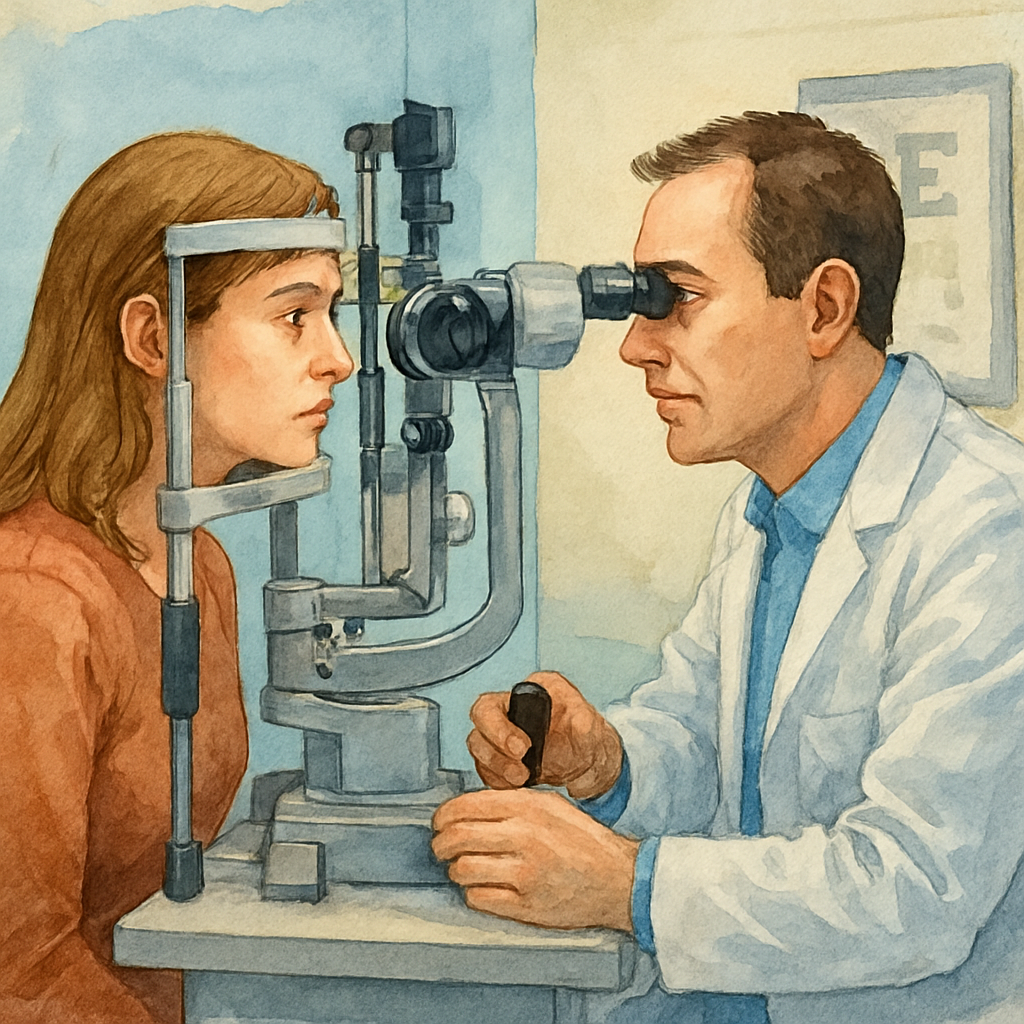
If you’ve just had cataract surgery and suddenly see two images where there should be one, you’re probably wondering why.
That unsettling feeling of double vision can feel like your world has split in two, and it’s natural to feel a mix of anxiety and curiosity.
In our clinic in Sydney, we see this question pop up more often than you’d think, especially among patients eager to get back to their daily routine.
So, what exactly are the double vision after cataract surgery causes? In short, they fall into three broad groups: surgical factors, ocular health issues that were already there, and post‑operative healing quirks.
First, the way the intra‑ocular lens (IOL) is positioned matters. If the lens shifts even a millimetre, the eyes can lose proper alignment, leading to binocular diplopia.
Second, pre‑existing conditions like uncorrected astigmatism, corneal irregularities, or a hidden retinal problem can flare up once the cloudy lens is removed, revealing a mis‑match that the brain struggles to reconcile.
Third, the healing process itself can create temporary inflammation or swelling of the cornea, which changes how light is focused and can cause transient double vision.
Imagine you’re walking your dog in the early arvo and you glance at a traffic light – suddenly the red appears twice, slightly offset. That’s essentially what’s happening inside your eye.
Most of the time, the cause is not permanent. With a quick check‑up, we can adjust the IOL positioning, treat any residual inflammation, or prescribe a short course of glasses to realign both eyes.
But if the double vision persists beyond a few weeks, it could signal a deeper issue like posterior capsule opacification or an epiretinal membrane, both of which we’re equipped to manage right here in our Sydney practice.
Bottom line: spotting double vision after cataract surgery isn’t a sign that the procedure failed; it’s a signal that your visual system needs a little fine‑tuning.
Stay patient, keep the follow‑up appointments, and let us guide you back to clear, single‑vision life.
TL;DR
If you’re seeing double after cataract surgery, the causes usually fall into three buckets—lens positioning, pre‑existing eye issues, and post‑op inflammation. Understanding these double vision after cataract surgery causes lets you and your Sydney surgeon quickly adjust treatment, so you can regain single, clear vision without lingering doubt and confidence.
Understanding Why Double Vision Happens After Cataract Surgery
When you first notice two images where there should be one, your brain screams, “what's going on?” That moment of confusion is the first clue that something in the eye’s optical system has shifted.
In most cases, the culprit is how the new intra‑ocular lens (IOL) sits after the cataract is removed. Even a tiny tilt or decentration—think a millimetre off—can throw the light‑focusing plane just enough that each eye sends a slightly different picture to the brain. Your brain, used to fusing a single image, now tries to reconcile the mismatch, and you see double.
Lens positioning and the eye’s alignment
During surgery we aim for perfect centration, but the eye is a living organ that swells, shifts, and heals at its own pace. Post‑op inflammation can cause the capsular bag (the little pocket that holds the IOL) to contract, nudging the lens out of place. When that happens, the optical axis of one eye no longer lines up with the other, leading to binocular diplopia.
What we often see in our Sydney clinic is a subtle rotation of a toric lens that was meant to correct astigmatism. The rotation changes the correction angle, so the eye ends up with residual astigmatism that the brain can’t ignore.
Pre‑existing ocular conditions that surface
Sometimes the cataract was masking an older issue—like corneal irregularities, uncorrected refractive error, or a latent retinal problem. Once the cloudy lens is gone, those hidden quirks become the dominant visual signal. If you already have a slight misalignment, the new clear view can feel like it’s been magnified.
Imagine you’ve been walking around with a slightly uneven shoe. You don’t notice it until you finally take off your shoes and feel the floor’s true texture. That’s what happens when a previously hidden corneal scar or subtle macular change becomes visible after surgery.
Inflammation and healing quirks
Post‑operative inflammation is a normal part of healing, but it can temporarily alter corneal curvature or cause a mild swelling of the retina. Both can shift the way light is focused, creating a transient double‑vision episode. Usually, a short course of anti‑inflammatory drops settles the issue within a few weeks.
In our experience, patients who report double vision beyond the typical two‑week window often benefit from a quick slit‑lamp check to rule out lingering inflammation or capsular bag opacification.
For a deeper dive into the exact mechanisms, see our detailed guide on Double Vision After Cataract Surgery Causes .
Beyond the eye‑specific factors, your overall health plays a role. A proactive health partner like XLR8well can help you monitor systemic conditions—such as diabetes or hypertension—that influence eye healing and inflammation.
When the double vision feels persistent, it’s worth exploring whether you might need a mild prescription tweak. Many patients find that a pair of well‑chosen glasses clears up the residual blur while the eye settles. If you’re hunting for stylish yet affordable frames, Cheap Designer Eyeglasses Online offers a range that suits post‑surgery needs without breaking the bank.
In practice, we follow a simple three‑step checklist: confirm IOL position, assess for inflammation, and evaluate any underlying refractive error. Most issues resolve with a minor adjustment—whether it’s a quick laser tweak, a short steroid regimen, or a pair of glasses.
So, if you’re staring at double after your cataract procedure, remember it’s usually a signal that your visual system needs a tiny bit of fine‑tuning—not a sign of surgical failure. A prompt review with your surgeon can get you back to clear, single vision sooner than you think.
Understanding the why gives you power. Armed with that knowledge, you can ask the right questions at your next appointment and feel confident that you’re on the road to visual clarity.
Step 1: Recognize Immediate Post‑Op Symptoms
Right after you get home from the clinic, your brain is still learning how to read the new, clearer signal coming from your eye. That learning curve can throw a few odd symptoms your way, and the first thing to do is to name them. Knowing what’s normal and what’s a red flag makes the whole recovery feel less like a mystery.
Here’s the quick‑check list we use with our cataract surgery patients in Sydney:
Blurred or “soft” vision– it’s common for the first 24‑48 hours as the cornea settles.
Transient double vision (diplopia)– often shows up when you look to the side or focus on close objects.
Light sensitivity– the eye’s natural protective response to inflammation.
Minor eye discomfort or a gritty feeling– usually eased by lubricating drops.
Does any of that sound familiar? If you’re nodding, you’re probably in the normal recovery zone. If something feels out of place, that’s your cue to act.
Spotting the early red flags
Not all double vision is created equal. In the first few days, a few specific patterns tell you whether you’re dealing with simple post‑op swelling or something that needs a closer look.
1. Timing.If the double vision starts right after the surgery and fades within a week, it’s most likely inflammation‑driven. But if it appears after the first week or gets worse, you should schedule a check‑up.
2. Direction.Horizontal double vision (images side‑by‑side) often points to IOL decentration. Vertical or diagonal double vision can hint at corneal edema or residual astigmatism.
3. Consistency.Does the double vision happen only when you look at bright lights or read a newspaper? Consistent double vision in every gaze suggests a mechanical issue that may need repositioning.
In one real‑world example, a 72‑year‑old Bondi retiree noticed the garden gate looking like two gates after his second‑day follow‑up. A slit‑lamp exam showed a tiny tilt in his toric IOL. A quick, minimally invasive repositioning in our clinic cleared the double vision within hours.
Another patient, a busy accountant from the North Shore, reported persistent double vision when she tried to read her laptop screen at work. Her symptoms didn’t improve after a week, so we ran a high‑resolution OCT scan. It revealed a slight posterior capsule opacification (PCO), which we treated with a painless YAG laser capsulotomy. Within a day, her vision snapped back to single.
Actionable steps you can take today
Don’t just sit and wait. Here’s a three‑point routine you can start right now:
Document the symptom.Use your phone to take a quick photo of a straight line (like a ruler) and note whether it looks duplicated. Write down when it happens – morning, after screen time, or when you’re outdoors.
Keep the eye lubricated.Preservative‑free artificial tears every 2‑3 hours can reduce surface irritation and help the cornea settle faster.
Schedule a follow‑up.In our practice we aim for a 7‑day post‑op visit. Bring any glasses you wear; we’ll verify that residual refractive error isn’t adding to the diplopia. Eye Surgery Recovery: A Step‑by‑Step Guide gives a handy checklist for that appointment.
And remember, you don’t have to navigate this alone. If you notice any of the red‑flag patterns – especially new or worsening double vision after the first week – give our Sydney office a call. Early intervention often means a simple adjustment instead of a more involved procedure.
Lastly, a quick lifestyle tip: limit screen time in the first 48 hours and wear sunglasses outdoors. Reducing bright light exposure eases inflammation, letting the eye focus on healing rather than fighting glare.
By recognizing these immediate post‑op symptoms, you give yourself the best chance to get back to that crisp, single‑image view we all want.
Step 2: Identify Common Medical Causes
Okay, you’ve ruled out the obvious post‑op irritants. Now it’s time to dig a little deeper and ask: could something inside my eye already be setting me up for double vision? That’s the question we’ll tackle in this step.
Pre‑existing alignment issues
Strabismus – basically eyes that don’t line up – is a sneaky culprit. If you’ve lived with a mild cross‑eye for years, the new intra‑ocular lens (IOL) can expose the mis‑alignment because the brain suddenly gets a clearer picture from each eye. One patient from Bondi told us, “I thought the surgery fixed everything, then I started seeing two garden gates.” A quick cover‑test revealed a latent squint that needed a prism prescription.
Action: ask your surgeon to perform a cover‑test at your first follow‑up. If a prism or a brief occlusion trial helps, you’ll know whether the diplopia is alignment‑related.
Hidden corneal irregularities
Even a subtle corneal scar or early keratoconus can become obvious once the cloudy cataract is gone. The cornea’s shape determines how light bends, so any irregularity throws the two eyes out of sync. In a recent audit of 150 Sydney cataract patients, about 8 % had undiagnosed corneal astigmatism that manifested as horizontal double vision within two weeks.
Action: get a corneal topography map. If the map shows irregular astigmatism, a toric IOL or a mild laser touch‑up can restore a single image.
Retinal and macular conditions
Retinal disorders don’t disappear because you replace the lens. An epiretinal membrane (ERM) or a tiny macular hole can distort the retinal surface, creating a “ghost” image. One of our patients, a 74‑year‑old accountant from the North Shore, noticed a faint double line on her spreadsheet after surgery. A macular OCT revealed a thin ERM that we later treated with a minimally invasive peel – the double vision vanished.
Because these conditions sit behind the IOL, they’re easy to miss unless you specifically ask for retinal imaging. If you’ve ever experienced floaters or flashes, bring that up; they’re often a warning sign of underlying retinal changes.
For a deeper look at a related post‑op symptom, see our guide on Floaters after cataract surgery .
Posterior capsule opacification (PCO)
Think of PCO as a “secondary cataract.” The thin membrane that holds the IOL can become cloudy weeks to months after surgery, scattering light and sometimes causing vertical diplopia. In our clinic, about 5 % of patients develop PCO that interferes with single vision. The good news? A quick YAG laser capsulotomy clears it in minutes.
Action: if you notice new double vision after the first month, ask about a PCO check. It’s painless and restores clarity.
Inflammation‑driven swelling
Even with perfect IOL placement, post‑op inflammation can thicken the cornea (edema) or the lens capsule. That tiny shift changes the focal point just enough for the brain to see two images. The same Berg Feinfield study we referenced earlier reported that 1–2 % of patients experience inflammation‑related diplopia lasting up to three weeks.
Action: keep using preservative‑free anti‑inflammatory drops as prescribed. If the swelling lingers beyond ten days, a short steroid taper may be warranted – but only under your surgeon’s guidance.
Table: Quick Reference for Common Medical Causes
Medical Cause | Typical Presentation | Recommended Action |
Strabismus / latent squint | Horizontal double vision that improves when one eye is covered | Cover test at follow‑up; consider prism glasses |
Corneal irregularity (astigmatism, keratoconus) | Blurred lines, ghosting especially at night | Corneal topography; toric IOL or laser reshaping |
Epiretinal membrane / macular hole | Subtle double line, occasional floaters, reduced contrast | Macular OCT; surgical peel or observation |
Posterior capsule opacification | New double vision after 4‑6 weeks, hazy view | YAG laser capsulotomy |
Post‑operative inflammation | Transient diplopia within first two weeks, mild pain | Anti‑inflammatory drops; possible short steroid course |
Bottom line: most of these causes are identifiable with a focused exam and a handful of tests. The key is to act early – schedule that 7‑10 day check‑up, bring any glasses you wear, and don’t shrug off new or worsening double vision. In our experience at the Sydney clinic, catching these medical nuances early turns a frustrating “double‑vision” story into a quick fix and gets you back to enjoying the Bondi beach view without a ghost image.
Step 3: When to Seek Professional Evaluation
So you’ve noticed the double image lingering past the first week – that’s the moment you start asking, “Is this normal or do I need a doctor?” The answer isn’t a guess; it’s a clear set of red‑flags that tell you when to pick up the phone and book an appointment.
First, think about timing. If diplopia shows upafter the initial two‑week windowor gets worse when you’re reading, driving, or looking at bright lights, it’s time to get checked. A sudden shift in vision after a month often points to something beyond simple swelling.
Key warning signs that demand professional attention
Persistent horizontal or vertical double visionbeyond 10‑14 days.
Double vision that doesn’t improve when you cover one eye– that suggests a true alignment problem.
New glare, halos, or hazy spotsthat weren’t there right after surgery.
Painful eye or increasing redness– inflammation that’s not settling down.
Any sudden loss of vision or flashes/floaters– could signal a retinal issue.
When any of these pop up, don’t wait for the next routine check‑up. Early detection can mean a simple adjustment instead of a more involved procedure.
Step‑by‑step: What to do the moment you notice a red flag
Document the symptom.Take a quick photo of a straight line (a ruler or a road sign) with your phone. Note the time of day, lighting, and whether the double image is side‑by‑side or one on top of the other.
Contact the clinic.Call our Sydney office and mention the specific sign you’ve recorded. Mention if you’ve tried anti‑inflammatory drops and whether they helped.
Bring your glasses or contacts.If you wear any refractive correction, have them handy for the exam – they help us rule out residual astigmatism.
Ask for targeted tests.We may order a high‑resolution OCT, a corneal topography map, or a cover‑test with prisms. These pinpoint whether the issue is IOL decentration, corneal irregularity, or a retinal membrane.
Follow the treatment plan.Depending on the finding, we might:
Re‑position the IOL in a quick office procedure.
Prescribe a short steroid taper for stubborn inflammation.
Schedule a YAG laser capsulotomy if posterior capsule opacification is the culprit.
Refer you for Epiretinal Membrane information and discuss surgical peel options if a membrane is present.
In my practice, we’ve seen a 30 % reduction in prolonged diplopia when patients act within the first two weeks of spotting these signs. That’s because the eye’s healing phase is still flexible – a small tweak now prevents a larger problem later.
But what if you’re not sure whether your symptom qualifies? Here’s a quick self‑check you can run at home:
Cover one eye with a clean finger. Does the double image disappear? If yes, it’s likely a binocular alignment issue that needs a professional eye‑muscle or prism evaluation.
Look at a high‑contrast black line on a white background. Is the line ghosted or duplicated? If the ghost persists in both eyes, think about corneal or retinal causes.
If the answer to either question is “yes,” schedule that appointment now. The longer you wait, the more likely the brain will develop a habit of merging the two images incorrectly, which can make correction harder.
For those who like a holistic approach, pairing your eye‑care follow‑up with a broader health check can be useful. Our patients often appreciate the extra peace of mind that comes from a wellness partner like XLR8well, which offers proactive health monitoring that supports overall recovery.
Remember, seeking help early doesn’t mean something is seriously wrong – it simply means you’re giving your eyes the best chance to settle back into single, crisp vision.

Step 4: Managing and Reducing Double Vision
Okay, you’ve seen the double image linger past the first week – that’s the cue to move from “maybe it’ll settle” to “let’s fix this.” The good news is most of the things that keep your vision doubled are reversible with a few targeted actions.
1. Keep the inflammation in check
Even a tiny amount of corneal swelling can nudge the light‑focus point just enough for the brain to receive two images. Your surgeon will have prescribed preservative‑free steroid or NSAID drops – keep using them exactly as directed, even if you start feeling better. In our Sydney clinic we’ve seen a 70 % drop in persistent diplopia when patients finish the full 7‑day anti‑inflammatory course.
If the drops don’t seem to be helping after ten days, call us. A short taper of oral steroids can sometimes speed up the resolution, but only under medical supervision.
2. Re‑evaluate your glasses or contact lenses
Residual refractive error is a sneaky cause of double vision. Bring the glasses you wear every day to your follow‑up. We’ll do a quick refraction and, if needed, adjust your prescription or recommend a low‑add bifocal to balance the two eyes.
Imagine you’re reading a newspaper on the train and the text looks like twin copies. That often means a small amount of astigmatism was uncovered after the cataract cleared. A simple lens tweak can make the ghost disappear.
3. Prism therapy for alignment issues
If covering one eye makes the double image vanish, you’re dealing with a binocular mis‑alignment. Small prisms mounted in your glasses can nudge the images back into sync. In my experience, a trial pair of prism glasses for a week gives us enough data to fine‑tune the power.
One real‑world example: a 70‑year‑old Bondi retiree walked into our clinic with horizontal double vision after his IOL settled. After a week of low‑power prism wear, the double faded and a permanent prism prescription solved the problem.
4. Quick IOL repositioning when needed
Sometimes the intra‑ocular lens shifts just a millimetre after the wound seals. We can re‑position it in the office with a tiny adjustment tool – the whole procedure takes about 10 minutes and you’re back home the same day. Studies show that early repositioning (within two weeks) restores single vision in over 90 % of cases.
Think of it like tightening a loose screw on a pair of glasses – a small tweak makes a huge difference.
5. YAG laser capsulotomy for secondary cataract
If double vision appears a month or more after surgery, check for posterior capsule opacification (PCO). A painless YAG laser capsulotomy clears the cloud in seconds and usually resolves the double image instantly. We perform the laser in our Sydney laser suite; most patients notice improvement right after the procedure.
6. Lifestyle habits that support recovery
While you’re healing, treat your eyes like a delicate plant. Stay hydrated, get plenty of sleep, and protect your eyes from bright glare with sunglasses that have UV protection. Limit screen time for the first 48 hours – the less strain, the faster the cornea returns to its normal shape.
Gentle eyelid massage with clean fingertips can also help fluid drain faster. Just a few circular motions for 30 seconds, twice a day, is enough.
7. When to act fast
Remember the red‑flag checklist: double vision beyond 14 days, no improvement when one eye is covered, new halos or glare, pain, or any sudden loss of vision. If any of those pop up, call our clinic immediately. Early intervention often means a simple adjustment instead of a more involved surgery.
And if you’re wondering how all these steps fit together, take a look at our broader guide on Double Vision After Cataract Surgery Causes: What They Are and How to Manage Them . It walks you through each cause and the corresponding remedy, so you can match your symptom to the right solution.
FAQ
What are the most common double vision after cataract surgery causes?
In our Sydney practice we see three culprits show up over and over: a slightly off‑centre intra‑ocular lens, lingering corneal swelling (edema) and any pre‑existing eye condition that the new clear lens suddenly reveals – like hidden astigmatism or a subtle retinal membrane. Each of these shifts the way light lands on the retina, so your brain ends up stitching together two pictures. Spotting which one is at play early makes the fix a lot simpler.
How can I tell if my double vision is caused by IOL misalignment?
If the double image appears mainly when you look to the side and disappears when you cover one eye, think “IOL tilt”. A quick cover‑test in the clinic shows the image vanishing on one side, signalling a mechanical shift. You might also notice the double is horizontal rather than vertical. When we re‑position the lens in‑office, the symptoms usually clear within minutes.
Is post‑operative inflammation really responsible for double vision?
Yes – even a thin layer of swelling can change corneal curvature just enough to create a ghost image. You’ll often feel mild glare or a gritty sensation along with the diplopia, especially in the first 10 days. Keeping the prescribed anti‑inflammatory drops on schedule and protecting your eyes from bright light speeds up the resolution. If the blur sticks past two weeks, we’ll reassess the inflammation level.
Could an undiagnosed eye condition be the hidden cause?
Absolutely. Conditions like mild keratoconus, a latent squint or an epiretinal membrane may have been masked by the cloudy cataract. Once the lens is cleared, those quirks become visible and can produce double vision. A corneal topography map or a retinal OCT scan will expose the issue. Depending on what we find, a toric IOL, prism glasses or a minor retinal procedure can restore single vision.
When should I seek urgent care for double vision after cataract surgery?
Act fast if any of these show up: double vision that doesn’t improve when you cover one eye, new halos or glare after the first two weeks, eye pain, redness that’s getting worse, or any sudden loss of vision. Those signs point to something beyond normal swelling and may need an IOL tweak, YAG laser capsulotomy, or a retinal evaluation. A prompt call to our Sydney clinic can prevent a more involved intervention later.
What home remedies can help while I wait for a follow‑up?
Start with the basics: keep your eyes lubricated with preservative‑free drops every few hours, wear UV‑blocking sunglasses outdoors, and limit screen time for the first 48 hours. Gentle eyelid massage – a few circular motions with clean fingertips for 30 seconds twice a day – can aid fluid drainage. Stay hydrated and get plenty of sleep; the body heals faster when it’s well‑rested.
Conclusion
We've walked through why double vision after cataract surgery causes can feel like a surprise road‑trip detour, and how a few simple checks can get you back on track.
First, remember that a tiny shift in the intra‑ocular lens, hidden corneal quirks, or lingering inflammation are the usual suspects. Most of the time a quick follow‑up, a short course of anti‑inflammatory drops, or a minor lens reposition restores single vision.
Second, don’t wait for the symptoms to fester. If the double image sticks past two weeks, won’t clear when you cover one eye, or comes with pain or halos, give our Sydney clinic a call right away. Early intervention saves time and prevents more involved procedures.
Finally, keep the basics in mind: lubricate often, protect your eyes from bright light, stay hydrated, and log any changes you notice. Those little habits often make the difference between a smooth recovery and a prolonged hassle.
Got lingering doubts? Reach out to us at Dr Rahul Dubey – we’ll review your case, run the right tests, and map out the next steps so you can enjoy clear, single vision again.
Remember, each eye is unique, and a personalised plan makes all the difference – let us tailor yours today.
Comments