


Retina Surgery Aftercare Guide: What to Expect and How to Heal
- Apr 8
- 9 min read
Getting ready for retina surgery can feel scary. You may wonder how long you’ll be in pain or when you can drive again. This retina surgery aftercare guide will walk you through every step from the moment you leave the operating room to the weeks after you’re back to normal life. You’ll learn how to protect your eye, manage meds, know what activities are safe, spot warning signs, and keep your vision strong for years.
Here is the data we used to shape this guide. It comes from a review of 15 after‑care items across 9 trusted sources.
Aftercare Item | Timing (Days Post‑Op) | Key Action | Best For | Source |
Eye patch or shield | Day 0–1+ | Wear eye patch or shield over the eye | Best for immediate eye protection | healthy.kaiserpermanente.org |
Phone screening for severe pain | Early postoperative period (POD1) | Participate in a phone interview with a technician to screen for severe pain or discomfort | Best for early pain monitoring | pmc.ncbi.nlm.nih.gov |
IOP‑lowering eye drop | When IOP ≥30 mm Hg at POD1 | Apply prescribed IOP‑lowering eye drop | Best for intraocular pressure control | pmc.ncbi.nlm.nih.gov |
Head positioning | First few days | Keep head in prescribed position | Best for head alignment | healthy.kaiserpermanente.org |
Maintain face‑down or sideways position | days to weeks | Stay face down or sideways | Best for retinal tamponade positioning | aao.org |
Have companion while walking | days to weeks | Have someone with you when you walk around | Best for safe ambulation | aao.org |
Obtain recovery equipment | days to weeks | Ask ophthalmologist for information about renting or buying recovery equipment | Best for equipment planning | aao.org |
Avoid air travel | while the gas remains | Avoid air travel | Best for travel safety (short term) | pmc.ncbi.nlm.nih.gov |
Avoid flying and high‑altitude activities | until gas bubble is gone | Avoid flying, mountain travel, high altitudes, scuba diving | Best for altitude avoidance (long term) | aao.org |
Return to normal activities | Weeks 2–4 | Resume normal activities | Best for activity resumption | healthy.kaiserpermanente.org |
Follow‑up appointments | Until follow‑up | Attend all follow‑up appointments | Best for follow‑up compliance | healthy.kaiserpermanente.org |
Emergency care | Any time | Call 911 | Best for emergency response | healthy.kaiserpermanente.org |
Urgent doctor contact | Now | Call your doctor immediately | Best for urgent medical contact | healthy.kaiserpermanente.org |
Monitor health changes | Ongoing | Watch for changes and contact doctor | Best for ongoing health watch | healthy.kaiserpermanente.org |
Contact retina specialist if symptoms arise | while healing | contact your retina specialist immediately | Best for specialist alert | retinautah.com |
Quick Verdict:The standout aftercare step is the 30‑day travel avoidance , "Avoid flying and high‑altitude activities" , because it prevents gas‑bubble complications. For early safety, follow the phone‑pain screen on POD 1 and the IOP‑lowering eye drop when pressure hits 30 mm Hg. Skip generic advice without warning signs, like "Resume normal activities" without timing specifics.
Step 1: Immediate Post‑Op Care
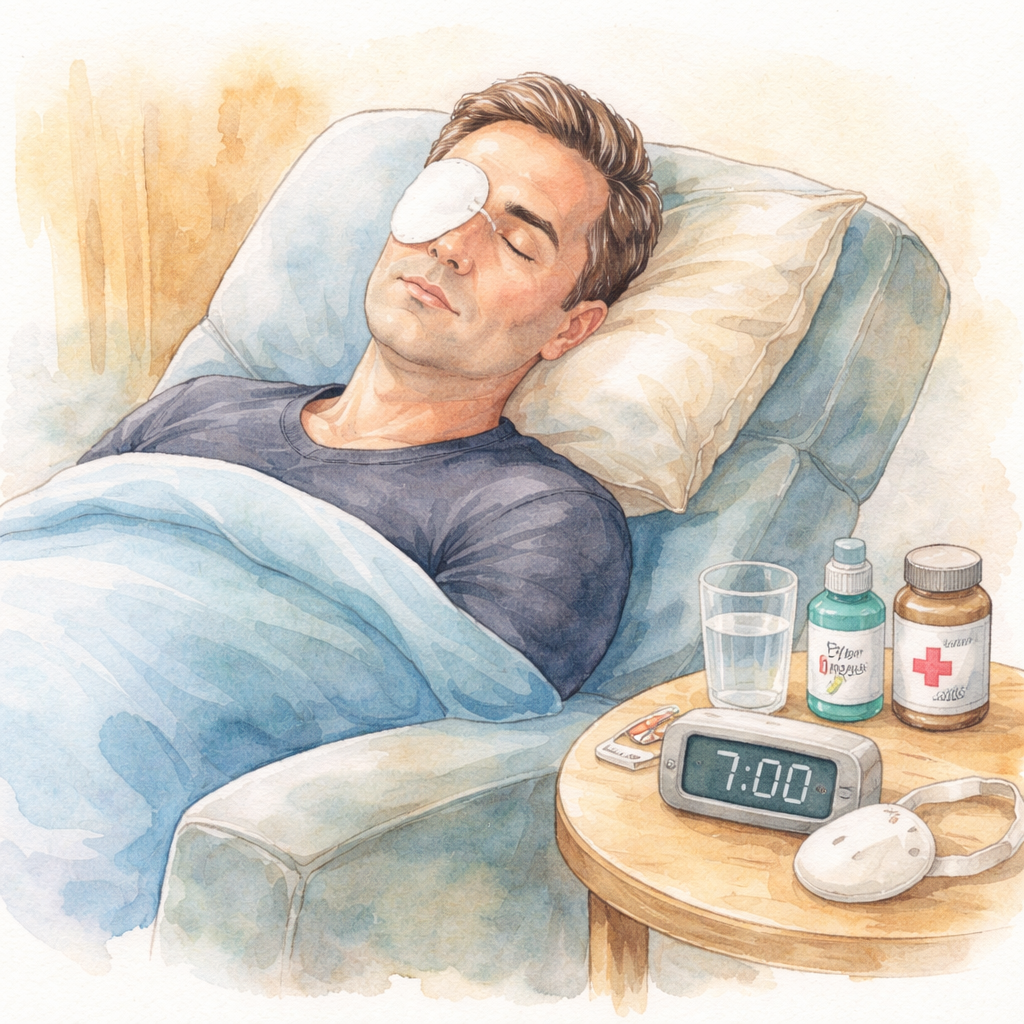
Right after you leave the OR, the first thing you need is a safe spot to rest. Set up a small table next to the bed. Put a phone alarm, a bottle of preservative‑free drops, and a soft pillow on it. The alarm will remind you to check your head position every hour. The drops keep the eye surface smooth. The pillow stops your neck from hurting while you stay face‑down.
Most surgeons ask you to keep the bubble pressing on the retinal break for at least six hours a day during the first three days. Use a recliner that lets you lean forward. If you don’t have one, stack firm pillows so your forehead rests on them while you watch TV.
For superior breaks, stay upright with a slight forward lean. For temporal breaks, tilt your head to the opposite side. If you have multiple breaks, switch sides every two hours. This “steam‑roller” tip is described in Dr Dubey’s specialist care guide.
Write down the drop schedule on a whiteboard. For example, “8 am , antibiotic, 12 pm , steroid, 4 pm , lubricating.” Seeing the list helps you stick to it.
Never rub the eye. It feels gritty, but rubbing can move the bubble and cause a new tear.
Keep a small notebook. Jot down anything odd , flashes, new shadows, sudden pain. A note like “Day 2, 10 am , mild floaters, no pain” gives your doctor clear info.
According to the Alberta health page, patients who log symptoms catch problems earlier.
Plan your first follow‑up for day 7. The surgeon will do an OCT scan to see if the retina stays attached. If you notice any red‑flag signs before then, call the clinic right away.
Here’s a real‑world example. James, 47, used a recliner and phone alarms. He kept a symptom log. His surgeon tweaked the laser plan on day 5, and James saw clear vision by day 9. Maya, 61, only remembered the position at night. She had a brief re‑detachment on day 6 and needed extra laser work.
Remember: consistency, a simple log, and a comfy set‑up can shave days off recovery.
What to Expect: Pneumatic Retinopexy Recovery Time Explained offers a deeper look at positioning tips.
External resources that reinforce these steps include Alberta Health’s after‑care guide and the AAO’s face‑down recovery page .
Step 2: Managing Medications & Pain
Medication helps keep infection down and inflammation low. Your doctor will likely give you three types of drops: an antibiotic, a steroid, and a lubricating drop.
Set a timer on your phone for each drop. The alarm sounds, you open the bottle, and you place a drop on the lower eyelid. Then you close the eye for a minute to let the medicine soak in.
Take any prescribed oral pain meds with food. This reduces stomach upset. If the label says “take every 6 hours,” write it on the same whiteboard you used for drops.
Watch for side effects. A steroid drop can raise eye pressure. If you feel a sudden ache or see a halo around lights, note it and call the clinic.
Many patients ask if they can use over‑the‑counter pain relievers. Ibuprofen is usually safe, but aspirin can affect clotting after surgery. Ask your surgeon before adding any new pill.
Here’s a quick tip: keep the drop bottles in the same spot on the bedside table. A consistent spot means you won’t waste time hunting for them.
James’s log showed a slight rise in pressure on day 3. His surgeon added an IOP‑lowering drop as the table recommends. The pressure fell quickly and his vision stayed clear.
Macular Hole page explains why steroids are part of many retina surgery plans.
For more on medication schedules, see the Alberta health site and the AAO’s medication guidance .
Step 3: Activity Restrictions & Vision Recovery
After the first few days, you can start gentle activities. Light walking is fine. Heavy lifting is not. Lifting more than five kilograms can raise pressure inside the eye and push the bubble.
Driving is a big question. Most surgeons say you can drive once your vision is clear enough to read signs and you have had a follow‑up confirming the retina is attached. That usually happens around day 7 to day 10.
Air travel is the biggest restriction. The research shows that avoiding flying until the gas bubble is gone , up to 30 days , prevents pressure spikes that can move the bubble.
Sports are another area to watch. Swimming and contact sports should wait until the surgeon gives the green light. The water pressure can disturb the eye.
Here’s a simple table that sums up the do’s and don’ts.
Activity | When it’s safe | Why it matters |
Light walking | Day 2 onward | Low pressure change |
Driving | After day 7 check‑up | Clear vision needed |
Heavy lifting | After bubble shrinks < 25 % | Prevents pressure spikes |
Air travel | After bubble gone (up to 30 days) | Altitude changes raise IOP |
Swimming | After surgeon ok | Water pressure can shift bubble |
Research published in 2024 shows that patients who kept a face‑down position for at least seven days had lower rates of retinal displacement.
James kept the position for nine days and saw his vision sharpen by week 2. Maya stopped early and needed an extra laser session.
Fundus Picture Explained explains how doctors watch the retina heal with OCT scans.
External reading includes RetinaToday’s review of head positioning and GS Eye Clinic’s 2025 technique roundup .

Step 4: Follow‑Up Appointments & Warning Signs
Follow‑up visits are the safety net of your retina surgery aftercare guide. Your first check‑up is usually on day 7. The doctor will look at the retina with OCT, check eye pressure, and ask about any symptoms you logged.
Second visit often lands around day 14. By then the bubble has shrunk and the doctor can see if the retina stays attached.
Later visits at week 4 and month 2 make sure the eye is stable. If you have any new flashes, a curtain‑like shadow, or sudden pain, call the clinic right away , even if it’s before the scheduled visit.
Red‑flag signs to watch for:
Sudden increase in floaters
New dark shadow that spreads
Sharp eye pain
Rapid loss of central vision
When you call, have your symptom log ready. The nurse may ask for the time you first noticed the change.
James’s log helped his surgeon spot a tiny fluid pocket on day 5, and they treated it before it grew.
Retinal Vein Occlusion , Intravitreal Injections page shows how doctors monitor pressure after injections, which is similar to post‑surgery checks.
For extra reading, the Alberta health site offers a checklist for emergency signs here , and the AAO page gives a quick guide to post‑op warning signs here .
Step 5: Lifestyle Adjustments & Long‑Term Eye Health
Even after the bubble is gone, your eye still needs care. Keep using preservative‑free drops if you feel dry. Dryness can make the eye itchy, and rubbing can cause trouble.
Nutrition matters. Foods rich in omega‑3, lutein, and zeaxanthin support retinal cells. Try salmon, walnuts, and leafy greens a few times a week.
Stay hydrated. Drinking at least two liters of water a day keeps the eye’s surface moist.
Regular eye exams are a must. Even if you feel fine, a yearly check‑up can catch problems early, especially if you have diabetes or high blood pressure.
Exercise is good, but keep it gentle for the first six weeks. Walking, light yoga, and stretching are safe. Avoid heavy weight lifting until the surgeon says it’s okay.
If you wear contacts, switch to glasses for at least six weeks. Contacts can irritate the healing surface.
James added a daily omega‑3 supplement and kept his water intake high. By week 6 his eye felt less dry and his vision stayed steady.
Services page lists the full range of follow‑up care options Dr Dubey offers, including imaging and nutrition counseling.
External advice from the Billings Retina guide stresses the same points , keep the eye protected, watch for changes, and eat a balanced diet here . The AAO also notes that avoiding high‑altitude travel reduces pressure spikes here .
Conclusion
This retina surgery aftercare guide has walked you through the first hours, the medication routine, the activity limits, the follow‑up schedule, and the lifestyle habits that protect your vision long term. The key takeaways are simple: set up a recovery station, keep a symptom log, follow the positioning plan, avoid high‑altitude travel until the gas bubble is gone, and stay in touch with your surgeon.
By following these steps you give your eye the best chance to heal cleanly and regain clear sight. If you have any questions, reach out to Dr Rahul Dubey’s clinic in Sydney. They can help you fine‑tune the plan for your unique case.
FAQ
What is the typical timeline for returning to normal activities?
Most patients feel ready for light tasks like reading and short walks by day 7 to day 10. Heavy lifting and vigorous exercise should stay off for at least two weeks. Full driving often resumes after the first follow‑up confirms the retina is still attached and vision is stable, usually around week 2.
When does the gas bubble usually disappear?
The bubble shrinks gradually over three to six weeks. You’ll still see a faint shadow on an eye exam around week 3, but most of it is gone by week 5. Vision keeps improving as the bubble fades, and many people notice sharp reading distance by the fifth week.
How often should I have follow‑up appointments?
Typical visits are on day 7, day 14, week 4, and a final check at month 2. Each visit includes an OCT scan, eye‑pressure check, and a review of your symptom log. If any red‑flag signs appear, call the clinic right away and ask for an earlier slot.
What warning signs mean I need urgent care?
Look for a sudden increase in floaters, a new curtain‑like shadow that spreads, sharp eye pain, or a rapid loss of central vision. Any of these symptoms could signal a re‑detachment or a pressure spike and require immediate attention.
Can I travel by plane during recovery?
No. The data shows that flying before the gas bubble is fully absorbed , up to 30 days , can raise intra‑ocular pressure and move the bubble. Wait until your surgeon confirms the bubble is gone before you book any air travel.
Do I need to keep using eye drops after the first two weeks?
Yes, especially if you feel dry or if your doctor prescribed a steroid or IOP‑lowering drop. Continue the drops as directed until your final follow‑up says it’s safe to stop. Stopping early can cause inflammation or pressure changes.
How does diet affect my recovery?
Foods rich in omega‑3 fatty acids, lutein, and zeaxanthin support retinal health. Aim for salmon, walnuts, chia seeds, and leafy greens a few times a week. Stay hydrated with at least two liters of water daily. Good nutrition helps the retina repair and reduces dry‑eye symptoms.
When can I go back to contact lenses?
Most surgeons recommend switching to glasses for at least six weeks after surgery. This gives the surface of the eye time to heal without the irritation that contacts can cause. After the clearance visit, you can discuss a safe return to contacts.
Comments