


Monofocal IOL vs Multifocal IOL: Which Lens Fits Your Vision Needs
- Feb 4
- 15 min read
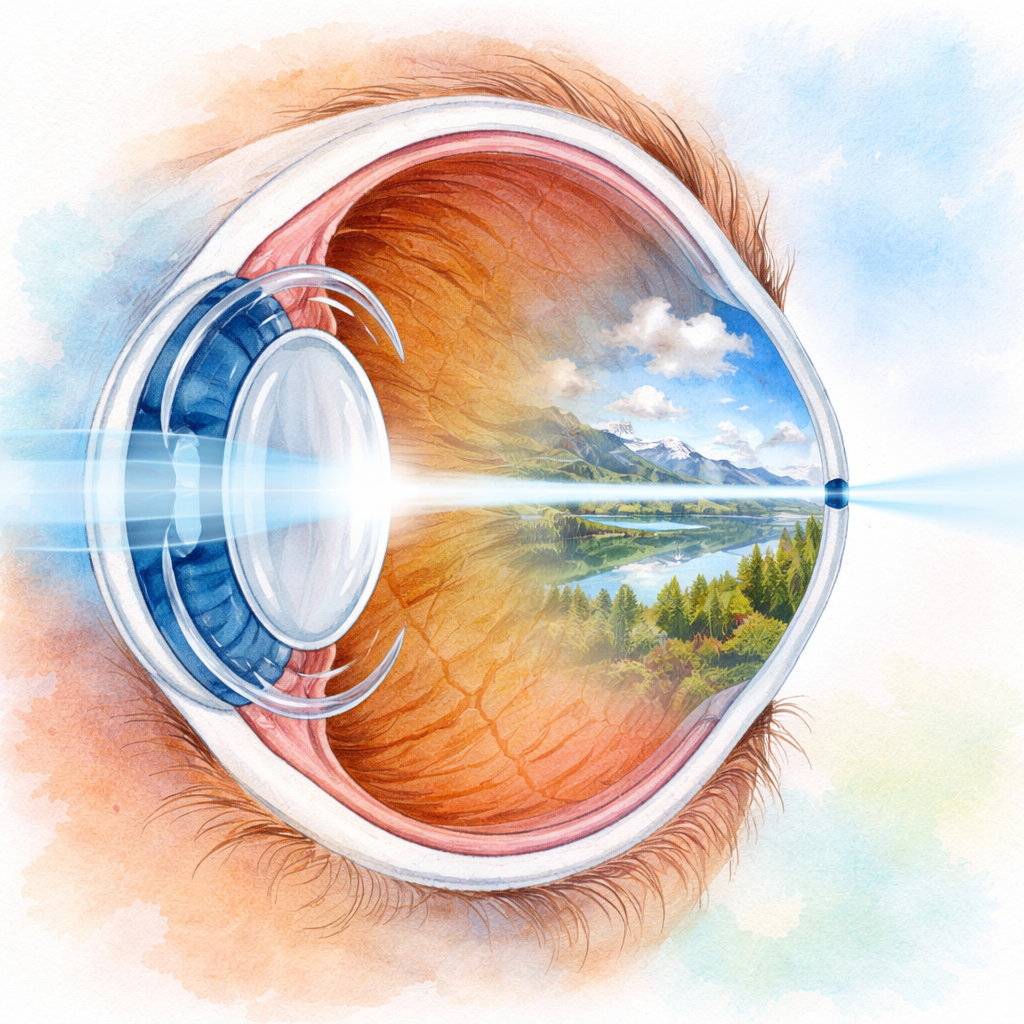
Picture this: you’ve just been told you need cataract surgery, and the surgeon mentions “IOL options.” Suddenly you’re faced with a jargon‑filled choice – monofocal iol vs multifocal iol – and you’re not sure which will let you get back to reading the Sunday paper or playing cricket on the beach.
We’ve heard that story a lot in our Sydney clinic – patients walk in worried about “will I still need glasses?” and leave relieved when they understand how each lens type shapes their daily life.
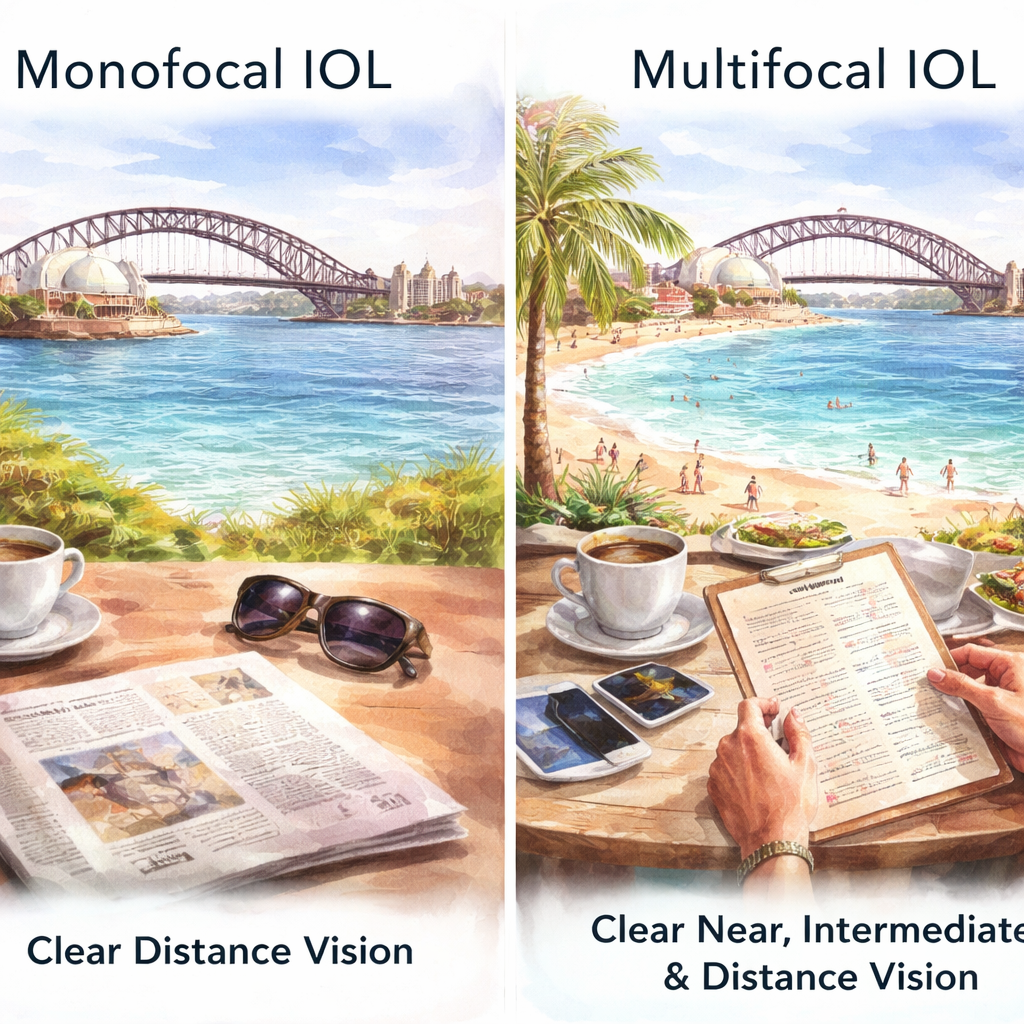
Monofocal IOLs are designed to give you clear vision at one distance – usually distance vision. Think of them like a single‑focus camera lens; you’ll see the road ahead crisply, but you’ll likely still need reading glasses for close work.
Multifocal IOLs, on the other hand, split the light into zones for near, intermediate and distance vision – kind of like a pair of glasses built into the eye. Many patients report waking up and being able to read the newspaper without reaching for spectacles.
If you weigh the pros and cons side by side, the trade‑off usually comes down to visual sharpness versus the need for glasses. Our detailed guide Monofocal vs Multifocal IOLs: Which is Right for You? breaks down the data – studies show about 70% of multifocal recipients achieve functional near vision, while 90% of monofocal patients hit perfect distance acuity.
Take Margaret, a 68‑year‑old retiree from Bondi who loves knitting. She chose a monofocal lens because she values crisp distance vision for her morning walks. After surgery she still uses a magnifier for fine threads, but she’s thrilled to drive at night without halos.
Contrast that with James, a 45‑year‑old tech consultant who spends his afternoons in front of multiple screens. He opted for a multifocal IOL to ditch reading glasses during long video calls. He reports a slight glare at night, but the convenience outweighs the minor side‑effect.
So, how do you decide? Here are three quick steps: 1) List the activities you do most – driving, reading, computer work. 2) Ask yourself how much you’re willing to rely on glasses after surgery. 3) Bring this list to your consultation and discuss visual expectations with your surgeon.
Remember, visual recovery isn’t just about the lens – overall health matters. Partnering with a proactive health program like XLR8well can help you optimise nutrition and blood sugar levels, which studies link to smoother healing after cataract procedures.
Bottom line: there’s no one‑size‑fits‑all answer. By understanding the trade‑offs, mapping them to your lifestyle, and discussing them openly with a Sydney‑based eye surgeon, you’ll walk out of the clinic with a clear plan for the vision you want.
TL;DR
Choosing between monofocal iol vs multifocal iol hinges on whether you prefer crystal‑clear distance vision with occasional glasses or balanced near‑and‑far sight without lenses, especially if you spend many hours on screens.
Map your daily tasks, discuss expectations with a Sydney eye surgeon, and let the right lens type keep your world in focus.
Understanding Monofocal IOLs
When you first hear "monofocal IOL" it can feel like another piece of medical jargon. Imagine walking into a Sydney café, ordering a flat white, and the barista says "your coffee will be single‑origin today." That's the idea – a single focus, a single strength, designed to give you crystal‑clear distance vision.
Monofocal lenses are like that single‑origin bean. They’re engineered to deliver sharp sight at one set distance, usually far enough for driving, watching the surf, or spotting the Opera House from the harbour. The trade‑off? Close‑up tasks – reading a menu, knitting, scrolling on your phone – often still need a pair of glasses or a reading aid.
So, why would anyone pick a monofocal lens when there are "multifocal" options that promise everything? The answer often comes down to predictability. In our experience at our Sydney clinic, patients who value consistent, high‑contrast distance vision – especially those who spend a lot of time outdoors or on the road – tend to be happiest with a monofocal IOL.
Here’s what I mean: a monofocal lens gives you a clean, glare‑free view of the world, which can be a game‑changer for night driving. You won’t have the subtle halos that some multifocal wearers mention. That reliability can be crucial for retirees who love sunset walks along Bondi or professionals who need to spot details at a distance during meetings.
How monofocal lenses work
During cataract surgery, the clouded natural lens is removed and replaced with a thin, clear acrylic implant. The surgeon measures the length of your eye and selects a lens power that aligns the focal point with your retina for distance vision. Think of it as swapping out a blurry window pane for a brand‑new, perfectly sized one.
Because the lens has a single focal point, the brain doesn’t have to juggle multiple images. That simplicity often translates to sharper contrast sensitivity – a subtle but noticeable benefit when you’re looking at signage on a highway or reading a street name sign at night.
But what about reading? Most people end up using a low‑powered reading glasses or a magnifier after surgery. It’s not a flaw; it’s just how the optics are set up. And for many, that’s a small price to pay for flawless distance vision.
Choosing the right power
We start with a thorough eye exam, measuring corneal curvature, axial length, and overall eye health. From there, we calculate the ideal lens power. If you’re a golfer who wants a clear view of the fairway but can tolerate reading glasses at home, a slightly under‑corrected monofocal might be the sweet spot.
Sometimes patients opt for “mini‑monovision” – one eye gets a monofocal set for distance, the other is tuned a bit closer for near tasks. It’s a compromise that preserves the benefits of monofocals while reducing dependence on glasses for reading.
Want a deeper dive into the pros and cons? Check out our Monofocal IOLs: Benefits and Limitations page for a full breakdown.
Beyond the eye, your overall health can influence how smoothly you recover. Programs like XLR8well focus on proactive health monitoring, which can help optimise nutrition and blood sugar levels – factors that research links to faster visual recovery after cataract surgery.
Watching a short video can demystify the surgical process and show you exactly what to expect on the day of your operation.
In case you’re curious about how visual aids can complement your lens choice, many patients find that a simple, stylish reading pair from a local optometrist does the trick. The key is to view the monofocal IOL as a foundation for distance clarity, then layer on the tools you need for near work.
Lastly, if you’re thinking about creating patient‑education videos for your own practice, you might consider a partner like Forgeclips . They specialise in producing clear, engaging medical videos that can help your patients understand options like monofocal versus multifocal lenses without feeling overwhelmed.
Understanding the mechanics, benefits, and trade‑offs of monofocal IOLs empowers you to make a confident decision that fits your lifestyle – whether that means crisp views of the harbour or a reliable pair of reading glasses for your favourite book.
Understanding Multifocal IOLs
Imagine looking at the Sydney Harbour Bridge in the morning and being able to read the plaque on the pylons without reaching for your glasses. That’s the promise of a multifocal intra‑ocular lens (IOL) – a tiny piece of optics that tries to give you clear vision at distance, intermediate, and near all at once.
So, how does a lens manage three focus zones inside a single eye? Think of it like a camera that uses concentric rings – the outer ring handles far‑away scenes, the middle ring takes care of things like computer screens, and the innermost ring brings a book right into focus. The lens splits incoming light into these zones, and your brain learns to pick the right one for the task at hand. It’s a bit of a learning curve, but most people adapt within a few weeks.
Does that sound too good to be true? In our Sydney clinic we’ve seen a range of outcomes. Some patients walk out of surgery and instantly read a menu at Bondi’s café; others notice a subtle halo around streetlights on a night drive. The key is understanding your visual priorities and how much you’re willing to tolerate those trade‑offs.
How multifocal lenses actually work
A multifocal IOL contains two or more optical powers etched into the same piece of silicone or acrylic. During phacoemulsification we remove the clouded natural lens, fold the IOL, and slide it into the capsular bag. Once it unfurls, the concentric rings stay perfectly aligned with your retina, letting light hit different zones depending on where you’re looking.
Research from 2024‑2025 shows that roughly 70 % of multifocal recipients achieve functional near vision (better than J1 on a near card) without glasses. At the same time, about 90 % hit 20/20 or better for distance. Those numbers are encouraging, but they also hide a spectrum of individual experiences – some people report glare or reduced contrast, especially in low‑light conditions.
Real‑world scenarios you might recognise
Take Sam, a 52‑year‑old software developer from Surry Hills. He spends most of his arvo debugging code and his evenings reading tech blogs. Sam chose a multifocal lens because he wanted to ditch the bifocals that kept sliding down his nose. Six weeks post‑op he told us he could scroll through pull‑requests on his phone without squinting, but he does notice a faint halo when he drives past the Harbour Bridge at dusk. He says the convenience outweighs the minor night‑time effect.
Contrast that with Elaine, a 70‑year‑old retired teacher who loves knitting and gardening. She opted for a multifocal lens hoping to read knitting patterns without glasses. While she now sees her garden beds clearly, she finds the glare on her reading lamp a bit distracting. Elaine decided to add a tiny reading add‑on lens for her non‑dominant eye – a tweak we call “mixed‑vision” that reduces the halo while preserving most of the near benefit.
Enhanced multifocal designs and what the data says
Manufacturers keep iterating. The latest generation, often branded as “extended‑depth‑of‑focus” (EDOF) or “enhanced” multifocals, adds a smoother transition between zones. A meta‑analysis of 38 studies published in 2025 reported a 0.07 logMAR improvement in intermediate vision for these newer lenses, while distance acuity stayed stable. In plain language, patients notice a clearer view of a laptop screen at arm’s length without a noticeable dip in distance sharpness.
For a deeper dive into the specifics of these lenses, check out our guide Multifocal IOLs for Enhanced Vision . It walks you through the optical physics, the latest models, and which eye‑shapes tend to respond best.
Deciding if multifocal is right for you
1.Audit your daily visual tasks.Write down how many hours you spend on a phone, computer, reading, or outdoor activities. If near work dominates, a multifocal may save you a pair of glasses.
2.Gauge your tolerance for visual phenomena.Halos, glare, and occasional reduced contrast are part of the package. Ask yourself if you can live with them on weekend drives or in dimly lit rooms.
3.Consider a staged approach.Some surgeons implant a monofocal in the dominant eye and a multifocal in the other – “blended vision” – to balance distance clarity with near independence.
4.Talk specifics with your surgeon.We’ll discuss target refraction, potential micro‑monovision, and whether an enhanced design fits your corneal shape.
5.Plan for post‑op adaptation.Your brain needs a few weeks to re‑wire visual processing. Consistent lighting, good nutrition, and staying hydrated speed up recovery.
And don’t forget to look after the people who take care of you – surgeons, nurses, and staff. Clinicians themselves benefit from tools that support wellbeing. The e7D‑Wellness platform, for example, offers evidence‑based assessments to help eye‑care professionals manage burnout e7D‑Wellness . Keeping the whole team healthy ultimately means better outcomes for you.
Monofocal vs Multifocal IOLs – Key Differences
Ever wonder why the surgeon pulls out two different lenses from the same little box? It’s because each lens is built for a specific visual goal. Monofocal IOLs give you razor‑sharp distance vision – think of looking down the Pacific Highway on a clear morning. Multifocal IOLs try to juggle distance, intermediate and near all at once, like a Swiss‑army knife for your eye.
So what does that mean for you, day‑to‑day? With a monofocal lens you’ll notice an immediate “wow” when you see the surf clearly from the balcony. The trade‑off is that a reading glass will still be part of your routine for the newspaper or knitting patterns. Multifocal lenses, on the other hand, aim to let you pick up a paperback at the beach without reaching for spectacles, but they split the incoming light into several zones.
Here’s the practical side‑by‑side: distance acuity with monofocals routinely lands at 20/20 or better – most of our Sydney patients report feeling like they’ve swapped their old glasses for a high‑definition TV. Multifocals also hit 20/20 for distance in about 90 % of cases, but the same studies show a 0.07 logMAR boost in intermediate vision compared with older designs. In plain English, you’ll see a laptop screen or a menu board a little clearer without squinting.
Near vision is where the gap opens up. Roughly 70 % of multifocal recipients achieve functional near vision (better than a J1 near‑card) without glasses, according to 2026 data. Monofocals, by design, still need a low‑plus add for reading. If you spend most of your arvo on a computer and only need a quick glance at a recipe, a multifocal may feel like a win. If you love long drives and want the most predictable distance clarity, the monofocal stays king.
But there’s a catch: visual phenomena. Multifocals can introduce halos, glare, or a slight dip in contrast, especially in low‑light settings like a night‑time stroll along Bondi. Monofocals rarely produce those side‑effects, which is why many retirees who value night‑driving safety stick with them. Your tolerance for these quirks often decides which lens feels right.
Adaptation is another hidden factor. Your brain has to re‑wire itself to choose the right focus zone with a multifocal. Most people settle in within three to four weeks, but a handful need a bit more time – plenty of coffee and bright daylight help. Monofocals, being a single‑focus solution, usually feel “normal” straight away.
Below is a quick visual cheat‑sheet that sums up the main trade‑offs. Use it as a reference when you sit down with your surgeon.
Feature | Monofocal IOL | Multifocal IOL |
Primary focus distance | One fixed distance (usually far) | Multiple zones – far, intermediate, near |
Typical distance acuity | ~90‑95 % achieve 20/20+ | ~90 % achieve 20/20+ |
Near‑vision independence | Reading glasses usually required | ~70 % functional near without glasses |
Night‑time visual side‑effects | Rare | Possible halos, glare, reduced contrast |
Adaptation period | Immediate | 3‑4 weeks for brain to adjust |
When you’re weighing the options, ask yourself three quick questions: How much do you rely on glasses for reading right now? How sensitive are you to night‑time glare? And are you comfortable giving your brain a few weeks to learn a new focus system? The answers will steer you toward the lens that fits your lifestyle.
If you want a deeper dive into the potential visual side‑effects of multifocal lenses, our detailed page on Side Effects of Multifocal IOLs walks you through the science and real‑world experiences without any jargon.
And here’s a short video that breaks down the optics in plain language – it’s the kind of chat you’d have over a coffee while waiting for the pre‑op scan.
Bottom line: there’s no one‑size‑fits‑all answer. By matching your daily visual tasks, night‑time comfort level, and willingness to adapt, you can choose the IOL that lets you enjoy Sydney’s sunshine without constantly reaching for glasses.
Choosing the Right IOL for Your Lifestyle
We get it – you’re not just choosing a lens, you’re choosing how you’ll spend your days after surgery. Will you be strolling along Bondi with a clear horizon, or scrolling through code on a laptop without ever pulling out glasses? The answer hinges on the rhythm of your life.
First, sit down with a notebook and jot three things you do every day that rely on your eyes. For many Sydney residents it’s a morning drive to the office, an afternoon coffee on a patio, and an evening of reading the news on a tablet. Those three moments become the compass for picking between a monofocal IOL and a multifocal IOL.
Match the lens to your daily visual tasks
If distance vision dominates – think long drives on the Pacific Highway, spotting surf conditions, or watching a cricket match from the stands – a monofocal IOL usually delivers the sharpest, most predictable result. Studies show roughly 90 % of monofocal recipients achieve 20/20 or better distance acuity.
On the other hand, if you spend an hour or more a day at a screen, or you love reading the menu at a seaside café without digging for glasses, a multifocal IOL might be the better fit. Medical research shows that about 70 % of multifocal recipients achieve functional near vision without glasses.
Consider night‑time visual comfort
Halos and glare are the most common side‑effects of multifocal designs, especially when you’re driving past the Harbour Bridge after sunset. If night‑time driving is a non‑negotiable part of your routine, you may prefer the “halo‑free” experience of a monofocal lens.
That said, many patients adapt within a few weeks. The brain learns to select the right focus zone, and bright indoor lighting can help ease the transition.
Adaptation period and brain training
Monofocal lenses feel “normal” right away – there’s no learning curve. Multifocal lenses usually need 3–4 weeks for the brain to settle into the new focus system. If you have a busy schedule and can’t afford a downtime period, monofocal may be the safer bet.
But if you’re comfortable with a short adjustment phase, the payoff can be huge: reading, knitting, or checking a recipe without reaching for spectacles.
Practical steps to decide
1️⃣ List your top visual activities and rank them by importance.
2️⃣ Rate your tolerance for night‑time glare on a scale of 1–5.
3️⃣ Decide how many glasses‑free moments you’d like each day.
Once you have those answers, bring the list to your consultation. We’ll discuss target refraction, the possibility of micro‑monovision (a slight myopic target in one eye), and whether an enhanced monofocal or an extended‑depth‑of‑focus (EDOF) lens could bridge any gaps.
During the appointment, I like to point patients toward our Vision outcomes after cataract surgery guide. It breaks down the expected acuity for each lens type and shows real‑world results from our Sydney clinic.
Finally, think about post‑op support. Good nutrition, staying hydrated, and regular follow‑ups speed up visual recovery. If you’re already on a macula‑health program or receiving retinal injections, we can coordinate your cataract plan to keep everything in sync.
Bottom line: the right IOL is the one that aligns with how you live, not just how you see. By mapping your daily tasks, weighing night‑time comfort, and planning for a short adaptation window, you’ll walk out of the clinic ready for the Sydney sunshine without constantly reaching for glasses.
FAQ
What’s the main difference between a monofocal IOL and a multifocal IOL?
In a nutshell, a monofocal IOL is tuned for one distance – usually far‑vision – so you’ll see the road ahead crystal clear but still need reading glasses for close work. A multifocal IOL contains several concentric zones that split light for distance, intermediate and near tasks, letting many patients read a menu or scroll a phone without glasses. The trade‑off is that multifocals can introduce halos or glare, especially at night.
Can I get a monofocal lens that still helps with my near‑vision needs?
Yes. Many surgeons, including us at our Sydney clinic, offer “micro‑monovision” where the dominant eye gets a distance‑focused monofocal IOL and the non‑dominant eye is set a fraction myopic (‑0.75 D to ‑1.25 D). That tiny shift gives you functional intermediate vision for a laptop or tablet, while preserving the crisp distance view you need for driving. It’s a low‑risk way to reduce your dependence on reading glasses.
How do multifocal IOLs affect night driving?
Multifocal lenses split light, which can lower contrast and create halos around streetlights or the Harbour Bridge at dusk. Most patients adapt within three to four weeks, and the effect often diminishes as the brain learns to ignore the out‑of‑focus rings. If night‑time driving is a daily must‑do, a monofocal IOL or a blended‑vision approach (monofocal in one eye, multifocal in the other) may feel more comfortable.
Are multifocal IOLs suitable for someone with early macular degeneration?
Generally, we steer clear of multifocals for macular‑related conditions. Because these lenses reduce the amount of light reaching the retina, they can worsen contrast loss in an already compromised macula. In those cases, a monofocal or a carefully calibrated monovision strategy preserves the maximum light throughput, which is crucial for maintaining the best possible vision despite the disease.
What does the latest research say about visual outcomes for monofocal vs multifocal lenses?
A recent meta‑analysis cited by the American Academy of Ophthalmology found that about 90 % of monofocal recipients achieve 20/20 distance vision, while roughly 70 % of multifocal patients achieve functional near vision without glasses. Both groups hit similar distance acuity, but multifocals show a modest gain in intermediate vision – around 0.07 logMAR – at the cost of a higher incidence of halos.
How long does it take to adapt to a new IOL, and what can I do to speed up recovery?
Monofocal lenses feel “normal” immediately after surgery. Multifocal lenses usually need three to four weeks for the brain to learn which focus zone to use. Help the process by keeping lighting consistent, staying well‑hydrated, and maintaining a balanced diet rich in omega‑3s and antioxidants – especially important if you’re also undergoing macula‑health programs. Regular follow‑ups let us tweak any residual refractive error early.
What should I ask my surgeon during the consultation to decide between monofocal and multifocal IOLs?
Start with your top three daily visual tasks and your tolerance for night‑time glare. Ask how each lens type would perform for those activities, whether micro‑monovision or blended vision is an option, and what the out‑of‑pocket cost difference looks like. Don’t forget to discuss any existing eye conditions, such as astigmatism or early macular changes, because they can tip the balance toward a monofocal solution.
Conclusion
So, after walking through the pros and cons, where does that leave you in the monofocal iol vs multifocal iol debate? If crystal‑clear distance vision is your top priority and you don’t mind a pair of reading glasses now and then, a monofocal lens will likely feel like a safe, predictable choice.
But if you spend most of your arvo on a screen, love reading the paper on the beach, and can tolerate a few halos on night drives, the multifocal option can give you that glasses‑free freedom you’ve been dreaming about.
Quick checklist
List your three most common visual tasks.
Rate your tolerance for night‑time glare (1‑5).
Decide how many glasses‑free moments you want each day.
Bring that list to your next appointment. In our Sydney clinic we’ll match your answers to the lens that fits your lifestyle, whether it’s a classic monofocal, a micro‑monovision tweak, or an enhanced multifocal design.
Remember, the right IOL isn’t just about numbers, it’s about how you’ll feel looking out over Bondi or scrolling through code tomorrow. Take a moment now to jot down your priorities, and let’s turn that list into clearer vision.
Ready to schedule a consultation? Reach out and let us help you pick the lens that keeps your world in focus.
Comments