


After Intravitreal Injection Home Care Checklist: What You Need to Do
- Feb 17
- 19 min read
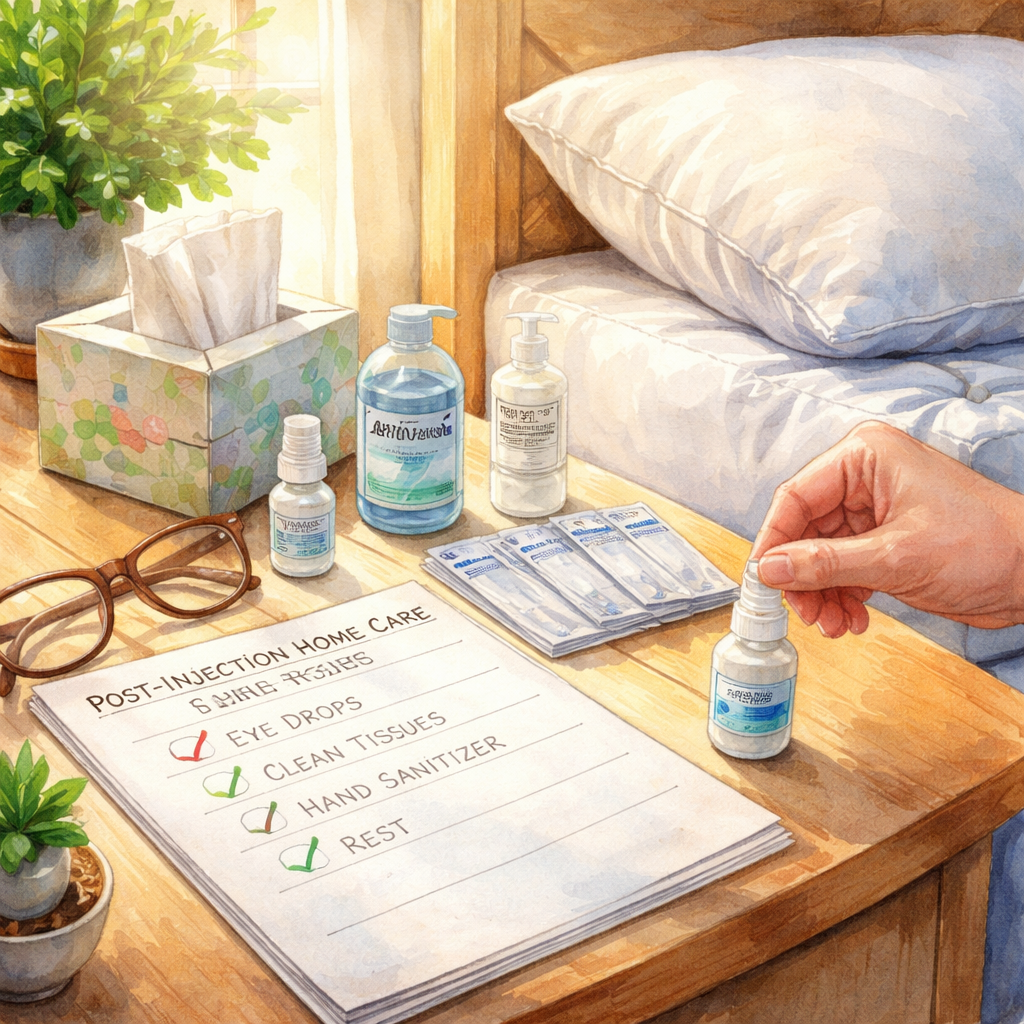
You’ve just sat in the clinic, felt that tiny pinch as the retina surgeon in Sydney administered your intravitreal injection, and now you’re wondering what comes next.
That moment of relief—your eye is bandaged, the doctor gives you a quick thumbs‑up, and you step out onto the bustling streets of Sydney—can feel a bit like stepping into the unknown.
In our experience, the first 24 hours are the most critical. Simple things like keeping the eye clean, avoiding heavy lifting, and watching for any sudden changes can mean the difference between a smooth recovery and a trip back to the clinic.
Here’s a quick snapshot of the after‑intravitreal injection home care checklist you can start using tonight: • Don’t rub or press the eye; the injection site is still delicate. • Apply the prescribed antibiotic drop exactly as directed—usually three times a day for a week. • Wear sunglasses outdoors to shield the eye from bright light and wind.
Real‑world example: Sarah, a 68‑year‑old retiree from Bondi, told us she felt a gritty sensation the morning after her first anti‑VEGF shot. By gently rinsing with sterile saline as we advised and keeping her head slightly elevated while sleeping, the discomfort faded within a few hours and she avoided an unnecessary emergency visit.
Another tip many of our patients overlook is hydration. Drinking plenty of water supports overall ocular health and helps the medication disperse evenly across the retina. Aim for at least eight glasses a day, and consider a splash of orange juice for a vitamin C boost.
If you notice any of the red‑flag signs—sharp pain, sudden vision loss, increasing redness, or a fever—pick up the phone right away. These symptoms, while rare, can signal an infection that needs prompt treatment.
And remember, you don’t have to navigate this alone. Our clinic provides a printable version of the checklist, and you can review the details on our Vitreous Floaters | Dr Rahul Dubey page, which walks you through each step with photos and FAQs.
So, take a deep breath, follow the simple steps, and give your eye the quiet it needs to heal. You’ll be back to enjoying the harbour view in no time.
TL;DR
If you’ve just had an intravitreal injection, follow this after intravitreal injection home care checklist: keep the eye clean, avoid rubbing, use prescribed drops, stay hydrated, and watch for red‑flag symptoms. Doing so helps you recover smoothly, prevents infection, and gets you back to enjoying Sydney’s harbour view without unnecessary trips to the clinic.
Step 1: Gather Your Supplies
After you've had an intravitreal injection, the first 24 hours set the tone for healing. Think of this as assembling your eye care toolbox before you start following the home care plan. Here's how to gather what you need so you can focus on resting your eye without a million little shopping trips.
First, gather your meds. If your eye drops were prescribed, keep the bottle(s) within easy reach and set a timer to remind you to dose on schedule. You may have an antibiotic drop, a steroid drop, and perhaps a lubricating preservative-free drop. Prescriptions are specific, so follow the directions exactly, even if you’re tempted to skip a dose because you feel fine.
Next, line up your clean, unbleached tissues, a small clean cup or sterile saline (if your clinician recommended rinsing), and a clean, dry surface to work on. A shallow dish or tray helps keep everything tidy and reduces the chance you’ll accidentally knock over small bottles while you’re tired.
Comfort matters, too. A soft pillow or rolled towel to prop your head slightly can ease night-time discomfort. Sunglasses are essential outdoors because bright light and wind can irritate the healing eye. A comfortable chair with a good recline and a note pad to log how you feel over the first 48 hours make the day easier to navigate.
Hydration and general rest round out the basics. Keep a water bottle nearby and plan for a quiet day at home so you won’t be tempted to bend, strain, or lift heavy objects. If you’re tracking symptoms, a simple notebook or notes app helps you spot patterns like increasing redness or unusual discharge early.
And if you want a quick read on what to watch for after an injection, you can check our Vitreous Floaters page for context on common post-injection sensations. Vitreous Floaters | Dr Rahul Dubey has concise explanations you’ll find helpful as you settle in at home.
Here’s a compact supplies list you can print or save: antibiotic/steroid drops (as prescribed), preservative-free lubricating drops, sterile tissues, a small tray, a bottle of sterile saline if advised, a soft head-elevating pillow, sunglasses, a comfortable chair, a notepad, a water bottle, and a phone or charger within easy reach. In 2026, we’ve refined this list to emphasize simple, at‑home recovery rather than complex setups.
Now, take a breath. You’ve got a plan, and you’re not alone. Next, I’ll walk you through the dosing schedule and signs that mean you should call the clinic right away.
If you find yourself curious about the day‑to‑day reality of eye healing after injections, the video above gives practical reminders that align with this checklist. Remember to keep the discussion open with your clinician if anything feels off. And for a quick visual reference, imagine a small watercolor still life: a glass dropper, a clean tissue, and a sunlit window—gentle, orderly, and calm, just like your healing process.
That’s the start. For more depth on post-injection symptoms, read the Vitreous Floaters page to connect.
Step 2: Monitor the Injection Site
Okay, you’ve got your kit ready and you’ve applied the first drop. The next thing you’ll hear in your head is, “What now?” The answer is simple: keep an eye on that tiny puncture point and listen to what your eye is telling you.
First off, give the area a quick visual check every few hours for the first 24‑hours. You’re looking for three things: redness that spreads beyond the tiny bandage, swelling that feels like a soft pillow under the skin, and any discharge that isn’t just the normal tear film.
Redness that stays localized to the edge of the bandage is normal – it’s just a little inflammation from the needle. If the redness starts to creep up the white of your eye (the sclera) or turns a deep, angry pink, that’s a red flag. Same with swelling: a mild puffiness that eases after a night’s sleep is fine, but a firm, rapidly expanding bump could mean an infection is brewing.
Now, let’s talk about pain. A dull ache for a few hours after the injection is expected. It should gradually fade. Sharp, stabbing pain that returns or gets worse after the first day is something you should call your clinic about right away.
Here’s a quick checklist you can tape to your mirror:
Check for new redness – note if it spreads.
Feel for any hard, warm lumps.
Count any unexpected watery or sticky discharge.
Rate your pain on a 1‑10 scale; note any spikes.
Does that feel like a lot? Maybe. But having a concrete list stops the “I’ll just wait and see” habit, which can cost you a trip back to the surgeon.
Real‑world example: James, a 72‑year‑old retiree from Manly, noticed a faint orange‑tinged spot near his injection site on day two. He thought it was just a bruise, but when the spot grew and the eye felt gritty, he called us. We caught a mild infection early, prescribed a short course of antibiotics, and his vision stayed on track.
Another story: Priya, a 58‑year‑old teacher dealing with macular degeneration, kept a simple diary. She wrote down the time she took each drop and any sensation she felt. When she saw a pattern of increasing floaters the third day after an anti‑VEGF shot, she mentioned it at her follow‑up. It turned out the medication was distributing a bit slower than usual, and we adjusted the dosing schedule – no vision loss, just a smoother recovery.
So, how do you actually monitor?
Step‑by‑step monitoring routine
1.Morning glance: Before you even get out of bed, look at the eye in a well‑lit bathroom mirror. Use a clean fingertip to gently lift the eyelid – never press on the injection site.
2.Mid‑day check: After lunch, repeat the visual scan. If you’re using a saline rinse, a gentle splash can clear any debris and give you a clearer view.
3.Evening recap: Before you sleep, note any changes in a small notebook or on your phone. This is also the perfect time to apply any prescribed antibiotic drops – three times a day, as instructed.
If you notice any of the following, act fast:
Sharp pain that spikes after the initial 24‑hour window.
Rapidly spreading redness or a new yellow‑green discharge.
Sudden loss of vision, even a few lines on a chart.
Fever above 38°C (100.4°F) accompanied by eye discomfort.
Give your clinic a call immediately – most offices have a dedicated after‑care line for injection patients.
For a deeper dive on common side effects, see our Eye Injection Side Effects guide . It breaks down what’s normal versus what needs urgent attention, and it’s written with the same Sydney‑based eye‑care perspective you’re getting from us.
Lastly, remember to stay hydrated and get plenty of rest. Your body does the heavy lifting of healing when you’re sleeping, and adequate water helps the medication spread evenly across the retina.
Monitoring isn’t a chore – it’s your safety net. Treat it like a quick coffee break: short, focused, and you’ll feel a lot better knowing you’ve got the situation under control.
Step 3: Manage Medications and Eye Drops
Okay, you’ve got your kit ready and you’re already checking the injection site. The next piece of the puzzle is making sure every drop lands exactly where it should, and that you stay on schedule without turning it into a chore.
First things first – understand the why. Antibiotic drops are your frontline defence against infection, while anti‑inflammatory drops keep that inevitable post‑injection swelling in check. Miss a dose, and you’re giving bacteria a tiny opening to move in, or you might end up with lingering blur that could have been avoided.
So, how do we turn “remember to use drops three times a day” into something you actually do? Here’s a quick mental model: treat each dose like a coffee break. You already set an alarm for your morning brew, right? Do the same for your drops – set three alarms, label them “Drop #1”, “Drop #2”, “Drop #3”. When the alarm goes off, you’re already in the habit loop: cue (alarm) → routine (apply drop) → reward (you feel a tiny cool sensation and check off the list).
Step‑by‑step drop routine
1. Prep the area.Wash your hands with soap, dry them on a clean towel, then give the bottle a quick swipe with a sterile wipe. This extra step is tiny but cuts down the chance of contaminating the tip.
2. Position yourself.Sit upright at a table, place a clean towel underneath, and keep a handheld mirror within arm’s reach. Tilt your head back just enough that the upper eyelid lifts naturally – no need to force anything.
3. Apply the drop.Pull down the lower eyelid gently to create a tiny pocket. Hold the bottle about 5 mm above the eye, squeeze once, and let the drop fall into the pocket. Close your eye for a few seconds and press gently on the inner corner with your finger – that helps the medication spread across the surface.
4. Record it.Open your reminder app or the small notebook you set up in Step 1 and tick off the dose. Seeing that check‑mark builds momentum for the next one.
That’s the core routine, but life throws curveballs. What if you’re on the couch watching the news and the alarm goes off? Don’t panic – keep your kit on the side table so you can grab it without getting up. If you miss a dose by a few hours, take it as soon as you remember, then resume the normal schedule. Don’t double‑dose to “catch up”.
Now, let’s talk about the types of drops you might have. Most patients receive an antibiotic (often a fluoroquinolone) and an anti‑inflammatory (like prednisolone or a non‑steroidal option). Some clinics also prescribe a lubricating drop to combat dryness caused by the anaesthetic. If you’re unsure which bottle is which, label them with colour‑coded stickers – a blue sticker for antibiotic, red for anti‑inflammatory, green for lubricant. Simple visual cues cut down confusion, especially when you’re a bit groggy after dinner.
Real‑world example: Maya, a 70‑year‑old from Coogee, told us she kept mixing up her drops for a couple of days. Once she added colour stickers, the mix‑up disappeared and her eye felt less irritated. Another patient, Tom, lives in the Blue Mountains and works on a construction site. He set his phone’s “repeat” alarm for every eight hours, which aligned perfectly with his three‑times‑daily schedule, so he never missed a dose even when he was on‑site.
What about side‑effects? A mild burning sensation is normal; it should fade within a few minutes. If you notice persistent redness, increasing pain, or a sudden decrease in vision, that’s a red flag. The Macular Society notes that pain or vision loss beyond 24 hours could signal endophthalmitis – a serious infection that needs urgent care. In those cases, call your clinic immediately. Retina Associates of Utah explains the warning signs you shouldn’t ignore .
For patients with diabetic retinopathy, managing medication can feel extra critical because blood‑sugar spikes can worsen inflammation. Our own Diabetic Eye Disease - Dr Rahul Dubey page breaks down how tight glucose control complements your eye‑drop schedule, and why it’s worth checking your sugar levels alongside your drop times.
Quick checklist you can print and tape to your mirror:
Wash hands, wipe bottle tip.
Set three daily alarms (e.g., 8 am, 2 pm, 8 pm).
Label bottles with colour stickers.
Apply drops using the pocket method.
Close eye, press inner corner for 5 seconds.
Mark the dose in your notebook or app.
Watch for burning > 5 minutes, spreading redness, or vision loss – call us right away.
Remember, consistency beats perfection. Even if you’re a bit off by an hour, you’re still protecting your eye. And if you’re ever in doubt, give our after‑care line a ring – we’re here to tweak the plan, not to judge.
Step 4: Follow Lifestyle Precautions
Okay, you’ve had the injection. The eye is healing, but your daily routine matters just as much as the meds you’re using. In our experience, tiny habits done consistently beat big efforts done rarely. So let’s get practical about lifestyle tweaks that fit real life in Sydney, from home to outings on the harbour.
First question you might be asking: what does “lifestyle precautions” actually mean for me? Think simple, doable steps that protect the healing site without turning recovery into a full‑time project. We’ll break it down into four real‑world areas you can act on today.
Hydration, diet, and overall healing
Water isn’t just for thirst. It helps your body distribute the medication and supports tissue recovery around the eye. Aiming for about eight cups a day is a good baseline, but if you’re active or it’s a hot day in Bondi, listen to your body and hydrate a bit more. If you’re snacking, choose eye‑friendly options—leafy greens, fatty fish like salmon, and nuts rich in omega‑3s can support surface health and circulation. You don’t need a fancy plan—just swap one snack for a veggie option and sip a glass of water before each meal.
For extra practical insight on how systemic health ties into post‑injection care, see our intravitreal injections guide here: Retinal Vein Occlusion - Vitreous Floaters - Dr Rahul Dubey .
And if you want formal guidelines while you’re learning, NHS offers straightforward aftercare guidance you can review: NHS aftercare guidelines .
Sleep, positioning, and nightly routines
Position matters. Elevate your head a bit when you sleep for the first 24–48 hours. An extra pillow or a small wedge can help reduce swelling and make waking up more comfortable. Does it change outcomes? Even small positioning tweaks can ease pressure around the healing site, which many patients notice in the morning after a night’s rest.
Keep activities gentle at first. If you’re in Sydney or sailing a weekend around the harbour, plan lighter evenings and avoid rubbing your eye before bed. A calm wind-down—dim lights, gentle reading, and a simple stretching routine—helps your body focus energy on healing rather than stress.
Activity, lifting, and environment
Avoid heavy lifting and high‑impact exercise for the first couple of days, then ease back in as you’re comfortable and your clinician has cleared you. If you’re at the gym, choose lower‑impact moves and avoid anything that strains the neck or face. Outdoors, protect your eye from wind, dust, and bright sun with sunglasses and a wide‑brim hat. If you’re doing DIY or outdoor tasks on a windy day, consider a scarf or wrap to shield your eye from debris.
Household chores? Simple tasks like cooking or light cleaning are fine, just don’t push yourself too hard. Your body is directing energy toward healing, not conquering a to‑do list. The idea is steady progress, not heroic effort every day.
Medication timing, follow‑ups, and safety signs
Continue the prescribed antibiotic and anti‑inflammatory drops exactly as directed. If you miss a dose by a few hours, resume the normal schedule—don’t double up. Keep a small notebook or an app handy to tick off each dose and note any sensations or changes in the eye. This record helps your follow‑up appointment go smoothly.
Red flags still matter. Increasing redness, new discharge, eye pain that intensifies, or sudden vision changes require prompt medical advice. If anything feels off, call your clinic’s after‑care line. It’s better to check early than wait for a problem to escalate.
If you’re curious about how other patients manage aftercare, many find that small, repeatable routines reduce anxiety and boost confidence in recovery. And remember: you’re not alone—our clinic supports you with clear guidelines and timely support during macula injections in Sydney.
Quick table: at‑a‑glance precautions
Aspect | What to Do | Why it Helps |
Hydration | Aim for 8 cups/day; adjust for activity | Supports medication distribution and tissue healing |
Sleep/Positioning | Elevate head with an extra pillow 24–48 hours | Reduces swelling and provides comfort on waking |
Activity | Avoid heavy lifting and high‑impact work for 2–3 days | Prevents strain and protects the injection site |
Eye protection | Sunglasses outdoors; shield from wind/dust | Reduces irritation and infection risk |
So, what’s the practical takeaway? Start with one small change today—hydration, a better sleep position, or a gentler activity plan. Then build on it over the next few days. Step by step, you’ll feel more in control and your eye will thank you for the care you give it.
Step 5: Schedule Follow‑Up Appointments
Now that you’ve got your kit, your drops, and your daily routine in place, the next piece of the puzzle is penciling in the follow‑up visit. Think of it as the checkpoint that tells you whether the eye is healing on schedule or if you need a quick tweak.
Does the idea of “another appointment” feel like a hassle? It’s actually the safest way to keep your recovery on track, especially after a macula injection in Sydney where we monitor subtle changes that can slip by unnoticed at home.
Why a follow‑up matters
During the post‑injection window, the retina specialist will check intra‑ocular pressure, look for signs of infection, and confirm the medication is spreading as expected. According to the American Society of Retina Specialists , a typical follow‑up is booked 4‑6 weeks after the injection to catch any early complications — and that timing is baked into the after intravitreal injection home care checklist.
How to lock in the date
1. Call the clinic’s after‑care line as soon as you leave the procedure room. Most of our patients get a provisional slot on the same call; if you miss it, a quick call the next day usually secures a spot.
2. Use your phone’s calendar app. Create a reminder titled “Retina follow‑up – Dr Rahul Dubey”. Add an alert 24 hours before, and another 2 hours before the appointment so you can prep your eye‑care kit.
3. If you prefer paper, jot the date on the same notebook you use for drop tracking. Write a short note next to the entry: “Check IOP, ask about redness”. The visual cue ties the follow‑up directly to your daily checklist.
Having the video on hand gives you a quick walk‑through of what to expect when you walk back into the clinic – from checking your vision chart to the brief eye‑pressure test.
What to bring to the appointment
A copy of your medication log – the same one you’ve been checking off each drop.
Any notes on new symptoms: when they started, how they feel, and if they’re getting better or worse.
Your list of questions. Common ones include “Do I need to adjust my drop schedule?” or “When is the next injection due?”
Insurance details or Medicare card, if you haven’t already provided them.
Being prepared shortens the in‑clinic time, and the doctor can focus on the eye exam instead of chasing down paperwork.
Pro tip: combine the follow‑up with other health checks
Many of our patients with diabetic macular edema use the same appointment to get a quick blood‑sugar review. If you have a chronic condition, ask the nurse if a basic check‑in can be added. It saves you a separate trip and gives the retina team a fuller picture of your overall health.
And remember, if you notice any red‑flag signs—sharp pain, sudden vision loss, or a fever—don’t wait for the scheduled date. Call the clinic’s urgent line immediately. The follow‑up is a safety net, not a replacement for emergency care.
Can’t make the in‑person slot? Many Sydney clinics now offer a brief tele‑health check‑in for patients who need a quick visual assessment or medication review. It’s not a full exam, but it lets the doctor spot obvious issues and decide whether you still need to come in.
When you get the confirmation email, reply with a quick note confirming you’ll attend. That simple reply reduces no‑show rates and keeps the clinic’s schedule tight.
Finally, mark the follow‑up on your calendar as a non‑negotiable event—like a dentist appointment or a bill due. Treat it as part of your recovery routine, not an optional extra.
Bottom line: lock the date, set reminders, bring your notes, and treat the visit as a regular part of your after intravitreal injection home care checklist. A smooth follow‑up means you can get back to enjoying the harbour view without unnecessary interruptions.
Step 6: Recognize Emergency Signs
You’re home after the intravitreal injection, and that moment of relief is mingled with a whisper of worry. It’s totally normal to wonder what truly counts as an emergency and what you can handle at home.
From our Sydney practice, recognizing emergency signs fast can be the difference between a smooth recovery and a setback. If you’re ever in doubt, trust your eye and act quickly.
So, what should you watch for? Let’s break it down and keep it practical.
What counts as an emergency
Sudden loss of vision in the treated eye or a rapid drop in sharpness
Severe, increasing eye pain that won’t ease with rest
Redness that spreads beyond the edge of the eye, or thick yellow to green discharge
Fever (38°C or higher) with eye discomfort
New flashes of light or a shower of floaters that changes vision noticeably
Eyelid swelling with warmth or redness that looks infected
These signs aren’t just annoying side effects. They can signal infections or other complications that need prompt care. If you notice any of them, treat it as urgent and don’t wait for a routine appointment.
Immediate steps if you notice signs
Stop what you’re doing, avoid rubbing or pressing on the eye, and wash your hands.
Call your clinic’s urgent line right away. If you can’t reach them, head to the nearest emergency department with a note about your recent injection.
Bring your drop log, list of symptoms, and the time you had the injection. This helps the on‑call team assess the situation quickly.
Don’t self‑medicate beyond what was prescribed. If you’re asked to use antibiotic or anti‑inflammatory drops, follow those directions exactly.
In our experience, having a clear plan and a readily accessible contact number reduces anxiety and speeds up care when something goes wrong.
When to seek care versus monitor at home
If the signs are dramatic or worsening within 24 hours, treat it as an emergency. If symptoms are milder but concerning and occur after the first day, call the clinic for guidance rather than waiting. In general, trust your gut—eye health isn’t something you want to gamble with.
Does this really apply to you after a macula injection in Sydney? Yes. These injections are delicate, and the eye needs careful monitoring in the days after the procedure. A quick check with your retina team is always wiser than hoping the issue will pass on its own.
What to tell the clinician
Be ready to describe exactly what happened, when the symptoms started, and how they’ve progressed. Note the time of your injection and any medications you’ve used since. This information helps clinicians decide whether you need an in‑clinic exam, a new treatment plan, or a fast‑track appointment.
Remember, you’re not alone in this. Our team is here to support you through the first days after a macula injection, and we’ve built a straightforward urgent‑care pathway so you’re not left wondering what to do.
Bottom line: if you notice red flags, act now. Your eye health matters, and quick action protects your vision as you continue recovery at home.
Conclusion
We've walked through every line of the after intravitreal injection home care checklist, from gathering supplies to spotting the tiniest warning signs. By now you should feel confident that the recovery process can be as smooth as a calm harbour morning.
So, what’s the next move? Grab your kit, set those three daily alarms, and keep a quick note of any change – even a fleeting blur or a hint of redness. Those few minutes each day are your safety net.
Remember, you’re not alone. If a symptom feels off, give our clinic a call right away. A quick chat can turn a potential emergency into a simple adjustment of drops or a brief check‑up.
In our experience, patients who stick to the checklist see fewer trips back to the office and get back to enjoying Sydney’s views faster. That’s the real payoff – less worry, more time for the things you love.
Got a question that slipped through the earlier steps? Drop us a message or ring the after‑care line. We’re here to fine‑tune your plan, not just to hand you a list.
Take a breath, follow the steps, and let your eye heal on its own terms. You’ve got this.
FAQ
What should I put in my after intravitreal injection home care checklist?
Start with the basics: eye‑drop bottles, a clean towel, hand sanitizer, a small mirror, and a timer or phone alarm. Add a notebook where you log each dose, any redness, pain level and the time you notice changes. Keep a list of emergency phone numbers on the same page. By having everything in one spot you’ll waste less time searching and more time focusing on healing.
How often should I apply the drops and record them?
Most clinicians prescribe three doses a day, so set three alarms – morning, afternoon and evening. When the alarm rings, wash your hands, wipe the bottle tip, apply the drop, then immediately tick the box in your notebook or mark it in your phone app. Consistency is more important than perfect timing, a dose a few minutes early or late won’t hurt, but missing a whole dose could leave a gap in protection.
What red‑flag symptoms mean I need to call the clinic right away?
Look for sudden loss of vision, sharp pain that gets worse, redness that spreads beyond the bandage edge, thick yellow‑green discharge, or a fever over 38 °C accompanied by eye discomfort. Any new flashes of light or a shower of floaters that changes how you see should also trigger an urgent call. When in doubt, give the after‑care line a ring – it’s better to be safe than to wait.
Can I use a regular kitchen timer or does my phone work better?
A kitchen timer is fine if you keep it where you store your kit, but most people find a phone alarm easier because it can repeat, snooze and send a notification to the lock screen. You can also label each alarm “Drop #1”, “Drop #2”, “Drop #3” so you know exactly which dose you’re about to take. Whichever you choose, make sure the sound is loud enough to hear from another room.
How do I keep my eye‑drop bottles sterile between uses?
Always wash your hands with soap and dry them on a clean towel before touching the bottle. Swipe the tip with a sterile wipe or a piece of gauze – a quick swipe removes any surface germs. Store the bottles upright in a small tray with a lid if possible, and avoid touching the tip to your eye, fingers or any surface. This simple habit cuts down the risk of infection without adding extra steps.
What’s the best way to remember my follow‑up appointment without missing it?
Enter the date in both your phone calendar and your paper notebook, then set a reminder 24 hours before and another two hours before the visit. Write a short note next to the entry – “bring drop log, ask about pain”. If you use a digital calendar, add an alert that also shows the clinic’s address so you can plan travel time. Treat the appointment like a non‑negotiable meeting; it’s part of the after intravitreal injection home care checklist.
Comments