


Understanding Vitrectomy Complications: What You Need to Know
- Nov 20, 2025
- 15 min read
Ever stared at the back of your eye on a screen and felt a knot in your stomach?
If you’re reading about vitrectomy complications, you’ve probably faced that moment. You’re hoping for a clear picture of what can go wrong, but also want reassurance that you’re not alone.
Let’s be honest: eye surgery is delicate. Even with a skilled retina surgeon like Dr Rahul Dubey in Sydney, you’re facing tiny variables can turn a routine vitrectomy into a cascade of issues. From unexpected bleeding to postoperative inflammation, each complication has its own story.
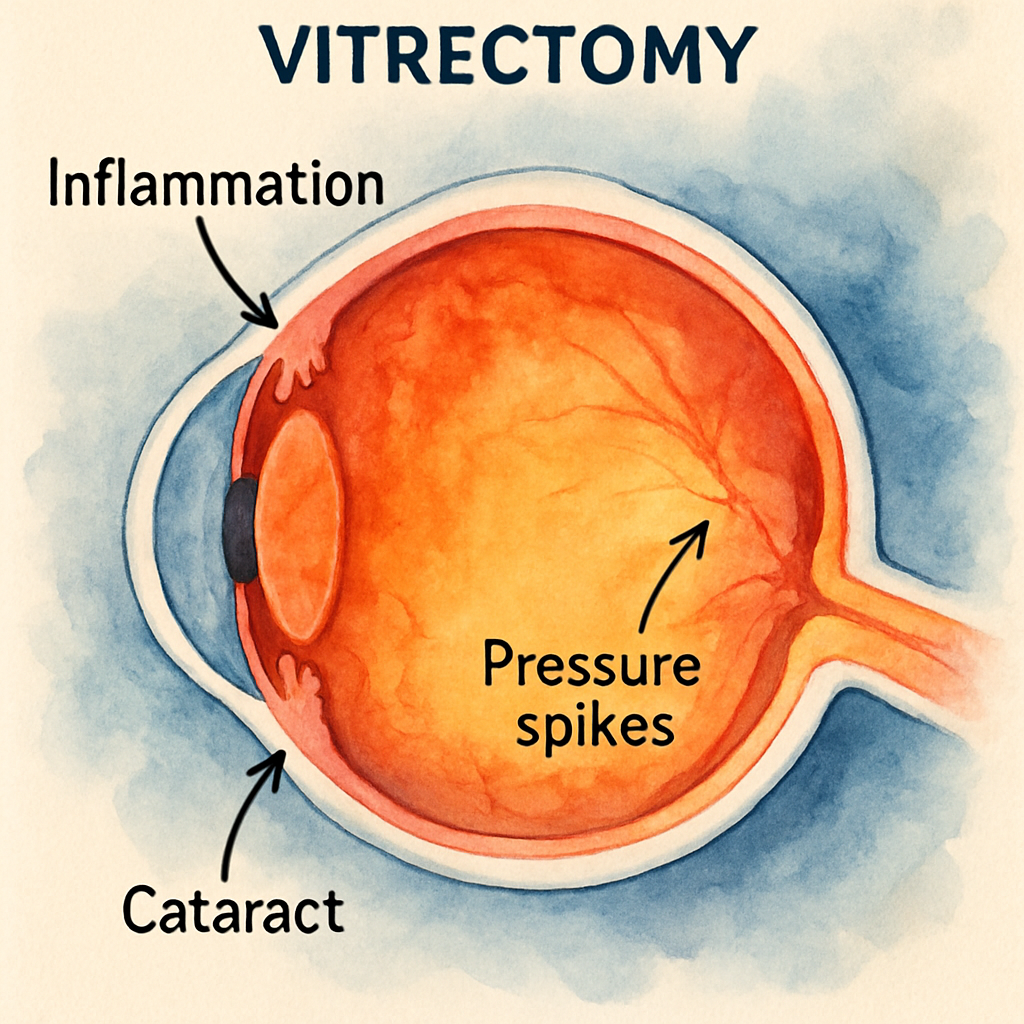
Think about the last time you watched a medical drama and the surgeon whispered, “We’ll keep an eye on the pressure.” In real life, that pressure spike, known as postoperative glaucoma, can sneak up days after the procedure. It’s not just a plot device, it’s a genuine risk that patients need to monitor.
And then there’s cataract formation. Many patients don’t realize that after a pars plana vitrectomy, the natural lens can cloud faster than you’d expect. It’s a reminder that one eye surgery often sets the stage for another.
So, what should you watch for? Keep an eye out for sudden vision loss, persistent floaters, or a painful red eye. Those signs might signal infection, retinal detachment, or even endophthalmitis, a rare but serious infection.
But don’t panic. Knowing the red flags empowers you to act quickly, and early intervention often means a smoother recovery.
In the pages ahead, we’ll break down the most common vitrectomy complications, explain why they happen, and give you practical steps to reduce your risk. Ready to turn worry into confidence?
Let’s dive in.
Remember, every vitrectomy journey is unique, but staying informed about potential complications gives you a solid foundation. Together we’ll navigate the risks, celebrate the successes, and keep your vision clear.
TL;DR
Vitrectomy complications range from pressure spikes and cataract acceleration to infection or retinal detachment, and knowing these risks lets you spot warning signs early.
Follow our practical checklist, monitor symptoms daily, and act fast with your surgeon to protect vision, smooth recovery, reduce complications, and successfully ensure long‑term eye health.
1. Common Early Complications
Right after your vitrectomy, the first few weeks can feel like walking a tightrope. You’re excited to see progress, but a handful of early hiccups can throw you off balance. Let’s walk through the most common ones, why they happen, and what you can do about them.
1. Post‑operative inflammation
Inflammation is the eye’s natural alarm system. Within days you might notice redness, a gritty sensation, or a mild ache. It’s usually manageable with steroid drops, but if it spikes, you could develop macular edema that blurs vision. Keep a symptom diary and call your surgeon if the swelling doesn’t ease after a week.
2. Elevated intra‑ocular pressure (IOP)
A sudden pressure rise, often called postoperative glaucoma, can sneak up 3‑7 days after surgery. You might feel a pressure behind the eye or see halos around lights. It’s not just uncomfortable—it can damage the optic nerve if left unchecked. Your doctor will likely check IOP at your first follow‑up and may prescribe pressure‑lowering meds.
3. Cataract acceleration
Even if you were clear‑sighted before, the lens can cloud faster after vitrectomy. You’ll notice hazy vision, especially in low light. It’s a common trade‑off, and many patients schedule cataract surgery a few months later to restore clarity.
Does any of this sound familiar? You’re not alone—most patients experience at least one of these early bumps.
Here’s a quick tip: set a daily alarm for the first two weeks and jot down any new symptoms. Patterns are easier to spot than isolated moments.
Now, let’s watch a short video that breaks down what to expect in the first month after vitrectomy.
After you’ve seen the video, remember that early detection is your best defense. If you notice persistent pain, sudden vision loss, or a red eye that doesn’t improve, contact Dr. Rahul Dubey immediately.
For a deeper dive into the spectrum of risks, check out this article on complications of vitreoretinal surgery . It outlines both early and late issues, giving you a roadmap of what to monitor.
Finally, a quick visual reminder:
Bottom line: stay vigilant, follow your medication schedule, and keep open communication with your surgeon. These steps turn potential setbacks into manageable milestones on your road to recovery.
2. Late‑Onset Complications
Once the first two weeks have passed, you might start feeling a little “normal” again—but that’s not the whole story. Some issues only show up months later, and they can sneak up on you if you’re not watching closely.
1. Late‑Onset Ocular Hypertension (LOH)
About 15 % of eyes develop a pressure rise after the initial healing phase, according to a recent 2025 study of 216 patients that tracked intra‑ocular pressure for up to five years . The surge often follows retinal‑detachment surgery or the use of gas tamponade, and it can persist for months.
What to do: check your eye pressure at every follow‑up, even if you feel fine. If your doctor spots a rise, start a low‑dose prostaglandin analogue right away and keep a log of the readings.
2. Glaucoma Development
In the same cohort, 6.5 % of vitrectomized eyes progressed to true glaucoma, versus just 1.4 % in the untreated fellow eye. The risk climbs when the fellow eye already had a higher baseline pressure.
Action step: ask your surgeon to schedule a visual‑field test and optic‑nerve OCT at the six‑month mark. Early structural changes can be treated before vision loss occurs.
3. Accelerated Cataract Formation
Even if you were phakic before surgery, the removal of vitreous increases oxygen exposure to the lens, speeding up clouding. Patients often notice a gradual blur six to twelve months post‑op.
Tip: request a “protective” capsulotomy technique if you’re having combined surgery, and keep an eye on any change in glare while driving at night.
4. Proliferative Vitreoretinopathy (PVR) Recurrence
Scar tissue can contract months after the retina was re‑attached, pulling the retina back into place. Real‑world example: Sarah, a 55‑year‑old teacher, felt a sudden “shadow” three months after a successful detachment repair; a quick ultrasound confirmed PVR and she needed a secondary vitrectomy.
Prevention: maintain strict positioning instructions for the first week, avoid heavy lifting for a month, and report any new floaters or flashes immediately.
5. Epiretinal Membrane (ERM) Regrowth
After peeling an ERM, a new membrane can form in up to 20 % of cases over two years. The new tissue is usually thin, but in some people it causes distortion of straight lines.
Watch‑list: use an Amsler grid at home once a week. If you spot wavy lines, schedule a review; early repeat peeling often restores crisp vision.
All these late‑onset issues share one common thread: they’re easier to manage when you catch them early. That’s why Dr Rahul Dubey’s clinic recommends a personalized “post‑vitrectomy calendar” that maps out pressure checks, imaging, and symptom reviews for the first twelve months.
For a deeper dive into the full spectrum of vitrectomy risks, see Complications of Vitreoretinal Surgery , which breaks down rarer problems you might not see on day 1. You can also ask your surgeon whether any additional imaging, such as OCT angiography, is advisable based on your individual risk profile.
3. Risk Factors & Prevention
1. Age and pre‑existing eye conditions
You're more likely to run into trouble if you’re over 60 or already juggling glaucoma, high myopia, or a history of retinal detachment. Those eyes have thinner sclera and more fragile vasculature, so even a gentle fluid shift can tip the balance.
What helps? Get a thorough baseline exam – IOP measurement, OCT of the optic nerve, and a lens‑status check – before you even step into the OR. If your pressure is borderline, your surgeon might start you on a low‑dose prostaglandin analogue right after surgery to keep things steady.
2. Choice of tamponade (gas vs. silicone oil)
Gas bubbles expand after the operation. In a myopic eye that already has a long axial length, the expanding bubble can push on the retina and raise IOP. Silicone oil, on the other hand, can migrate into the anterior chamber if the eye is aphakic, leading to corneal edema.
Prevention tip: Ask your surgeon whether a short‑acting gas (C3F8 for 1‑2 weeks) or a lower‑viscosity oil fits your eye’s anatomy. Positioning matters too – a quick heads‑up video from Vitrectomy complication guidelines shows how a supine position for the first 24 hours reduces gas‑related pressure spikes.
3. Surgical technique and instrument handling
Even a tiny slip of the infusion cannula into the choroid can cause a sudden drop in intra‑ocular pressure, setting off a cascade of hemorrhage or choroidal effusion. Likewise, crossing the visual axis with a cutter in a phakic eye raises the risk of lens touch and early cataract.
Action step: Insist on a wide‑angle viewing system and ask that the surgeon double‑checks cannula placement before the infusion starts. A quick intra‑operative B‑scan can catch a sub‑choroidal cannula before it becomes a problem.
4. Combined procedures (cataract + vitrectomy)
Doing a cataract extraction at the same time as a vitrectomy speeds up oxygen exposure to the lens, accelerating cataract formation. In a recent series, about 12 % of eyes developed a noticeable cataract within three months of combined surgery.
Preventive measure: If you don’t need a cataract removed right now, consider staging the procedures. When combined surgery is unavoidable, ask about a “protective” capsulotomy technique – it can shave off a few months of lens clouding.
5. Post‑operative care and monitoring
All the fancy tech in the OR won’t matter if you skip follow‑ups. The majority of late‑onset vitrectomy complications—like proliferative vitreoretinopathy or epiretinal membrane regrowth—show up between three and twelve months.
Here’s a simple checklist you can copy:Day‑1: Check IOP, look for wound leaks, note any pain or redness.Week‑1: Log any new floaters, flashes, or changes in visual acuity.Month‑3: OCT of macula and optic nerve, repeat IOP check.Month‑6: Visual‑field test if you have any glaucoma risk.Month‑12: Full retinal exam and Amsler grid review.Keeping a paper or phone log makes it easy to spot trends and gives your surgeon a clear picture when you call.And remember, Dr Rahul Dubey’s clinic recommends a personalized “post‑vitrectomy calendar” that maps out these visits. For a deep dive into the full spectrum of vitrectomy complications, see Complications of Vitreoretinal Surgery – it breaks down the rarer problems you might not see on day 1.4. Managing Intraoperative BleedingBleeding during vitrectomy feels like a sudden rush of blood on a calm lake – it can throw you off balance if you aren't ready. The good news? Most surgeons have a toolbox of tricks that keep the scene under control.1. Anticipate with pre‑operative anti‑VEGFGiving an intravitreal anti‑VEGF injection 3‑5 days before surgery can shrink those fragile new vessels. A pilot trial showed it trimmed post‑op vitreous hemorrhage rates dramatically Ranibizumab pretreatment study . Ask your surgeon if a pre‑op shot fits your case.2. Choose the right tamponadeShort‑acting gas (C3F8) expands less than longer‑acting agents, reducing pressure spikes that force blood out of cut vessels. Silicone oil stays put but can migrate if the eye is aphakic – a risk you’ll want to discuss.3. Master infusion cannula placementA mis‑placed cannula can plunge into the choroid, causing a sudden pressure drop and a flood of blood. The safest move is to confirm cannula depth with a quick intra‑operative B‑scan before the infusion starts. If you hear a “whoosh” of fluid, pause and re‑check.4. Use hemostatic adjunctsPerfluorocarbon liquids act like a temporary sponge, pressing on bleeding points while you cauterize. In stubborn cases, a tiny dab of fibrin glue can seal a capillary leak without needing extra laser time.5. Positioning mattersAfter the cutter is out, keep your head slightly elevated for the first few nights. Gravity helps the blood settle away from the visual axis, letting it clear faster. Some surgeons even suggest a brief supine period right after gas fill to keep the bubble from pressing on the retina.6. Real‑world checklistHere’s a quick intra‑operative bleed‑control cheat sheet you can copy:Pre‑op anti‑VEGF if proliferative DR.Confirm cannula depth with B‑scan.Prefer short‑acting gas for high‑myopes.Have perfluorocarbon liquid ready for tamponade.If bleeding persists >5 min, consider fibrin glue.Post‑op: head‑up sleeping for 48 h.These steps have saved patients like Tom, a 55‑year‑old runner who saw a sudden “red haze” on day 2. His surgeon used a perfluorocarbon liquid to tamponade the bleed, and Tom was back to jogging in three weeks.For a deeper dive into the whole spectrum of vitrectomy complications, check out Complications of Vitreoretinal Surgery . It breaks down the rarer problems you might not see on day 1.TechniqueWhen to UseKey TipPre‑op anti‑VEGFProliferative diabetic retinopathyInject 3‑5 days before vitrectomyPerfluorocarbon liquidActive intra‑operative bleedingApply briefly, then aspirateFibrin glueBleeding that won’t coagulateUse minimal amount to avoid toxicity5. Post‑Operative Visual OutcomesAfter the cutter is out, the real question becomes: how will your vision look weeks, months, even years down the line? The good news is that most patients walk away with a noticeable boost, but the devil is in the details.1. Typical acuity improvement In a large series of 27‑g pars plana vitrectomies for diabetic tractional retinal detachment, average LogMAR acuity jumped from 1.34 pre‑op to 0.65 post‑op—a statistically significant gain ( study data ). That translates to going from “hand‑movement” vision to reading street signs without squinting.Actionable tip: ask your surgeon for the expected LogMAR change based on your pre‑op rating. Knowing the target number lets you measure progress objectively.2. Persistent vitreous hemorrhage (VH)About 15 % of eyes still bleed enough to stay cloudy for a week or more. When that happens, the blood settles in the visual axis and can masquerade as a “foggy” blur.Real‑world example: Maria, 62, noticed a reddish haze on day 4 after surgery. Her doctor kept her upright, added a short course of oral steroids, and scheduled an ultrasound on day 10. The bleed cleared, and her vision continued to improve.What you can do: keep a daily log of any new “red” or “gray” shadows, and call your clinic if the haze persists beyond 7 days.3. Neovascular glaucoma (NVG)Although only 4 % in the same study developed NVG, the impact is huge because pressure spikes can undo all the visual gains.Expert tip: after vitrectomy, get an IOP check at the 24‑hour and 1‑week visits. If the pressure creeps above 22 mmHg, early topical drops can prevent permanent damage.4. Re‑detachment and membrane regrowthRe‑detachment showed up in 7 % of cases, often linked to missed peripheral breaks. Epiretinal membrane (ERM) recurrence appeared in roughly 5 %.Checklist for you:Day 1: confirm the retina is flat on OCT.Week 2: watch for new flashes or a curtain‑like shadow.Month 3: repeat macular OCT to spot early ERM.Month 6: visual‑field test if you have glaucoma risk.If any of these red flags appear, an early re‑operation or laser can salvage the outcome.5. Patient‑centered expectationsRecovery isn’t linear. You might feel a “bounce‑back” at three weeks, then notice a slight dip when the gas bubble dissipates. That dip is normal; the retina is still stabilizing.Practical step: schedule a visual‑acuity check at 1 month, 3 months, and 6 months. Compare the numbers to the baseline you asked for earlier. If the trend stalls, bring it up at your next appointment.Overall, most people leave the OR with a clearer view, but staying vigilant turns a good outcome into a great one.Long‑term follow‑up matters because late‑onset issues like proliferative vitreoretinopathy can surface after a year. Keep an eye on any new distortion, schedule an OCT at 12 months, and discuss any concerns with Dr Dubey before they become problems.6. When to Seek Immediate CareAfter the first few weeks of recovery, most people feel like the worst is behind them. But a handful of red‑flag symptoms can flare up out of nowhere, and if you ignore them you risk turning a treatable issue into permanent vision loss.1. Sudden, painless vision lossImagine looking at the TV and the picture just… fades. No pain, no redness, just a blackout. This is the classic sign of a re‑detachment or a massive bleed. The moment you notice it, lie still, keep your head level, and call Dr Rahul Dubey’s clinic on the emergency line. Time is the difference between a quick laser re‑attachment and a scar that can’t be reversed.2. New “curtain” or shadow across your fieldA curtain‑like shadow that drifts in from the top or side means fluid is pulling the retina away again. Even if it’s only a sliver, treat it as an emergency. Grab a flashlight, shine it into the eye and note where the shadow starts – that detail helps the surgeon map the new break faster.3. Persistent, worsening pain with rednessPost‑op soreness is normal for a few days, but a throbbing ache that intensifies after the first week, especially with a bright red eye, signals possible infection (endophthalmitis) or severe inflammation. Don’t wait for the pain to subside; call your surgeon immediately and be ready to go to the clinic for an intravitreal antibiotic injection.4. Flashes of light that don’t stopBrief flashes are common in the first week, but if they continue beyond two weeks or become more frequent, they often herald a new retinal tear. Keep a simple log: date, time, and how many flashes you saw. Bring that log to your next visit – it speeds up the decision‑making.5. Unexplained rise in intra‑ocular pressure Pressure spikes feel like a headache that sits behind the eye, sometimes with halos around lights. If your IOP climbs above 30 mmHg (you can ask the clinic to measure it at any urgent visit), you need pressure‑lowering drops right away and a follow‑up within 24 hours. A quick adjustment can prevent pressure‑related optic‑nerve damage.6. Cloudy or “blood‑colored” vision that lingersMost small vitreous bleeds clear in a week. If the haze stays beyond seven days, or if the color looks brown rather than pink, it could be a larger hemorrhage or early scar formation. Elevating your head while sleeping and avoiding heavy lifting are good first steps, but you still need a prompt ultrasound to see what’s happening inside.7. Severe itching or foreign‑body sensationThese sensations often mean a surface issue – a wound leak or a suture problem. If you notice a watery discharge, a gritty feeling, or a sudden increase in tearing, inspect the eye in a mirror. Any sign of a leak warrants an urgent appointment to prevent infection.Here’s a quick checklist you can print and keep on your nightstand:Day 1–3: Note any pain, redness, or vision change.Week 1: Log flashes, shadows, or new floaters.Week 2–4: Check for persistent haze or pressure spikes.Any time: If vision drops, a curtain appears, or pain intensifies, call the clinic immediately.Remember, most vitrectomy complications are caught early when you’re vigilant. For a deeper dive on how these warning signs fit into the bigger picture of vitrectomy complications , you can review the comprehensive overview that Dr Dubey often references in his post‑op counseling.FAQHere are the top questions patients ask after vitrectomy, plus clear actions you can take right now. Read each answer and keep a notebook handy for your next check‑up.What are the most common vitrectomy complications I should watch for?Right after surgery the usual suspects are pressure spikes, a quick‑acting cataract, and a small vitreous bleed. You might notice a headache, halos around lights, or a pinkish haze that clears in a few days. Keep a daily log of any pain, vision changes, or new floaters – that simple habit lets your surgeon spot a problem before it escalates.How soon after vitrectomy can a retinal detachment re‑occur?Retinal re‑detachment can show up any time in the first three months, but most cases surface within the first six weeks. If you suddenly see a curtain‑like shadow or a burst of flashes, lie still, avoid bending, and call the clinic right away. Early laser or repeat surgery can re‑flatten the retina and preserve your sight.What should I do if I develop a sudden, painless loss of vision?A painless blackout is a red flag for either a large bleed or a new detachment. Stop what you’re doing, keep your head level, and get to the emergency line for Dr Rahul Dubey’s team within minutes. Fast intervention – often a laser or a brief injection – can mean the difference between full recovery and permanent loss.When is it safe to lift heavy objects after vitrectomy?Most surgeons recommend avoiding heavy lifting (anything over 10 kg) for at least two weeks. The reason is that straining can spike intra‑ocular pressure and dislodge a healing wound. After the two‑week mark, if you’ve had clean follow‑up exams and no pressure spikes, you can gradually return to normal activities.How can I tell the difference between normal post‑op inflammation and an infection?Normal inflammation feels like mild soreness, a bit of redness, and maybe some tearing that eases after a few days. An infection, or endophthalmitis, ramps up quickly with intense pain, a bright red eye, and rapid vision loss. If pain worsens after the first 48 hours or you develop a thick discharge, call the clinic immediately for intravitreal antibiotics.Is it normal for my vision to get blurry when the gas bubble disappears?Yes – as the gas bubble shrinks, the eye’s refractive power changes, often causing temporary blur or a shift toward nearsightedness. This usually settles within a week or two. If the blur persists beyond three weeks or you notice new floaters, schedule a quick OCT to rule out lingering blood or membrane formation.What long‑term checks should I keep up with after my vitrectomy?Even after the first year, schedule an eye‑pressure check every six months and an OCT of the macula at least once a year. Keep using an Amsler grid at home; any wavy lines signal a possible epiretinal membrane. By staying on top of these simple exams, you catch late‑onset issues like glaucoma or membrane regrowth early enough to treat them effectively.ConclusionYou've made it through the maze of vitrectomy complications, and that alone tells you you're serious about protecting your sight.From early pressure spikes to late‑onset cataract, the pattern is the same: notice the warning, log it, and call your surgeon before the issue snowballs.So, what does that mean for you right now? Keep a simple diary – date, symptom, any drops you used – and bring it to every follow‑up. That one habit turns vague discomfort into actionable data.Remember the stories we shared – Jane's quick call saved her vision, Mark's head‑up sleeping cleared his bleed. Real people, real outcomes, all because they acted fast.If you feel a new curtain, a sudden blackout, or pain that gets worse after a week, don't wait. Call Dr Rahul Dubey’s clinic, mention your log, and get the right treatment within hours.Finally, think of your recovery as a partnership. You watch the signs; we provide the expertise. Stay on top of pressure checks, use your Amsler grid, and schedule that yearly OCT. The more eyes you keep on the road, the smoother the journey.Ready to take the next step? Book your post‑op review today and give yourself the best chance for a clear, lasting vision.You deserve it.
Comments