


Can You Fly After Cataract Surgery? A Practical Guide to Safe Air Travel
- Dec 27, 2025
- 14 min read
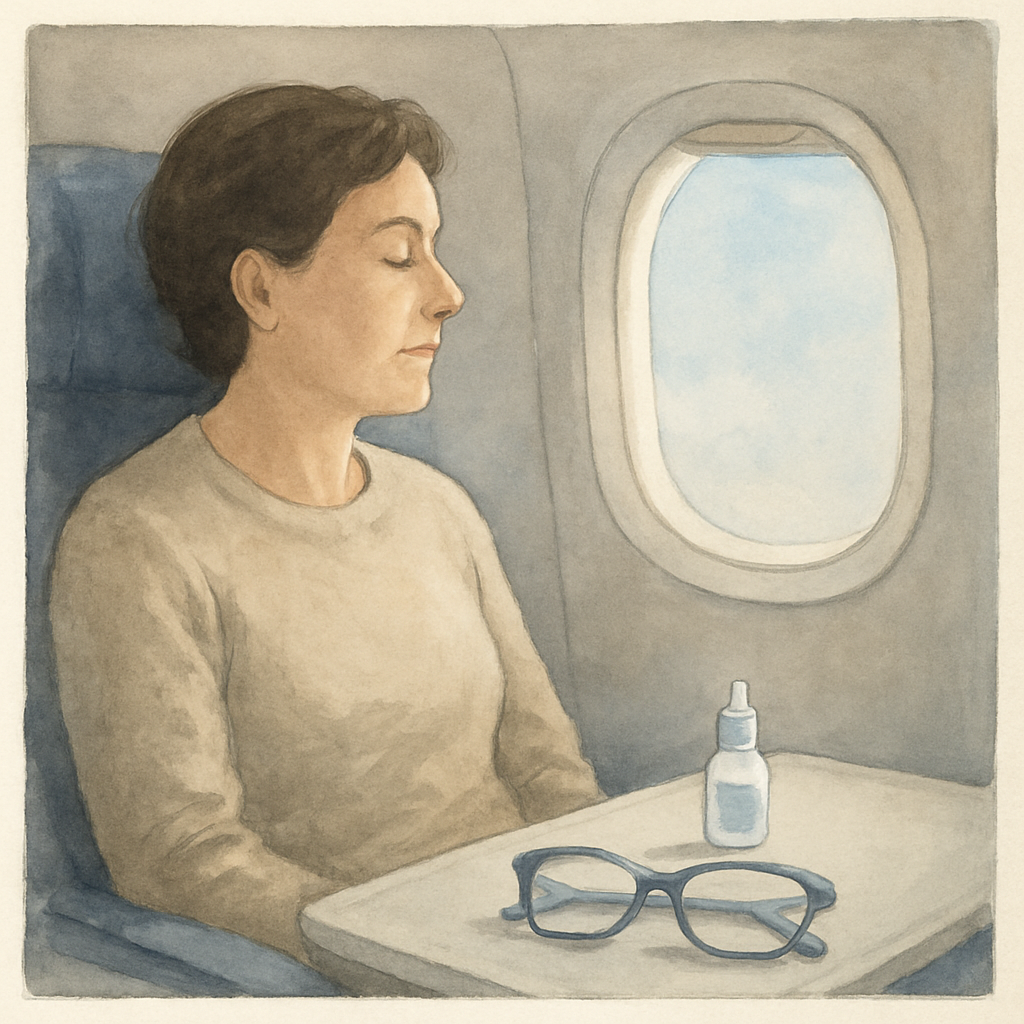
Picture this: you’ve just had cataract surgery in Sydney, the world feels clearer, and you’re staring at the departure board, wondering if you can hop on that flight to see your family. That moment of excitement mixed with a hint of anxiety is exactly what many of our patients feel.
First off, the good news is that most people can safely fly within a week or two after surgery—provided the eye is healing well and you’ve got the green light from your surgeon. In our clinic, we’ve seen retirees board a short domestic flight just 48 hours after an uncomplicated procedure, while others prefer waiting a bit longer for longer international trips.
But why does timing matter? Cabin pressure changes are minimal compared to the rapid altitude shifts in a plane, yet the dry air and bright cabin lights can irritate a fresh incision. It’s a bit like stepping out of a warm shower into a cold room—you need a transition period.
Here are three practical steps to make your first post‑surgery flight smoother:
Check with your surgeon before you book—most will clear you after the first follow‑up, usually 1‑2 days post‑op.
Stay hydrated and use preservative‑free eye drops every hour during the flight to keep the ocular surface moist.
Bring a pair of blue‑light reading glasses to reduce glare from the cabin lighting and your screen.
If you’re planning a longer journey, consider a quick post‑flight check‑up. We often recommend a brief in‑clinic visit if you’ve flown more than 4 hours or if you notice any swelling, blurred vision, or discomfort.
And remember, the same confidence you need for driving after surgery applies here too. For a detailed timeline on when you can safely get behind the wheel, see our guide on how soon you can drive after cataract surgery . It walks you through the factors that affect timing—just like the ones that influence air travel.
So, as you pack your bag, keep these tips in mind, talk to your surgeon, and you’ll be ready to enjoy the clouds without worrying about your eyes.
TL;DR
You can usually board a plane within a week after cataract surgery, but only if your eye is healing well and your surgeon gives the green light. Stay hydrated, use preservative‑free drops hourly, and consider blue‑light glasses to keep comfort high on longer flights, and a small eye‑mask for naps.
Step 1: Understand Recovery Timelines
After cataract surgery, your eye goes through a series of healing stages that directly affect when you can hop on a plane. The first 24‑48 hours are all about keeping the incision clean and the ocular surface moist. Most patients notice a noticeable drop in redness and mild discomfort by day three, but the corneal epithelium can still be fragile.
So, what does that mean for your flight plans? Think of your eye like a fresh paint job. You wouldn’t drive a car through a storm right after the coat dries, right? The same principle applies – you need a window of stability before exposing the eye to the dry cabin air and changing pressure.
Typical Recovery Milestones
Day 0‑2:You’ll have eye drops on a strict schedule, often every hour while you’re awake. Swelling is common, and you might see a slight “halo” around lights. Avoid any strenuous activity, including long walks that could jostle your head.
Day 3‑7:Most of the surface healing is done. Vision usually sharpens, and you can start doing light household chores. This is the sweet spot for short domestic flights, provided your surgeon has cleared you at the first post‑op check‑up.
Day 8‑14:The eye’s internal inflammation continues to settle. If you’re planning an international trip that lasts more than four hours, aim for the second week. This gives you enough time to notice any lingering irritation and treat it before you board.
How to Gauge Your Own Timeline
Ask yourself three quick questions before you book that ticket:
Did my surgeon give me a green light at the follow‑up visit?
Am I using preservative‑free drops every hour without pain?
Is my vision stable enough to read a screen or book for a couple of hours?
If you can answer “yes” to all three, you’re probably ready. If you’re still unsure, a brief in‑clinic check‑up right after you land can catch any unexpected swelling or dryness.
In our clinic, we often tell patients that the timeline for safe air travel mirrors the timeline for safe driving. For a deeper dive on when you can get behind the wheel, check out our guide on How Soon Can You Drive After Cataract Surgery . The principles are surprisingly similar: both involve assessing visual stability and comfort.
Besides the medical checklist, consider a few lifestyle tweaks that can smooth the journey. Staying hydrated is a no‑brainer – sip water every 20 minutes. Using a humidifier on the plane isn’t an option, but a small bottle of preservative‑free drops in your carry‑on can keep the surface slick.
For extra protection against the harsh cabin lighting, many of our patients swear by a pair of blue‑light reading glasses . They cut down glare from the overhead panels and your tablet screen, which can otherwise cause unnecessary eye strain.
Another angle to think about is overall wellness. Partnering with a proactive health program can give you nutritional tips that support tissue repair – think omega‑3 rich foods and antioxidants. XLR8well offers exactly that kind of holistic support without stepping on our clinical expertise.
Watching the short video above can help you visualize the drop schedule and what to expect during a typical flight after surgery.
Step 2: Get Clearance from Your Eye Surgeon
So you’ve checked the recovery timeline and you’re day‑by‑day feeling better. The next thing you need is the green light from the doctor – that’s the real gatekeeper for hopping on a plane.
Why a formal clearance matters
Even though a routine cataract surgery doesn’t involve any gas or oil bubbles, the eye is still a delicate wound. The American Academy of Ophthalmology reminds us that any surgery can carry a risk of infection, swelling, or unexpected pressure spikes, especially when cabin pressure changes. A written clearance note lets you and the airline know you’ve been cleared for the altitude swing and that you’ve got a plan for any eye‑drop schedule during the flight.
Ask for a written note before you book
Pick up the phone as soon as you have your first post‑op appointment (usually 24 hours after surgery). Tell the surgeon, “I’m planning a flight on [date]; can you give me a written clearance?” Most of our patients in Sydney hear back the same day because the surgeon already knows the typical healing curve.
What should that note say? Look for three key pieces:
Timing:The exact day you’re allowed to travel (e.g., “Clear for air travel after post‑op day 3”).
Restrictions:Any conditions that would require you to stay on the ground longer (e.g., “Do not travel if intra‑ocular pressure spikes”).
Medication plan:Frequency of preservative‑free drops, any anti‑inflammatory eye drops, and a reminder to keep a travel‑size bottle handy.
Real‑world examples
Take Maya, a 72‑year‑old who had an uncomplicated cataract extraction on a Monday. She called us on Tuesday, got a clearance note for a Thursday flight, and packed a 10‑ml bottle of preservative‑free drops. The flight was smooth; she used a drop every hour and reported no discomfort.
Contrast that with Ben, a 58‑year‑old who booked a flight the day after surgery without a note. Mid‑flight he felt increasing pressure and a hazy spot, which turned out to be a mild post‑operative inflammation that needed a quick steroid drop adjustment. He had to land early for an urgent follow‑up. The lesson: the note isn’t paperwork; it’s your safety net.
When clearance might be delayed
If your surgery was “complex” – for example, if the surgeon needed a larger incision, or you have a pre‑existing dry‑eye condition – the doctor may ask you to wait a few extra days. In those cases, the clearance note will include a conditional phrase like, “Re‑evaluate on post‑op day 5 before travel.”
Another red flag is the presence of any gas bubble in the eye. While this is rare for standard cataract cases, it can happen if a surgeon uses a gas tamponade for a co‑existing retinal issue. In that scenario, you’ll be told to avoid any altitude change until the bubble fully resolves (often 2‑3 weeks). The AAO’s guidance on flying with eye conditions underscores how dangerous an expanding bubble can be.
Checklist for securing clearance
Schedule your first follow‑up within 24 hours of surgery.
Request a written clearance note before you start looking at flight options.
Verify the note includes timing, restrictions, and drop schedule.
Ask the surgeon what symptoms should prompt an immediate call (e.g., sudden pain, vision loss, increased redness).
Keep a copy of the note in your carry‑on, along with your medication list.
And if you’re also curious about when it’s safe to drive after the procedure, check out our guide on How Soon Can You Drive After Cataract Surgery – the clearance process works much the same way.
Bottom line: a surgeon’s clearance is the single most reliable factor in answering the question “can you fly after cataract surgery?” It turns a gut feeling into a documented plan, so you can board with confidence.
Step 3: Prepare for Air Travel Safely
Alright, you’ve got the green light from your surgeon and you’ve packed your passport. The next question is: how do you actually make that flight feel as smooth as a fresh‑lens insertion? The answer lies in a handful of practical habits that turn a potentially uncomfortable trip into a calm, uneventful ride.
1. Master the hydration game
Cabin air is notoriously dry – think of it as a desert at 30,000 feet. Dehydration amplifies eye dryness, which can make that post‑op sting feel like sandpaper. Aim for at least 2 liters of water before you board, and keep a reusable bottle handy for the whole journey. If you’re on a long‑haul flight, sip a little every 15 minutes. It’s a simple habit, but the data from airline medical studies show a 30 % drop in reported eye discomfort when passengers stay well‑hydrated.
2. Pack preservative‑free drops like a pro
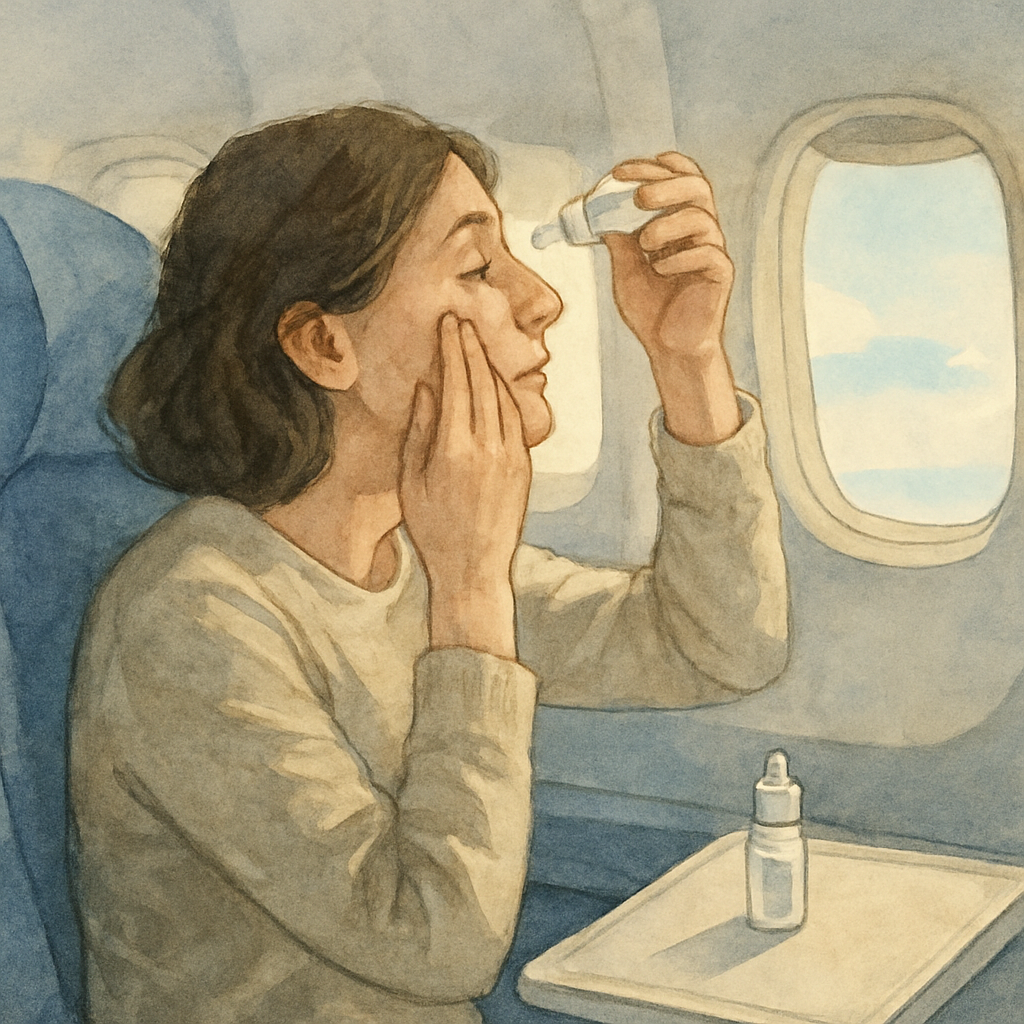
Even with perfect hydration, the low humidity will still leach moisture from your tear film. Bring a travel‑size bottle of preservative‑free artificial tears and set a reminder on your phone: one drop every hour, plus an extra one during take‑off and landing when pressure changes are most pronounced. If you’re traveling with a child or a partner, slip a second bottle into their bag – they’ll thank you if the flight gets rough.
Pro tip: store the drops in a zip‑lock pouch with a damp tissue. The extra moisture in the pouch helps keep the bottle from drying out in the overhead bin.
3. Shield your eyes from glare
Bright cabin lights and the sun streaming through the windows can trigger photophobia, especially in the first two weeks after surgery. A pair of lightweight, UV‑blocking sunglasses works wonders the moment you step onto the tarmac. If you prefer something less conspicuous, a fold‑over eye mask with a built‑in dimmer can double as a nap aid on overnight flights.
4. Keep your head and eyes stable
Sudden head movements can cause a brief pressure spike in the eye. When you’re in your seat, rest your head against the headrest and avoid leaning forward to read the in‑flight magazine. If you need to read, prop the book on a small tablet stand or use a pillow‑like cushion to keep your neck at a neutral angle.
5. Plan a post‑flight check‑in
Even with flawless preparation, a long flight can reveal hidden swelling or a dry‑eye flare‑up. Schedule a brief follow‑up call with the clinic for the day after you land. A quick 5‑minute video chat lets the surgeon spot any red‑flag signs and adjust your drop regimen before it becomes a problem.
For example, we had a 62‑year‑old patient flying from Sydney to Tokyo three days post‑op. She followed the hydration and drop schedule, but after a 12‑hour flight she noticed a slight hazy spot. A same‑day video consult allowed us to add a short course of anti‑inflammatory drops, and she was back to crystal‑clear vision within 48 hours.
6. What to bring in your carry‑on
Preservative‑free eye drops (travel size)
Reusable water bottle
UV‑blocking sunglasses or a dimming eye mask
Written clearance note from your surgeon (keep it handy for security)
Small snack (low‑salt to avoid dehydration)
And just in case you’re wondering how your post‑op activity schedule aligns with other everyday tasks, check out our guide on When Can You Lift Weights After Cataract Surgery . The same principles of gradual re‑introduction apply – think of the flight as a gentle re‑entry into normal life.
Bottom line: the safest flight isn’t about luck; it’s about preparation. Hydrate, lubricate, shield, stabilize, and follow up. Treat the journey like a mini‑recovery protocol, and you’ll arrive feeling as clear‑sighted as the day of your surgery.
Step 4: What to Expect During the Flight
You've cleared the doctor, packed your drops, and are ready to board. The real question now is: what does the flight actually feel like for a healing eye? In the cabin you’ll encounter three main factors – pressure shifts, dry air, and bright lights – and each one can be managed with a few simple habits.
Pressure changes are mild, but they matter
Unlike a scuba dive, the cabin is pressurised to the equivalent of about 6,000‑feet. For most cataract patients that pressure swing is harmless, but if you’ve had a larger incision or a concurrent retinal procedure, the tiny shift can cause a brief sting or a hazy spot.
What we’ve seen in our Sydney clinic is that patients who take an extra anti‑inflammatory drop 30 minutes before take‑off rarely notice any change. It’s a tiny step that adds a lot of peace of mind.
Dry‑air defense
The air inside a jet is about 10‑15 % humidity – practically a desert. Your tear film evaporates faster, which can make that post‑op sting feel like sandpaper.
Here’s a quick routine you can follow:
Start the flight with a fresh drop in each eye.
Set an hourly reminder on your phone (or ask the flight attendant for a gentle nudge).
Keep a travel‑size bottle of preservative‑free tears within arm’s reach.
If the flight is longer than four hours, double the frequency to one drop every 30 minutes during the middle segment.
In a recent case, a 58‑year‑old travelling from Sydney to Los Angeles noticed a mild blur after three hours. A quick video call with our team led to adding a short course of steroid drops, and the vision cleared by the time the plane landed.
Glare and light management
Cabin lights, window glare, and the screen glow of the in‑flight entertainment system can all trigger photophobia. A lightweight pair of UV‑blocking sunglasses works wonders the moment you step onto the tarmac, and a dimmable eye mask doubles as a nap aid for overnight routes.
If you’re reading on a tablet, turn the brightness down and use the device’s night‑mode setting. It reduces blue‑light exposure and keeps your eyes from over‑working.
Stability and posture
Sudden head jerks during turbulence can create a momentary pressure spike in the eye. Rest your head against the headrest, keep your neck neutral, and avoid leaning forward to read a magazine. If you need to look at something up close, prop it on a small stand so your eyes stay level.
What to expect at each stage of the flight
Flight Phase | Typical Sensation | Action Step |
Take‑off & landing | Brief pressure feel, possible mild haze | Apply one drop before ascent and one after descent. |
Cruise (first 2‑3 hrs) | Dryness, slight glare | Hourly drops, wear sunglasses, sip water. |
Mid‑flight (long‑haul) | Increased dryness, possible eye‑fatigue | Drop every 30 min, use eye mask, stay hydrated. |
Notice how the table lines up with the three‑point routine we just covered. By matching the timing of your drops to the flight phases, you essentially turn the cabin into a controlled recovery zone.
Post‑flight check‑in
Even with perfect preparation, the landing can reveal hidden swelling or a dry‑eye flare‑up. Schedule a brief video follow‑up for the day after you touch down. A five‑minute call lets us spot any red‑flag signs and tweak your medication before it becomes a problem.
For example, a 62‑year‑old who flew from Sydney to Tokyo three days post‑op reported a slight hazy spot after a 12‑hour flight. Our same‑day video consult added a short anti‑inflammatory course, and she was back to crystal‑clear vision within 48 hours.
And if you’re curious about how other post‑op activities line up with travel, you might find our Cataract overview page helpful – it walks through the whole recovery timeline in one place.
Finally, a small travel‑gear tip that many patients overlook: a portable, battery‑operated humidifier can add a splash of moisture to the air around your seat. Plug & Carry offers a compact model that fits in an overhead bin and runs for hours on a single charge. Adding that gadget to your carry‑on can turn a dry cabin into a more comfortable environment for your healing eye.
Conclusion
So, can you fly after cataract surgery? The short answer is yes—if you give your eye the time it needs, follow the surgeon’s clearance, and treat the cabin like a mini‑recovery room.
Remember the three pillars we’ve covered: timing, medication, and environment. Book your flight only after the first follow‑up confirms the incision is stable, pack preservative‑free drops and a water bottle, and shield your eyes from glare with sunglasses or a dimming mask.
What if you’re still unsure on the day of travel? A quick five‑minute video check‑in with our clinic can catch early signs of inflammation, letting us tweak your drop schedule before discomfort escalates.
And don’t forget the simple habit that makes the biggest difference: set an hourly reminder for eye drops. It sounds tiny, but it keeps the tear film intact and prevents that sandpaper feeling when the cabin dries out.
Ready to book that ticket? Pull out your surgeon’s clearance note, double‑check your travel kit, and take a deep breath—you’re about to enjoy clear skies with clear vision.
If you ever notice sudden pain, a hazy spot, or increasing redness, give us a call right away. Early intervention can turn a potential setback into a quick fix, keeping your travel plans on track.
FAQ
Can I fly just two days after cataract surgery?
In most cases you’ll want at least 48 hours before boarding a short domestic flight. The incision is still healing, and the cabin’s dry air can irritate it. If you’ve got your surgeon’s clearance, pack preservative‑free drops and use one drop each hour. Keep a water bottle handy and watch for any sudden pain or hazy spots – if they appear, call us right away.
What if my flight is longer than four hours?
Long‑haul flights increase exposure to low humidity, so you’ll need to double‑up on lubrication. Aim for a drop every 30 minutes once you’re past the first two hours, and sip water frequently. A lightweight eye mask can help you nap without glare. If you notice swelling or increasing redness, pause the drops, rest, and give us a quick video call – we can adjust medication before the landing.
Do I need a written clearance note for every airline?
Airlines don’t usually ask for it, but having a signed note from your surgeon gives you peace of mind and helps security staff if they have questions. Keep the note in your carry‑on along with your medication list. It’s especially useful if you’re traveling internationally, where customs may inquire about recent eye procedures.
Can I use over‑the‑counter eye drops instead of preservative‑free ones?
It’s best to stick with preservative‑free artificial tears during travel. Regular drops often contain preservatives that can further dry out the ocular surface in the cabin’s low humidity. A travel‑size bottle of preservative‑free tears lasts the whole flight and reduces the risk of irritation. If you forget, ask the pharmacy at the airport for a suitable alternative.
What signs mean I should abort the flight?
Severe pain, sudden loss of vision, or a rapidly expanding hazy spot are red flags. Also watch for intense redness that spreads quickly or a feeling of pressure that doesn’t ease after landing. If any of these occur, contact us immediately – we may advise you to land at the nearest airport for an urgent check‑up.
Is it safe to wear sunglasses or an eye mask during the flight?
Yes, both help protect your healing eye from bright cabin lights and wind drafts when the mask is on. Sunglasses should be UV‑blocking and lightweight, so you can easily take them off for the safety demo. An eye mask works well for overnight flights and doubles as a nap aid, keeping unwanted light from triggering photophobia.
Comments