


Toric Lens Cost: What You Need to Know Before Buying
- Nov 21, 2025
- 19 min read
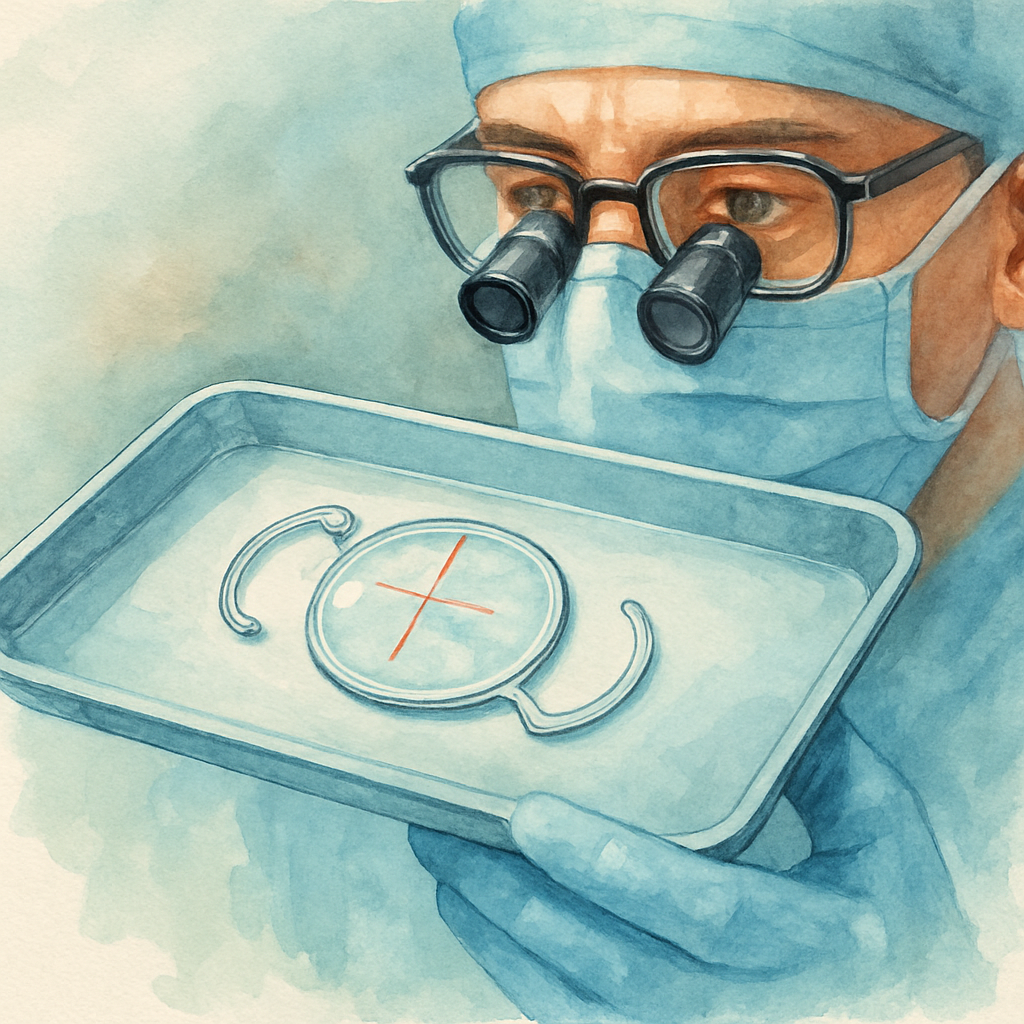
If you’ve ever stared at the price tag for a toric lens and felt a knot form in your stomach, you’re not alone.
Those lenses are the secret sauce that turns a cloudy cataract surgery into crystal‑clear vision for people with astigmatism, but they don’t come cheap. The cost you see on a clinic’s brochure is only the tip of the iceberg – you have to factor in the surgeon’s fee, the premium IOL price, any pre‑operative tests, and post‑op care.
Think about the last time you bought a new phone. You didn’t just pay for the hardware; you also paid for the warranty, the carrier plan, maybe a case. It’s the same with toric lenses. One of the biggest variables is whether your private health insurer covers part of the premium. In Australia, many Medicare‑eligible patients still pay out‑of‑pocket because the government only funds standard monofocal lenses.
So, how do you avoid a surprise when the bill arrives? Start by asking your surgeon for a detailed quote that breaks down each line item. Ask if the clinic offers a payment plan or a discount for cash payment. And, crucially, check if you qualify for any government rebates or private health fund rebates.
We’ll walk you through the exact numbers you can expect in Sydney, compare the price range of different brands, and show you how to calculate your out‑of‑pocket expense. By the end you’ll know whether a toric lens fits into your budget or if you need to explore alternatives.
For a deeper look at how cataract procedures are priced and what options exist, see our cataract surgery overview that explains the full spectrum of lens choices and costs.
Ready to take the guesswork out of toric lens cost? Let’s dive in and turn those numbers into a clear plan you can act on.
TL;DR
If you’re worried about surprise expenses, this guide breaks down toric lens cost, rebates, and payment options, and helps you avoid hidden fees so you can budget confidently.
You’ll learn how to request detailed quotes, compare brands in Sydney, and calculate your out‑of‑pocket spend before you book surgery with ease.
Understanding Toric Lens Pricing Factors
When you start looking at a quote for a toric intraocular lens, the first thing that jumps out is the headline price. It feels a bit like seeing a price tag on a high‑end smartphone – you know there’s more underneath, but you can’t quite tell what.
So, what actually makes up that number? In Australia, the toric lens itself is a premium item, usually ranging from $1,500 to $2,500 AUD per eye. But that’s just the base. Add the surgeon’s fee, pre‑op diagnostics, and post‑op medication, and you’re quickly into the $4,000–$5,500 range for a typical cataract‑with‑astigmatism case.
1. Lens Design and Material
The design of the IOL – whether it’s a C‑loop haptic or a plate‑haptic – directly influences the manufacturing cost. Studies have shown that plate‑haptic lenses tend to have better rotational stability, which can reduce the need for a costly repositioning surgery later on according to recent research . Hydrophobic acrylic materials also command a premium because they stick better to the capsular bag, lowering the risk of rotation.
That extra stability isn’t just a clinical win; it’s a financial one. If a lens rotates more than 10°, a secondary procedure may be required, adding $1,000–$1,500 AUD to your bill.
2. Surgeon Experience and Technique
Experienced surgeons who use digital marking systems (like Verion or Callisto) often achieve tighter alignment, which translates into fewer post‑op adjustments. While the technology adds a few hundred dollars to the upfront cost, the long‑term savings can be worth it.
Think about it this way: paying $300 extra for a digital alignment tool today could save you $1,200 if you avoid a repositioning surgery next month.
3. Biometric Factors
Every eye is unique. Parameters such as axial length, white‑to‑white (WTW) distance, and lens thickness (LT) affect which lens size you need. If your WTW exceeds 12.5 mm, you might need a larger‑diameter toric lens, which typically costs a bit more.
In practice, a 70‑year‑old patient with a LT of 4.6 mm and a WTW of 12.8 mm might be recommended a capsular tension ring (CTR) to improve stability. The CTR itself adds roughly $250–$400 AUD, but many surgeons bundle it into the overall quote.
4. Health‑Fund Rebates and Medicare
Unlike standard monofocal lenses, toric lenses aren’t fully covered by Medicare. However, many private health funds provide a partial rebate – often $500–$800 per eye. The key is to ask your clinic for a detailed breakdown so you can apply for the rebate before you sign the consent form.
Here’s a quick checklist you can use:
Ask for a line‑item quote separating lens cost, surgeon fee, and ancillary fees.
Confirm whether a digital marking system is included.
Verify if a capsular tension ring is recommended and why.
Check your private health fund’s rebate schedule for toric IOLs.
Having that transparency helps you negotiate a better overall package.
5. Real‑World Cost Scenarios
Let’s walk through two common Sydney cases:
Case A – Low Astigmatism (1.75 D): Patient opts for a single‑piece C‑loop toric lens at $1,700 AUD. Surgeon fee $1,200, diagnostics $350, post‑op meds $150. Total $3,400. With a $600 health‑fund rebate, out‑of‑pocket $2,800.
Case B – High Astigmatism (3.5 D) + Long Axial Length: Surgeon recommends a plate‑haptic lens plus a CTR. Lens $2,300, CTR $350, surgeon $1,500, diagnostics $500, meds $200. Total $4,850. After a $750 rebate, you’re looking at $4,100 out‑of‑pocket.
Notice how the second scenario adds roughly $1,300 more because of the extra hardware and a more experienced surgeon’s fee. Those are the hidden costs you need to anticipate.
For a deeper dive into how different premium lenses compare, you might explore our full range of cataract services where we break down each option in plain language.
Finally, a quick tip: schedule a short pre‑op consultation just to go over the quote line by line. It’s a 15‑minute conversation that can save you thousands.
And if you’re curious about other tech‑related costs outside eye care, you might find it useful to read about Doctor Mac Toronto – they explain how transparent pricing can make a big difference in any service industry.
How Your Prescription Affects Toric Lens Cost
When you first get your prescription, the numbers on the chart feel like a secret code. That cylinder value (the "C" in your Rx) is the part that decides whether you need a standard monofocal IOL or a premium toric IOL. The higher the cylinder, the more expensive the toric lens tends to be because it requires a finer, customized design.
Think about a patient named Maya who came in with 1.5 D of astigmatism. Her surgeon could pick a basic toric IOL that costs around $1,700 AUD per eye. Now imagine another patient, Sam, who has 3.8 D of astigmatism and a longer axial length. Sam’s surgeon will likely recommend a plate‑haptic toric lens with a larger optic and possibly a capsular tension ring (CTR). That combo can push the lens price up to $2,300 AUD or more.
Why Cylinder Strength Drives Price
The cylinder tells the lens maker how much “twist correction” the IOL must provide. More twist means a more complex surface geometry, which raises manufacturing costs. A recent Johnson & Johnson press release notes that toric lenses with higher diopter ranges demand tighter tolerances, which translates into higher retail prices according to industry data .
But it’s not just the cylinder. Your corneal curvature (measured by keratometry), the white‑to‑white distance, and the axial length all feed into the final lens choice. If your white‑to‑white measurement exceeds 12.5 mm, the surgeon might need a larger‑diameter toric lens, which adds roughly $200–$400 AUD to the bill.
Real‑World Cost Scenarios
Let’s break down three common prescriptions you might encounter in a Sydney clinic:
Low astigmatism (≤ 2 D): A C‑loop toric IOL at $1,700 AUD, surgeon fee $1,200, diagnostics $350, meds $150. Total ≈ $3,400 AUD. After a $600 health‑fund rebate, you pay about $2,800.
Moderate astigmatism (2‑3 D) + standard axial length: Plate‑haptic toric IOL at $2,000 AUD, plus a small CTR $300, surgeon fee $1,300, diagnostics $400, meds $180. Total ≈ $4,180 AUD. Rebate $700 brings out‑of‑pocket to $3,480.
High astigmatism (≥ 3 D) + long axial length: Premium plate‑haptic toric IOL $2,300 AUD, CTR $350, surgeon fee $1,500, diagnostics $500, meds $200. Total ≈ $4,850 AUD. After a $750 rebate you’re looking at $4,100.
Notice the pattern? Every extra diopter of cylinder can add $100–$300 AUD to the lens price, and any additional hardware (like a CTR) adds another few hundred.
And if the toric lens rotates more than 10° after surgery, you might need a repositioning procedure that costs $1,000–$1,500 AUD. That’s why many surgeons invest in digital marking systems – the $300‑$500 upfront for the tech can save you a thousand later.
Actionable Steps to Keep Costs in Check
1.Get a detailed line‑item quote.Ask your surgeon to separate lens price, hardware, and fees. It makes the rebate application straightforward.
2.Verify your exact measurements.Bring any recent biometry reports to the pre‑op visit. If your WTW or axial length is borderline, you might avoid an unnecessary CTR.
3.Ask about alignment technology.If the clinic uses a Verion or Callisto system, note the extra cost and weigh it against the risk of a costly repositioning.
4.Check your private health fund.Most Australian funds rebate $500–$800 per eye for toric lenses. Submit the itemized quote before surgery to lock in the rebate.
5.Consider a short “cost‑clarity” consult.A 15‑minute chat can reveal hidden fees—think of it as a financial safety net.
If you’re curious about how other premium lens options stack up, you might explore Understanding Light Adjustable Lens Cataract Surgery for a broader perspective on lens technology.
Bottom line: your prescription’s cylinder, corneal size, and eye length are the three levers that drive toric lens cost. By knowing exactly how each factor adds to the price, you can ask the right questions, negotiate smarter, and avoid surprise bills.
Breakdown of Toric Lens Cost by Brand
When you sit down with your surgeon and the quote looks like a grocery list, the first thing you’ll notice is that the price tag changes depending on the brand you pick. It’s not a mystery – each manufacturer builds the lens a little differently, and those design choices ripple into the final number you pay.
So, how do you make sense of the spread? Let’s walk through three of the most common brands you’ll encounter in Sydney clinics, break down what you actually pay for, and give you a quick decision‑making table you can print out.
What drives the price differences?
First, material matters. Hydrophobic acrylic lenses, which stick to the capsular bag better, usually cost more than older silicone‑hydrophobic blends. Second, the haptic design – C‑loop versus plate‑haptic – affects manufacturing complexity and rotational stability. Third, the brand’s proprietary alignment tech (Verion, Callisto, or their own marker) may be bundled or listed as a separate line item.
Here’s a real‑world snapshot: a patient in Bondi with 2.25 D of astigmatism was offered an Alcon toric IOL at $1,800 AUD per eye, plus $300 for digital marking. In the same clinic, a Bausch + Lomb plate‑haptic lens was $2,050 AUD, but the clinic bundled the alignment tool, so the total was $2,300 AUD. The difference isn’t just branding – it’s the extra stability that Bausch + Lomb promises, which can save you a $1,200 repositioning surgery later.
Brand‑by‑brand look
Alcon (AcrySof Toric)– the market leader for many surgeons. Base lens cost sits around $1,600–$1,800 AUD per eye. If your surgeon uses a Verion system, expect an additional $250‑$350. The brand’s reputation for low rotation rates often means fewer follow‑up tweaks.
Bausch + Lomb (Ultra‑Toric)– known for plate‑haptic designs that offer superb centration. Base price is a touch higher at $1,900–$2,200 AUD. The company markets a built‑in toric axis marker, so many clinics waive the separate alignment fee. According to Bausch + Lomb’s multifocal toric lens data , their supply rate is the highest in the sector, suggesting strong demand despite the premium.
Johnson & Johnson (Tecnis Toric)– often the choice for very high cylinders (>3 D). Base lens cost can reach $2,300 AUD, and because the lens is thicker, a capsular tension ring (CTR) is frequently recommended – another $300‑$400. The tech is solid, but the price spikes quickly if you need extra hardware.
Quick comparison table
Brand | Base Lens Cost (AUD) | Typical Add‑Ons | Notes |
Alcon | $1,600–$1,800 | Digital marking $250–$350 | Low rotation, widely available |
Bausch + Lomb | $1,900–$2,200 | Alignment marker often bundled | Plate‑haptic gives extra stability |
Johnson & Johnson | $2,300+ | CTR $300–$400 (often needed) | Best for high astigmatism |
Notice the pattern? Every extra $100–$300 in base cost usually reflects either a more stable haptic or a higher cylinder range. The hidden fees – alignment tools, CTRs, or even a premium surgeon’s fee – can add another $300–$800.
What can you do to keep the total under control? Start by asking for a line‑item quote that separates lens price, hardware, and tech fees. Next, compare that quote against the table above. If a brand’s extra hardware pushes you over your budget, ask whether the surgeon can achieve comparable alignment with a cheaper marker system – many clinics have both Verion and manual options.
Another tip: some Sydney practices negotiate bulk discounts with manufacturers. If you’re comfortable sharing your quote with the clinic’s admin team, they might be able to pull a lower price for the Bausch + Lomb plate‑haptic, especially if you’re ordering both eyes at once.
Finally, remember that the cheapest option isn’t always the most economical. A $1,200 repositioning surgery later will wipe out any savings you made up front. That’s why many surgeons recommend the slightly pricier plate‑haptic lens for patients with borderline WTW measurements – the added stability can be worth the upfront premium.
Want to learn more about the surgeon behind these choices? Check out Dr Rahul Dubey’s background to see why he favors certain brands for specific eye anatomies.
In short, the brand you choose directly influences three cost levers: base lens price, alignment technology, and any extra hardware like CTRs. Use the table, ask for a detailed quote, and weigh the long‑term stability against short‑term savings. That way you walk into surgery knowing exactly where every dollar goes.
Insurance Coverage and Out‑of‑Pocket Expenses
When you first see a quote that lists a toric lens cost of $1,800 plus a surgeon’s fee, your stomach probably does a little flip. You’re thinking, "Is my private health fund going to pick up any of this, or am I about to pay for a luxury I didn’t know existed?" That moment of doubt is exactly why we need to break down what you’ll actually pay and where the money comes from.
In Australia the picture is a bit different from the U.S., but the same principle applies: Medicare will cover a basic monofocal IOL, but it won’t foot the bill for a premium toric lens. Most private health insurers offer a rebate – typically $500‑$800 per eye – but the amount varies by fund and by the specific lens brand you choose.
Here’s a quick snapshot of the typical cost components you’ll see on a Sydney quote:
Base toric IOL price: $1,500‑$2,500 AUD per eye
Digital alignment system (e.g., Verion or Callisto): $250‑$350 AUD
Capsular tension ring (if your white‑to‑white >12.5 mm): $250‑$400 AUD
Surgeon’s fee: $1,200‑$1,600 AUD
Pre‑op diagnostics & post‑op meds: $400‑$600 AUD
Those numbers line up with what we see in other markets – for example, the average out‑of‑pocket cost of cataract surgery in the United States can range from $4,000 to $7,000 per eye when a premium IOL is added according to Better Vision Guide’s 2023 cost guide . While the Australian dollar is different, the proportion of lens cost to total bill is similar.
Real‑world scenario A – low astigmatism: Jane, 68, has 1.8 D of cylinder and a WTW of 12.2 mm. Her surgeon recommends a C‑loop toric IOL at $1,600, no CTR, and uses the clinic’s manual marker (no extra tech fee). Total before rebates: $3,400. Jane’s health fund rebates $600, leaving her with $2,800 out‑of‑pocket.
Scenario B – high astigmatism + long axial length: Mark, 72, presents with 3.6 D cylinder and a WTW of 13.0 mm. The surgeon selects a plate‑haptic toric lens ($2,300) plus a CTR ($350) and a digital alignment system ($300). Add surgeon’s fee ($1,500) and diagnostics ($500). The bill tops $4,950. After a $750 rebate, Mark still faces $4,200.
Notice how a single extra hardware item – the CTR – can push the out‑of‑pocket amount by more than $300. And the digital marking tool, while an added cost, often saves $1,000‑$1,500 by preventing a costly repositioning surgery later.
So, what can you do to keep the surprise low?
Actionable checklist
Request a line‑item quote that separates lens price, alignment tech, CTR, surgeon’s fee, and diagnostics.
Ask your insurer for the exact rebate amount for the specific toric IOL brand you’re considering.
Verify your biometric measurements (WTW, axial length) before the quote is final – a borderline WTW might let you skip the CTR.
Confirm whether the clinic’s digital marking system is bundled or charged separately.
Explore payment plans or a short “cost‑clarity” consult – a 15‑minute chat can uncover hidden fees.
Another tip that many Sydney surgeons, including Dr Rahul Dubey, share is to bring any recent biometry report from your optometrist. If the report shows a WTW under 12.5 mm, you can often negotiate to omit the CTR and save a few hundred dollars.
Financing options are also worth a look. Some clinics partner with low‑interest medical loan providers, and a few even offer a 0 % interest plan if you pay within six months. The key is to get the written terms before you sign anything.
Finally, remember that the cheapest quote isn’t always the cheapest in the long run. A $1,200 repositioning surgery because the toric lens rotated more than 10° will erase any upfront savings. That’s why many surgeons argue that the extra $250‑$300 for a digital alignment system is an insurance policy in itself.
Bottom line: map out every line item, compare the total against your insurer’s rebate schedule, and ask yourself whether a small upfront expense could prevent a bigger bill later. With a clear picture, you’ll walk into the operating theatre knowing exactly what you’ll owe – and you’ll avoid that knot‑in‑your‑stomach feeling when the final invoice arrives.
Tips to Reduce Toric Lens Cost Without Compromising Vision
We’ve talked about what drives toric lens cost, now let’s get practical. How can you keep the price down while still walking out of surgery with crystal‑clear vision?
1. Ask for a line‑item quote and negotiate each piece
Start by requesting a spreadsheet‑style breakdown. When you see “lens”, “alignment system”, “capsular tension ring” and “surgeon fee” listed separately, you can ask the clinic to waive or discount any item that isn’t strictly needed for your eye measurements.
For example, if your white‑to‑white (WTW) reads 12.3 mm, you may not need a capsular tension ring (CTR). Point out the measurement and ask to remove that $300‑$400 line.
2. Bring your own recent biometry report
It sounds simple, but a fresh report from your optometrist can save you a few hundred dollars. The surgeon can verify the numbers on the spot and avoid ordering repeat scans that would add to your bill.
Think about the last time you showed up for a car service without the latest mileage log – the shop would probably run the same test again. Same principle here.
3. Choose a lens brand that matches your cylinder without over‑paying
Not every toric lens is created equal, but you don’t need the most premium model if your astigmatism is moderate. Ask the surgeon to match the lens to the exact diopter range you need. A C‑loop lens that covers up to 2 D can be $200 cheaper than a plate‑haptic designed for 4 D.
When you’re sure the lower‑range lens will give you the same visual outcome, you’re protecting your wallet without compromising vision.
4. Leverage digital alignment tools wisely
Digital marking systems (Verion, Callisto) add $250‑$350 to the quote, but they also cut the risk of a costly repositioning surgery later. If your surgeon already has a manual marker that they’re comfortable with, you might skip the digital fee.
Ask, “Do you have a reliable manual method for my case?” If the answer is yes, you can stay a few hundred dollars under budget.
5. Explore financing that carries zero interest
Some Sydney clinics partner with medical‑loan providers that let you spread the cost over six months with 0 % interest. The key is to get the terms in writing and confirm there are no hidden admin fees.
Even a modest $500‑$800 loan can turn a lump‑sum payment into manageable monthly installments without adding extra cost.
6. Time your surgery around rebate cycles
Private health funds often update their rebate schedules at the start of the financial year. Scheduling your procedure shortly after a new rebate is published can shave a few hundred dollars off the out‑of‑pocket amount.
Give your insurer a quick call, ask about the upcoming schedule, and align your surgery date accordingly.
7. Use a short “cost‑clarity” consult
Book a 15‑minute chat with the clinic’s admin team purely to audit the quote. They’ll walk through each line, flag any duplicate fees, and sometimes even offer a small discount for asking the right questions.
It feels like a tiny extra step, but it often uncovers hidden costs that would otherwise surprise you on the final invoice.
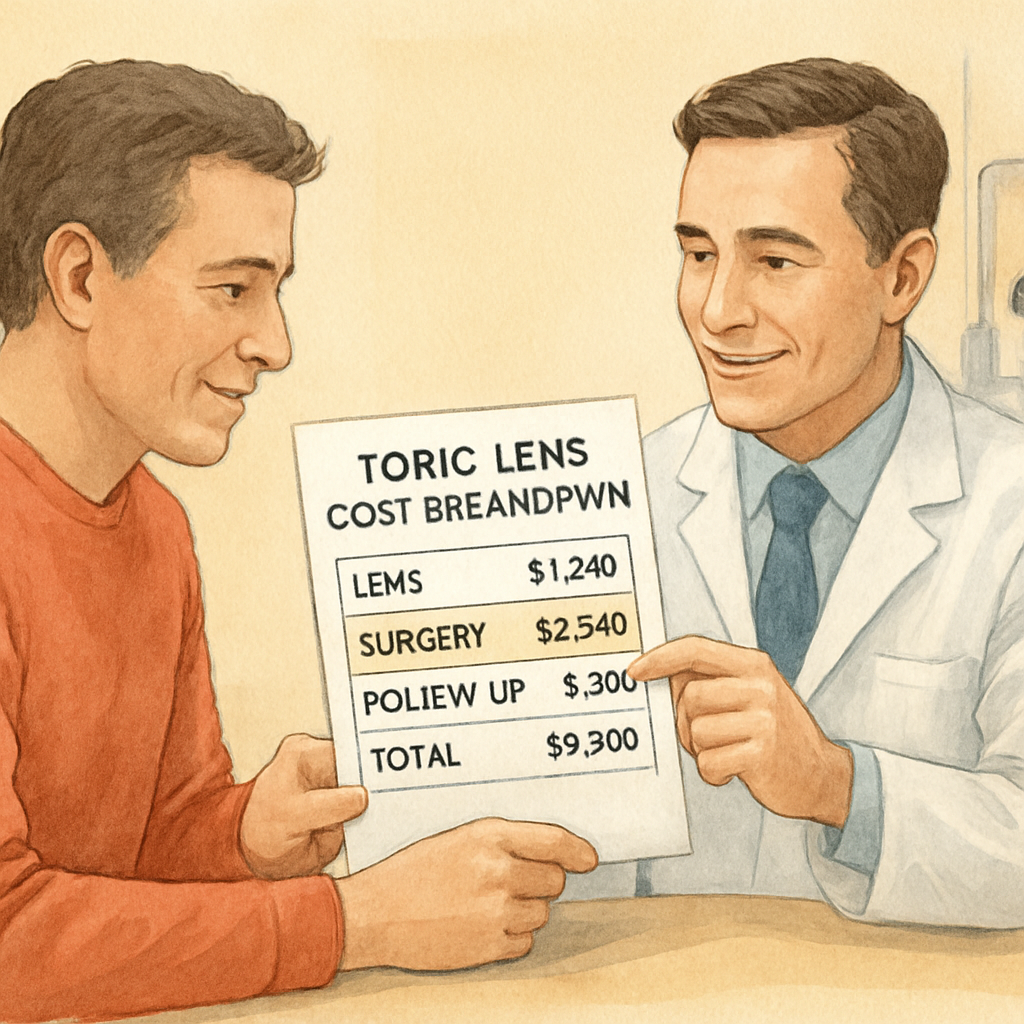
Bottom line: you control toric lens cost by dissecting the quote, confirming which hardware you truly need, and timing your surgery to line up with rebates or financing offers. Follow these steps, and you’ll walk into the operating theatre confident that you’ve squeezed every unnecessary dollar out of the budget while still getting the clear vision you deserve.
Future Trends in Toric Lens Pricing (2025‑2026)
When you stare at the line‑item for a toric lens today, it feels like you’re buying a piece of high‑tech hardware. But the price tag isn’t static – it’s a moving target shaped by market forces, new material science, and the way clinics bundle services.
Why the market is heating up
The global phakic intraocular lens market – the broader family that toric lenses belong to – is projected to grow at a compound annual growth rate of about 7.9% between 2025 and 2035, with the 2025 market value already at $440.6 million and expected to more than double by 2035 according to Future Market Insights . That kind of expansion usually pushes manufacturers to invest in better optics, which in turn nudges the price upward.
What does that mean for you? More choices, but also a wider spread between the “budget” toric lens and the premium, plate‑haptic models that promise extra stability.
Emerging lens designs that could shift cost
In 2024 Alcon announced plans for a TOTAL30 Multifocal Toric lens that will hit the market between 2024 and 2026 as reported by LensPricer . Because it bundles two functions, the TOTAL30 is likely to sit at the higher end of the toric lens cost spectrum. Clinics that adopt it may bundle the price with a premium alignment system, but the trade‑off is fewer follow‑up visits and a lower chance of needing a repositioning surgery.
Technology‑driven price drivers
Three tech trends are set to shape toric lens cost in the next two years:
AI‑assisted biometric imaging.Faster, more precise measurements reduce the need for oversized lenses or capsular tension rings, trimming a few hundred dollars off the quote.
Pre‑loaded delivery systems.When the lens comes in a ready‑to‑inject cartridge, operating time drops and surgeons can charge a smaller “instrument” fee.
Digital alignment platforms.Tools like Verion or Callisto add $250–$350 upfront but can save $1,200‑$1,500 by avoiding a secondary repositioning procedure.
If a clinic already owns a digital platform, you might see the alignment fee disappear from your itemised quote – a subtle cost‑saving that’s easy to miss.
Pricing scenarios you’ll likely see in 2025‑2026
Here’s a quick snapshot of three realistic bundles you could encounter in a Sydney practice:
Base C‑loop toric + manual marking.Lens $1,600, surgeon $1,200, diagnostics $350 – total around $3,150 before rebates.
Plate‑haptic toric + digital alignment.Lens $2,050, alignment $300, surgeon $1,350, diagnostics $400 – total about $4,100.
Hybrid TOTAL30 Multifocal Toric + AI imaging.Lens $2,400, AI package $200, surgeon $1,500, diagnostics $450 – total roughly $4,550.
Notice the jump of $400‑$600 when you add a premium lens or advanced tech. Those extra dollars often pay off in visual stability, but they’re also the part of the quote you can negotiate.
How to keep the price in check as the market evolves
1.Ask for a line‑item breakdown that isolates “technology fees.”If you see a $300 digital fee, request a manual marking alternative and compare outcomes.
2.Bring your own up‑to‑date biometry report.A fresh scan can prove you don’t need a capsular tension ring, shaving $250‑$400.
3.Check if the clinic participates in bulk‑purchase programs.As demand surges, many Sydney centres negotiate volume discounts with manufacturers – especially for new launches like the TOTAL30.
4.Time your surgery around rebate cycles.Private health funds often raise their toric‑lens rebates at the start of the financial year; a few extra weeks can save you $200‑$300.
5.Consider a short “cost‑clarity” consult.A 15‑minute chat with the admin team can reveal hidden fees or promotional pricing you’d otherwise miss.
What to watch for after 2026
Beyond 2026, the market is likely to see more “custom‑fit” toric lenses that use AI to fine‑tune cylinder power to within 0.25 D. Those lenses could command a premium, but the precision may eliminate the need for any post‑op adjustments, effectively flattening the total cost of care.
In short, toric lens cost is poised to climb modestly as technology adds value. Your best defense is staying informed, demanding transparency, and leveraging the very tools that are driving the price up to bring the total bill down.
Conclusion
We've walked through every angle of toric lens cost, from the base price of the IOL to the hidden fees that can surprise you at checkout.
So, where does that leave you? You now have a checklist, a few negotiation tricks, and a timeline for when rebates bite.
Remember, a clear line‑item quote is your best ally. If you see a $300 digital marking fee, ask for a manual alternative; if your white‑to‑white measurement is under 12.5 mm, you can often skip the capsular tension ring and shave a few hundred dollars.
Timing matters, too. Scheduling your surgery soon after your health fund rolls out a new rebate can trim $200‑$300 off the out‑of‑pocket total.
And don't forget the long‑term view. Paying a bit more for a plate‑haptic lens or AI‑assisted imaging may feel like an extra cost today, but it can prevent a costly repositioning surgery later.
What's the next step? Grab your most recent biometry report, book a 15‑minute cost‑clarity consult, and walk into the clinic with the confidence that every dollar is accounted for.
When you leave the operating room seeing clearly, you'll know the effort you put into managing toric lens cost paid off – and you’ll have saved enough to enjoy that clearer view without the lingering “what if?” worry.
FAQ
What factors influence toric lens cost the most?
At the end of the day, toric lens cost breaks down into three buckets: the base price of the lens itself, any extra hardware like a capsular tension ring (CTR), and the technology fees for alignment or imaging. Your prescription’s cylinder strength, white‑to‑white measurement, and axial length decide which lens model you need, while a surgeon’s experience can add a premium for tighter outcomes.
How can I lower toric lens cost without sacrificing vision?
Start with a line‑item quote and flag anything you don’t actually need. If your white‑to‑white reads under 12.5 mm, ask to drop the CTR. Bring a fresh biometry report so the clinic can skip a repeat scan. You can also request a manual marking method instead of a digital system, which shaves a few hundred dollars while still delivering good alignment for most eyes.
Does my private health fund really cover toric lens cost?
Most Australian private health funds rebate somewhere between $500 and $800 per eye for a toric IOL, but they won’t touch the surgeon’s fee or ancillary hardware. The key is to get an itemised quote before you sign consent, then submit that exact document to your insurer. That way you lock in the maximum rebate and avoid surprise out‑of‑pocket charges.
Are digital alignment tools worth the extra fee?
Digital platforms like Verion or Callisto usually add $250‑$350 to the bill. In exchange, they reduce lens rotation risk, which can save you $1,200‑$1,500 if a repositioning surgery becomes necessary. If your surgeon is confident with a reliable manual marker and your eye measurements are straightforward, you might skip the tech fee. Otherwise, think of the digital fee as an insurance policy against a costly follow‑up.
What is a capsular tension ring and when does it add to the cost?
A capsular tension ring (CTR) is a tiny, plastic hoop that stabilises the capsular bag when the white‑to‑white distance is large or the eye is unusually long. It typically costs $250‑$400. If your biometric report shows a WTW under 12.5 mm and a normal axial length, you can often negotiate to leave the CTR out of the quote, trimming a few hundred dollars.
When is the best time to schedule surgery to maximise rebates?
Private health funds usually update their rebate schedules at the start of the financial year (July 1). Booking your procedure within a month or two after the new rates roll out can capture the highest possible payout. Combine that timing with a short “cost‑clarity” consult, and you’ll walk into surgery knowing you’ve squeezed every rebate dollar out of the system.
Comments