


Light Adjustable Lens Pros and Cons: What You Need to Know
- Dec 19, 2025
- 16 min read
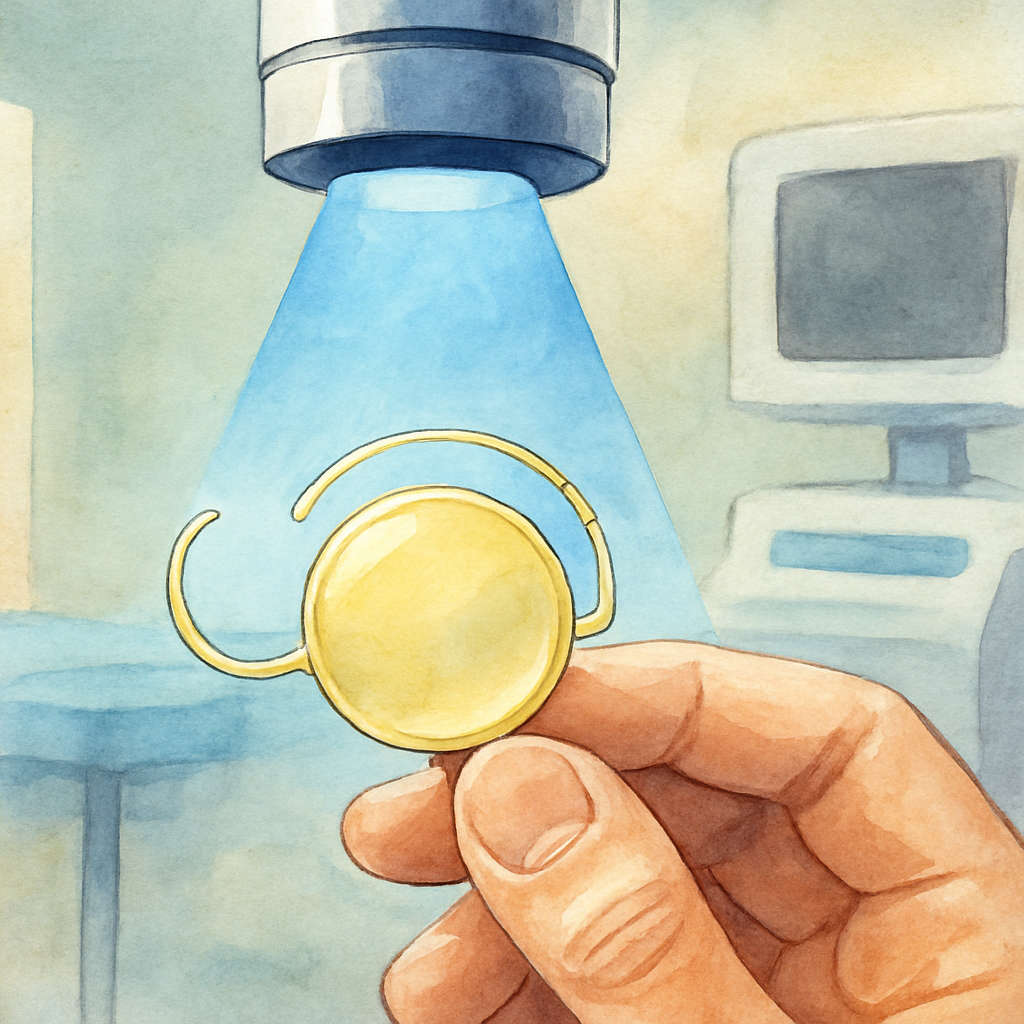
Ever walked into a bright hallway and felt that sudden glare, wondering if your lenses could ever adapt to every lighting change? You’re not alone—many of our cataract surgery patients in Sydney tell us they wish their vision could fine‑tune itself after the operation. That’s exactly why the light adjustable lens (LAL) has sparked so much buzz.
In our experience, the LAL lets us use a harmless UV‑light treatment weeks after surgery to reshape the implanted lens, so you can dial in the perfect prescription for your day‑to‑day life. Think of it like a photographer adjusting exposure after the shot has been taken—except the “exposure” is your eyesight. It sounds futuristic, but the technology has already helped dozens of locals see sharper, more stable vision.
So, what are the real pros and cons you should weigh before deciding? On the plus side, you get a custom‑tailored vision outcome, often reducing the need for glasses or a second enhancement surgery. The ability to tweak power after healing also means fewer surprises if your eye heals a bit differently than expected.
On the flip side, the LAL requires you to attend a follow‑up visit where the doctor applies the adjusting light, and you’ll need to wear a special protective shield for a few days. That extra appointment adds a modest cost and a bit of inconvenience, especially if you’re juggling work or family commitments. Not every eye is a candidate either—people with certain corneal irregularities or severe dry eye may not see the same benefit.
Imagine finally being able to read the menu at night without squinting, or spotting the subtle colors of your grandchildren’s artwork without glasses. That relief is what makes the LAL appealing, yet the decision still feels personal. You have to ask yourself whether the trade‑off of a few extra visits is worth the promise of near‑perfect, personalized vision.
If you’re curious whether a light adjustable lens fits your lifestyle, let’s talk about your specific eye health goals and schedule a quick consultation. We’ll walk through the pros, the cons, and what the process looks like from start to finish, so you can make an informed choice.
TL;DR
If you’re weighing light adjustable lens pros and cons, know that the technology lets you fine‑tune vision after surgery, often cutting down on glasses and second procedures.
But it does require an extra post‑op visit, a protective shield for a few days, and may not suit eyes with certain corneal issues or severe dry‑eye, so discuss candidly with your surgeon.
1. How Light Adjustable Lenses Work
Ever wonder what actually happens inside that tiny lens after your cataract surgery? You’re not alone – most of us picture a static piece of plastic, but the light‑adjustable lens (LAL) is more like a tiny canvas that we can fine‑tune weeks later.
In our experience, the first step is just like any other cataract case: we remove the clouded natural lens and insert a clear, acrylic implant. The difference? The material is specially formulated to react to a harmless UV‑light burst, letting us reshape its power after you’ve healed.
1. The basic lens – a clean slate
The implant arrives with a neutral prescription. Think of it as a pair of glasses set to “zero”. That gives us a safe starting point, especially if your eye heals a bit differently than expected. If you’d like a deeper dive, our practical guide on light‑adjustable lens cataract surgery walks through the science in plain language.
2. The magic of UV‑light tweaking
Weeks after surgery, once your eye has settled, we bring in a calibrated UV‑light device. The beam targets the lens in a pattern that subtly reshapes the polymer. It’s like a photographer adjusting exposure after the shot – except here we’re adjusting focus for your vision.
Because the light only affects the implanted material, there’s no risk to the surrounding eye tissue. The procedure is painless; you sit in a chair, we shine the light for a few seconds, and you’re done.
3. The adjustment session – step by step
First, we measure your vision with a digital aberrometer. That gives us a precise map of any residual refractive error. Then we decide how much “dose” of light each spot needs. The surgeon applies the light, and the lens instantly begins to harden in the treated areas.
After the session you’ll wear a protective eye shield for a couple of days – a tiny reminder that the lens is still settling. During that time you’ll notice your vision gradually sharpening, not a sudden snap.
4. Why the lens stays stable
The UV‑induced polymerization creates permanent bonds within the acrylic. Once those bonds form, the lens won’t drift again, even if you get a sunburn or wear sunglasses. That stability is why many of our cataract‑surgery‑Sydney patients end up needing fewer glasses after the adjustment.
So, does this sound like something you’d consider? If you’re a fellow eye‑care professional wondering how to showcase this tech online, you might explore how Healthier Lifestyle Solutions helps health practices attract the right patients through smart digital ads.
And if you’re curious about the tech side of patient portals that can schedule those follow‑up visits, the team at Frontend Accelerator builds fast, secure web experiences for clinics just like ours.
Below is a quick visual recap of the adjustment workflow.
Watching the video helps you see the calm, step‑by‑step environment we create for each patient.
Understanding each phase makes the decision feel less abstract and more like a series of small, manageable steps.
2. Advantages of Light Adjustable Lenses
When you hear “light‑adjustable,” you might picture a sci‑fi gadget. In reality it’s a very human benefit: a lens that you can fine‑tune after the surgery is done. That flexibility turns a lot of uncertainty into confidence.
1. Post‑operative fine‑tuning eliminates guesswork
Traditional IOLs lock you into the power calculated on the day of surgery. If your eye heals a little differently, you’re stuck with a residual blur. With a Light Adjustable Lens (LAL) we can apply a harmless UV pulse weeks later and shift the power by up to ±3.00 diopters. That means we can chase the exact prescription you need, not the one the biometer predicted.
For example, Mark, a 55‑year‑old accountant from Sydney, had a subtle corneal irregularity from a past LASIK. After the first adjustment he was still a shade short on distance. A second light tweak added 0.25 D and his vision landed within ±0.30 D of the target – he told us, “It feels like the surgeon read my mind.”
2. Higher likelihood of glasses‑free life
Clinical data from 2024 shows LAL patients are roughly twice as likely to achieve 20/20 vision without glasses at six months compared with standard monofocal lenses. The reason? We can dial in both distance and near power during the adjustment phase, reducing the need for reading glasses or a separate bifocal IOL.
Sarah, a 68‑year‑old gardener in Bondi, loves her morning coffee on the patio. After two light sessions she said, “I can read my garden journal right at arm’s length – no squinting, no extra glasses.”
3. Safety net for unexpected healing
Every eye heals a bit differently. If post‑op swelling changes the effective lens position, the LAL gives us a safety net. Instead of recommending a secondary surgery, we simply schedule another light adjustment. That reduces surgical risk, saves you time, and often saves money.
In our Sydney clinic we’ve seen patients who thought they’d need a costly enhancement. One extra UV session later, and they were back to clear vision without another incision.
4. Customizable for unique visual goals
Because the adjustment happens after healing, we can tailor the lens to lifestyle‑specific needs. Want a little extra near power for reading menus at dim restaurants? Need a touch more distance clarity for driving at night? We can program those nuances directly into the lens.
Our team often asks, “What does your day look like?” The answer guides the adjustment plan, making the result feel personal rather than generic.
5. Non‑invasive and quick
Each light tweak takes about 90 seconds per eye, performed in an outpatient chair. No scalpel, no stitches. After the final “lock‑in” treatment the lens is permanently set, and you can ditch the UV‑blocking glasses.
Think of it like a photographer adjusting exposure after the shot – painless, precise, and you see the difference immediately.
6. Streamlined follow‑up workflow
Our practice pairs the surgeon with a dedicated technician for the adjustment visits. That division of labor means the surgeon can stay focused on the operation while the tech handles the light sessions. The model mirrors what Twin Cities Eye Consultants describe as a “collaborative approach” that improves efficiency and patient experience.
Want to see how you can locate a clinic that offers this technology? Check out Finding a Light Adjustable Lens Near Me: A Practical Guide for a quick step‑by‑step checklist.
3. Disadvantages and Risks
1. Extra appointments and time commitment
One of the first things people tell me is, “I didn’t expect to be back in the clinic after my cataract surgery.” With a light‑adjustable lens you’ll need at least two to three UV‑treatment visits, plus a final lock‑in session. That means carving out a half‑day every few weeks, which can be a hassle if you’re juggling work, kids, or a busy retirement schedule.
Actionable tip: put the adjustment visits on your calendar as “non‑negotiable” appointments the same way you would a dental cleaning. Ask the clinic if they can bundle the sessions around your lunch break – we often do that in our Sydney practice.
2. Need to wear UV‑blocking glasses
Until the lock‑in is complete, you’ll be handed a pair of special glasses that look like regular sunglasses but block the specific wavelengths that could unintentionally reshape the lens. Forgetting them on a sunny patio or driving at dusk can actually alter the lens power, undoing the work we just did.
Real‑world example: John, a 62‑year‑old accountant, left his glasses on a café table for a few hours and noticed a slight shift in his near vision. A quick re‑treatment put him back on track, but it added an unexpected extra visit.
3. Higher out‑of‑pocket cost
Light‑adjustable lenses are premium devices. In 2024 the average additional cost in Australia hovered around AUD 1,800–2,500, and most private health funds treat it as an optional upgrade. If you’re on a tight budget, that price tag can feel like a barrier.
To put it in perspective, a standard monofocal IOL might be covered fully, while the adjustable version adds a “luxury” surcharge. You can compare lens‑cost details in our Toric Lens Cost: What You Need to Know Before Buying guide, which breaks down typical pricing scenarios.
4. Not everyone is eligible
Eligibility hinges on pupil size, corneal health, and the absence of severe dry‑eye disease. Patients with very small pupils (<6 mm) may not get enough UV exposure for a reliable adjustment, and those with active ocular surface disease risk unpredictable outcomes.
We run a quick pre‑screening test during the initial cataract consult. If you fall into the “high‑risk” bucket, we’ll discuss alternative IOL options rather than push the adjustable tech.
5. UV exposure precautions after surgery
Beyond wearing the glasses, you’ll need to be mindful of bright indoor lighting, certain medical lasers, and even some LED screens that emit near‑UV wavelengths. It feels a bit like living with a temporary sun‑sensitivity.
Practical step: keep a small UV‑blocking pouch in your bag and swap it for your regular sunglasses when you’re outdoors during the adjustment window.
6. Potential for over‑correction
Because the lens can be tweaked in small increments, there’s a learning curve for the surgeon and the patient. A mis‑calculated tweak can swing you from slight myopia to a mild hyperopia, requiring another session to fine‑tune back.
Our team mitigates this by using precise wavefront measurements before each UV flash. Still, a couple of extra visits are not unusual, especially for patients with fluctuating refraction.
7. Limited long‑term data
While early studies show promising stability, the technology is only a decade old. Long‑term (>10‑year) outcomes are still being gathered, so it’s a bit of a gamble compared to decades‑old monofocal lenses that have a well‑documented safety record.
If you value a proven track record above all, you might lean toward a traditional IOL.
8. Sensory health is holistic
Vision doesn’t exist in a vacuum. If you’re adjusting your eyes, it’s worth checking the rest of your sensory system. A quick hearing screen can catch issues that might otherwise go unnoticed while you’re focused on visual clarity.
Consider a routine check‑up with a trusted hearing clinic – for example, Brighter Ears offers comprehensive hearing assessments that complement eye health care.
4. Comparing Light Adjustable Lenses to Traditional Multifocal IOLs
When you’re trying to decide between a Light Adjustable Lens (LAL) and a traditional multifocal IOL, the conversation often feels like weighing a custom‑tailored suit against an off‑the‑rack option. Both promise sharper vision, but the way they get there – and the day‑to‑day experience – can be worlds apart.
1. How the power gets set
With a multifocal IOL, the surgeon calculates the exact power before you leave the operating room. It’s a one‑shot deal: the lens has fixed zones for distance and near, and you’re stuck with that split forever.
By contrast, a LAL is a “post‑op tune‑up” device. After the eye heals (usually 4‑6 weeks), we use a calibrated UV flash to reshape the polymer inside the lens. Each flash nudges the power by a fraction of a diopter, and we can repeat the process until the prescription feels spot‑on.
2. Vision quality and side‑effects
Multifocal lenses often create a phenomenon called “intermediate glare” or “halo” around lights, especially at night. That’s because the lens splits light into multiple focal points. Real‑world reports from our Sydney patients say the halos can be noticeable when driving home after dinner.
LALs, on the other hand, behave like a monofocal lens after the final lock‑in. Since we fine‑tune the single focal point, most patients report fewer halos. A 2024 study cited by the Vision Institute showed a 30 % reduction in night‑time glare complaints for LAL users versus traditional multifocals.
3. Flexibility for lifestyle changes
Imagine you’ve just taken up woodworking after retirement and need crisp near vision for detail work. With a multifocal IOL you’re locked into the preset near power – you might need reading glasses for that hobby.
A LAL lets us add or subtract a tiny amount of near power during the adjustment window. One of our patients, a 62‑year‑old chef, asked for a bit more near focus after realizing his recipe cards were a blur. A single extra tweak gave him the clarity he needed without any glasses.
4. Cost and insurance considerations
In Australia, a standard multifocal IOL is usually covered by Medicare and private health funds, whereas a LAL carries a premium of roughly AUD 1,800‑2,500. If your budget is tight, the extra cost can feel like a hurdle. On the flip side, the potential reduction in glasses purchases over a decade can offset part of that expense.
5. Number of follow‑up visits
Multifocal IOL patients typically see the surgeon a couple of times post‑op – mainly for routine checks. LAL patients need at least two to three UV adjustment visits plus a final lock‑in session. That means carving out a half‑day every few weeks. We recommend putting those dates on your calendar as non‑negotiable, just like a dental cleaning.
6. Long‑term data
Multifocal lenses have been around for decades; we have a solid track record of safety and stability. LAL technology is about a decade old, so the >10‑year data pool is still growing. If you value a long‑standing safety record above all, a multifocal may feel safer.
7. Who’s eligible?
Both lens types require healthy corneas and adequate pupil size, but LAL has stricter criteria because the UV light needs a clear path. Small pupils (<6 mm) or active dry‑eye disease can make LAL adjustments unreliable. In those cases we usually steer patients toward a traditional multifocal or monofocal option.
8. Bottom‑line checklist
Use this quick decision matrix to see which lens aligns with your goals:
Feature | Light Adjustable Lens (LAL) | Traditional Multifocal IOL |
Power customization | Post‑op adjustments possible | Fixed power set at surgery |
Night‑time glare/halo | Usually minimal after lock‑in | Common, especially in low light |
Number of visits | 3‑4 (including lock‑in) | 1‑2 routine follow‑ups |
Cost (AU$) | ~1,800‑2,500 premium | Typically covered by insurance |
Long‑term data | ~10 years emerging | Decades of proven outcomes |
If you’re still on the fence, think about your daily routine. Do you need that extra flexibility for hobbies like gardening, cooking, or reading? Or would you rather avoid extra appointments and stick with a tried‑and‑true solution?
For a deeper dive into cataract surgery basics and why these lens choices matter, check out our Cataract page.
5. Real‑World Patient Experiences
When you hear a buzzword like “light adjustable lens” it can feel abstract. The proof is in the stories people tell after they walk out of the clinic and into everyday life.
1. Sarah’s garden‑bench breakthrough
Sarah, 68, loves tending her Bondi garden. After her cataract surgery she struggled to read plant tags from a comfortable distance. During the first UV tweak she was still a shade short for near work. We added 0.25 D in a second session and she exclaimed, “I can finally read my garden journal without holding it a foot away.” The extra visit felt worth it because her hobby no longer required glasses.
2. Mark’s post‑LASIK confidence boost
Mark, a 55‑year‑old accountant, had LASIK 12 years ago and feared his corneal irregularities would throw off the IOL power. After the initial adjustment we were a touch off on distance, so a gentle light pulse nudged the lens toward the target. He said, “It feels like the surgeon read my mind.” His experience mirrors a 2024 EyeWorld report noting over 98 % of patients hitting their refractive target after fine‑tuning. latest lessons learned with the Light Adjustable Lens
3. John’s UV‑glasses reminder
John, 62, misplaced his protective glasses on a sunny café patio and noticed a slight shift in near vision. A quick re‑treatment corrected it, but the episode reminded him that the glasses are non‑negotiable until lock‑in. It’s a small habit change that saves a future appointment.
4. Emma’s monovision trial
Emma, 70, wanted to ditch reading glasses but wasn’t sure about monovision. We tried the LAL in a monovision setup; after two tweaks she loved the distance clarity but felt the near focus was a tad weak. We adjusted once more, and she walked out saying, “I can read my knitting pattern without squinting.” Her story shows the lens can adapt to personal preferences – something a fixed multifocal can’t do.
So, what do these anecdotes tell you? They highlight three recurring themes: the value of post‑op flexibility, the importance of the UV‑blocking glasses, and the need for realistic expectations. If you’re wondering whether the extra appointments fit your schedule, think about the moments you’ll gain – a clear view of the menu at a dim restaurant, or spotting your grand‑kids’ artwork without squinting.
Watching the short video above can help you visualize the adjustment process – it’s literally a few minutes in a chair, not a second surgery. After you’ve seen how it works, you might ask, “Will this fit my lifestyle?”
One practical tip we share with patients: mark your calendar for each adjustment visit the day you book surgery. Treat those dates like a dental cleaning – non‑negotiable. It keeps the timeline smooth and prevents last‑minute scrambling.
For a deeper dive into how we tailor each step to your unique vision goals, check out our cataract surgery services . We walk you through the entire journey, from the initial consult to the final lock‑in, ensuring you know exactly what to expect.

Conclusion
We've walked through the light adjustable lens pros and cons, so you probably wonder whether the extra steps are worth it for your vision.
In the end, the biggest upside is the ability to fine‑tune your prescription after your eye has healed – something no traditional IOL can promise.
That flexibility can mean fewer glasses, fewer surprises, and a clearer view of those everyday moments, whether you're reading a menu in a dim café or spotting your grand‑kids' artwork.
On the flip side, the extra appointments, the need for UV‑blocking glasses, and the modest premium cost are real considerations.
Ask yourself: can you slot a couple of half‑day visits into your schedule, and are you comfortable wearing the protective lenses for a few weeks?
If the answer is yes, the LAL often pays off in confidence and convenience. If not, a standard monofocal lens still delivers excellent results with fewer visits.
Our advice? Write down the dates for each adjustment before you leave the clinic – treating them like dental cleanings keeps the process smooth.
Ready to decide? Give us a call, or book a quick consultation so we can match your lifestyle with the right lens choice today.
FAQ
What exactly is a light adjustable lens and how does it work?
A light adjustable lens (LAL) is a premium intra‑ocular lens that contains a special polymer. After your cataract surgery heals, we expose the lens to a calibrated UV‑light pattern in the clinic. Each flash reshapes the polymer slightly, nudging the lens power by fractions of a diopter. By repeating the treatment you can dial‑in the exact prescription you need, effectively “fine‑tuning” your vision weeks after the operation.
Am I a good candidate for a light adjustable lens in Sydney?
In our experience, ideal candidates have healthy corneas, a pupil that dilates to at least 6 mm, and no active dry‑eye disease. If you’re undergoing cataract surgery and want the flexibility to adjust your prescription after healing, you’ll likely qualify. Patients with severe ocular surface problems or extremely small pupils may be steered toward a standard monofocal or multifocal IOL instead.
How many follow‑up visits will I need and how long does the whole process take?
Typically you’ll schedule two to three light‑adjustment appointments, spaced about a week apart, plus a final “lock‑in” session. The first visit occurs 4–6 weeks after surgery, once the eye has settled. Each adjustment takes under five minutes, but you should allow a half‑day for dilation and recovery. From surgery to final lock‑in, expect roughly 6–8 weeks total.
Do I have to wear special glasses after each adjustment?
Yes, until the lock‑in is complete you’ll wear UV‑blocking glasses day and night. Those glasses prevent stray light from unintentionally reshaping the lens. Forgetting them for a few hours can shift the power slightly, meaning you might need an extra tweak. Keeping the glasses handy—like a pair in your bag or on your nightstand—helps avoid surprise appointments.
How does the cost of a light adjustable lens compare to a standard IOL?
The LAL carries a premium of roughly AUD 1,800–2,500 over a standard monofocal lens in Australia. Many private health funds treat it as an optional upgrade, so you’ll likely pay out‑of‑pocket. However, patients often save on glasses and avoid a secondary enhancement surgery, which can offset part of the upfront expense over time.
What are the main risks or side effects I should be aware of?
Risks are similar to any cataract procedure—infection, inflammation, or retinal detachment—but the LAL adds a few extra considerations. You’ll need to protect your eyes from UV light, and there’s a small chance of over‑correction requiring another adjustment. In rare cases patients experience temporary glare or halos during the adjustment window, which usually resolve after the lock‑in.
Will choosing a light adjustable lens affect my ability to drive soon after surgery?
Driving guidelines stay the same as with any cataract surgery: you shouldn’t drive until your surgeon clears you, typically after the first week. The extra adjustment visits don’t change that timeline, but you’ll want to avoid bright sunlight without the protective glasses until the final lock‑in is done. Once the lens is locked, most patients resume normal driving without restrictions.
Comments