


How Long Does YAG Laser Capsulotomy Take? A Practical Step‑by‑Step Guide
- Jan 25
- 16 min read

Imagine you’ve just had a YAG laser capsulotomy after cataract surgery and the doctor tells you the whole thing takes only a few minutes. You’re probably thinking, “Is that really all it is? How long will I actually feel anything?” That split‑second procedure can feel like a blink, but the recovery timeline is where most of the anxiety lives.
In our Sydney clinic, we’ve seen patients walk out of the treatment room within 10‑15 minutes, yet the after‑effects can linger. Most people notice a brief, bright flash or a slight hazy spot for the first hour. By the next day, vision usually sharpens, but it’s normal to experience mild glare for up to a week.
So, what does “how long does YAG laser capsulotomy take” really encompass? It’s not just the laser pulse—it’s the whole experience from prep to post‑procedure comfort. Here are three real‑world scenarios:
Maria, 68, retired teacher:The laser took 3 minutes, but she wore sunglasses for two days because of light sensitivity.
Tom, 55, accountant:The procedure was 5 minutes; he could return to his desk the same afternoon, though he avoided bright screens for 24 hours.
Lydia, 72, avid gardener:After a 4‑minute capsulotomy, she waited 48 hours before resuming outdoor work to protect her eyes from dust.
What we’ve learned is that the key to a smooth recovery is a simple after‑care checklist:
Wear UV‑blocking sunglasses for the first 24‑48 hours.
Avoid heavy lifting or strenuous exercise for at least 24 hours.
Use preservative‑free artificial tears if you feel dryness.
Schedule a brief follow‑up to confirm the capsule is clear.
If you’re curious about how this fits into the broader picture of eye‑surgery healing, check out our Laser Eye Surgery Recovery Time: A Practical Step‑by‑Step Guide for a detailed timeline.
And while you’re planning your next steps, you might also wonder what glasses will feel best once your vision stabilises. A quick read on how to choose eyeglass frames for your face shape can help you pick frames that complement your new clarity without the hassle.
Bottom line: the laser itself is over in minutes, but giving your eye a gentle transition period of a few days ensures the best visual outcome. Keep these tips in mind, and you’ll move from that brief flash to crisp, comfortable sight faster than you expect.
TL;DR
Wondering how long does YAG laser capsulotomy take? In just a few minutes the laser pulse is done, but plan for 24‑48 hours of gentle after‑care to protect your vision and enjoy a smooth recovery.
You’ll notice a brief flash right after, and by the next day clarity improves, while using UV‑blocking sunglasses and preservative‑free tears eases any discomfort.
Step 1: Pre‑Procedure Consultation
Before the laser even fires, the real clock starts ticking during your pre‑procedure consultation. That's the moment you sit down with your eye surgeon, ask the dreaded question “how long does YAG laser capsulotomy take?”, and get a clear roadmap for the minutes, hours, and days that follow.
First, we’ll go over your medical history – anything from past cataract surgeries in Sydney to current retina treatments. It sounds bureaucratic, but those details let us fine‑tune the laser settings, which in turn keeps the actual laser time down to a few minutes. In our experience, most capsulotomies wrap up in under five minutes, but the consultation itself usually lasts 15‑20 minutes.
Next, we discuss your daily routine. Are you a morning jogger who can’t miss the park? Do you work in a high‑rise office and need to drive after the procedure? Knowing how you live helps us schedule follow‑up checks and give you realistic expectations about when you can safely return to those activities.
During this chat, we’ll also hand you a checklist – think of it as a mini‑to‑do list for the next 48 hours. It covers everything from protecting your eyes with UV‑blocking sunglasses to avoiding heavy lifting. If you’re curious about the broader recovery timeline, take a look at our Eye Surgery Recovery: A Step‑by‑Step Guide for a deeper dive.
So, what should you bring to the consultation? A list of current medications (including any eye drops), recent vision test results, and any questions you’ve jotted down. It’s perfectly fine to ask, “Will I need to wear glasses again?” – many patients wonder that right after their capsulotomy.
And here’s a little secret most people miss: nutrition can subtly influence how quickly your eye heals. Partnering with a proactive health brand like XLR8well can give you access to supplements that support retinal health, especially if you’re already managing macular degeneration.
Once the consultation wraps, you’ll leave with a clear timeline: the laser itself takes only a few minutes, but the preparatory steps and post‑care guidance are what make the whole experience feel smooth and predictable.
After you’ve watched the quick overview, remember that the real work starts once you step out of the clinic. Keep your sunglasses handy, and if you’re thinking about new glasses after your vision stabilises, this guide from how to choose eyeglass frames for face shape can help you pick a style that suits your refreshed sight.
Finally, jot down the date of your follow‑up appointment before you leave. Most surgeons schedule it within a week to confirm the capsule is clear and to address any lingering glare. If anything feels off – sudden pain, persistent vision changes – give us a call right away. Your eye’s recovery is a team effort, and the consultation is the first play in that game.
In short, the pre‑procedure consultation isn’t just paperwork; it’s the foundation that turns a five‑minute laser burst into a hassle‑free recovery. Treat it like a friendly chat, bring your questions, and you’ll walk out confident that you know exactly how long each step will take.
Step 2: Preparing for the Capsulotomy
Now that you’ve locked in the appointment, the next thing on your mind is probably “how long does YAG laser capsulotomy take” and what you need to do before you walk into the clinic. The truth is, the laser part itself is over in minutes, but a few simple steps beforehand can shave off stress and keep the whole process feeling as smooth as a Sydney arvo breeze.
Gather your eye‑care paperwork
First, pull together any recent eye‑exam reports, medication lists, and a copy of your cataract surgery summary. Your surgeon will want to double‑check that the posterior capsule is still intact and that no new retinal issues have popped up since your last visit. If you’re on blood‑thinners, have diabetes, or just started a new supplement, write that down too – it can affect the laser’s energy settings.
Plan your day of the procedure
Most patients find that the whole visit, from check‑in to checkout, fits comfortably into a 30‑minute window. That means you can schedule a coffee with a friend or a quick errand afterward without feeling rushed. Because the laser doesn’t require anaesthesia, you’ll be able to drive yourself home. Just remember to bring a pair of UV‑blocking sunglasses – you’ll need them for the next 24‑48 hours.
So, what should you pack? Your ID, the appointment reminder, and a small bag of any eye drops your doctor prescribed for post‑procedure use. If you wear contacts, leave them at home; you’ll be wearing glasses or no correction for a short while.
Pre‑procedure eye drops
About 15 minutes before the laser, the clinic will instil two drops: one to dilate the pupil and another to numb the surface. The drops can cause a brief blurry feeling, but that’s normal. If you’re prone to dry eyes, ask the nurse for a preservative‑free artificial tear you can use right after the procedure.
What to expect in the chair
You’ll sit in a reclined chair, place a chin rest, and look at a fixed point on the ceiling. The laser technician will align the YAG laser – a precise Yttrium‑Aluminium‑Garnet beam – with the cloudy capsule. The actual laser pulses take less than 10 minutes total, often closer to 2‑3 minutes. Cleveland Clinic notes that “the steps take less than 10 minutes” and the procedure ends as soon as the laser finishes the tiny opening.
During those seconds, you might see a bright flash or feel a slight “pop”. It’s harmless and signals that the capsule is being cleared. Most people describe it as a quick “blink” – you won’t even notice the time passing.
Post‑laser quick checklist
Put on your sunglasses before leaving the clinic.
Use the prescribed eye drops as directed – usually three times a day for a few days.
Avoid heavy lifting or vigorous exercise for at least 24 hours.
Keep a short follow‑up call scheduled for the next day to confirm you’re seeing improvement.
And here’s a handy visual guide to walk you through the steps – just hit play below.
Once you’ve checked off those items, you’ll feel confident that you’ve done everything you can to keep the capsulotomy as painless and swift as possible. Remember, the laser itself is over in a flash; the preparation is what guarantees you walk out with clear vision and minimal hassle.
Step 3: The Procedure Timeline
Alright, you’ve got the consult and you’ve gathered your paperwork – now it’s time to map out the actual day of the YAG capsulotomy. The big question on everyone’s mind is “how long does YAG laser capsulotomy take?” The short answer: the laser itself is over in a flash, but the whole appointment, from check‑in to checkout, usually spans 30‑45 minutes.
What the clock looks like
When you walk into our Sydney clinic, the receptionist will confirm your identity and hand you a short consent form – that’s about 3‑5 minutes. Next, a nurse will adminster the pre‑procedure drops (one to dilate, one to numbing). Those drops take roughly 15 minutes to work, and you’ll feel a mild blur while they do.
Once the drops have taken effect, you’ll be escorted to the laser suite. The actual laser pulses – the part that creates the tiny opening in the posterior capsule – typically last under 2 minutes. Most patients report seeing a brief flash, maybe hearing a soft “pop,” and then the chair is reclined for a quick post‑laser check.
After the laser, the technician will apply a short‑acting anti‑inflammatory drop and give you a printed after‑care sheet. You’ll spend another 5‑10 minutes gathering your sunglasses, eye‑drop bottle, and scheduling a follow‑up call.
Real‑world timelines
Take Sam, a 62‑year‑old accountant from the CBD. He arrived at 9 am, finished the consent and drops by 9:10, sat for the laser at 9:30, and was out the door with his sunglasses by 10 am. That’s a 60‑minute window, but the laser portion was just 90 seconds.
Then there’s Elaine, a 70‑year‑old garden enthusiast from the North Shore. She prefers a slower pace, so we scheduled a 10 am slot. She took the full 45‑minute visit, using the extra time to ask questions about post‑capsulotomy glare and her upcoming bushwalks.
Actionable checklist for the day
Arrive 10 minutes early – it gives you breathing room for paperwork.
Bring your ID, appointment reminder, and any current eye‑drop bottles.
Wear comfortable clothing; you’ll be sitting still for a few minutes.
Make sure you have UV‑blocking sunglasses ready for after the procedure.
Schedule a brief phone check‑in for the next day (we’ll call you at 10 am).
Following this checklist cuts down on idle time and ensures you leave feeling in control.
Tips from the clinic
We’ve learned a few tricks that shave minutes off the timeline. First, pre‑fill the consent form online before you arrive – that can cut the check‑in step by half. Second, keep a small bottle of preservative‑free artificial tears in your bag; you’ll need it once the drops wear off and the eye feels a bit dry.
And if you’re wondering how this fits with other laser procedures, you might find our laser eye surgery vs cataract surgery comparison useful for understanding why the YAG capsulotomy is so quick compared to, say, a retinal laser session.
One final note: while the procedure itself is brief, give yourself a half‑hour buffer for travel and post‑procedure paperwork. Rushing can add stress, and we’ve seen patients feel more confident when they have a relaxed timeline.
Looking beyond the clinic, supporting your eye health with good nutrition can make the recovery feel even smoother. A quick glance at XLR8well health optimisation shows a range of supplements that target eye‑specific antioxidants – not a replacement for medical care, but a helpful addition.
Step 4: Recovery and Post‑Op Care
So the laser’s done – you’ve just watched a tiny flash and felt a faint “pop”. Now the real question is,how long does YAG laser capsulotomy taketo feel completely normal again. In practice, the answer splits into two parts: the immediate few‑hour window where we watch your eye pressure, and the gradual few‑day period where your vision settles.
What happens in the first hour?
After the laser, we keep you in the outpatient area for about 30‑90 minutes. During that time we check intra‑ocular pressure (IOP) with a tonometer. A small rise in pressure is common; if it’s over 25 mmHg we may give a quick IOP‑lowering drop. Most patients leave the clinic with stable numbers and a printed after‑care sheet.
Here’s a quick snapshot from one of our Sydney patients, Alan (63, accountant). He finished his capsulotomy at 10 am, stayed for 45 minutes, and was cleared to drive home at 10:45 am. He reported a brief “floaters” sensation that faded by the evening.
First‑24‑hour checklist
Even though the laser itself is over in seconds, the first day sets the tone for a smooth recovery. Follow these steps:
Slip on UV‑blocking sunglasses as soon as you step outside. The bright Sydney sun can aggravate temporary light sensitivity.
Use preservative‑free artificial tears (one drop every two hours) if your eye feels dry. Our clinic provides a small bottle at discharge.
Avoid heavy lifting, vigorous exercise, or bending over for at least 24 hours. This reduces the risk of a pressure spike.
Skip screen‑time – phones, tablets, or computer monitors – for the first 6‑8 hours. The bright glare can make the post‑laser “halo” effect feel worse.
We also like to remind patients to keep a short‑term pain‑relief plan handy. Over‑the‑counter acetaminophen works well; we generally advise against NSAIDs for the first day unless you have a specific reason.
Days 2–5: Fine‑tuning your vision
Most people notice a clear improvement by the next morning, but a mild glare or occasional floaters can linger up to a week. That’s normal – the retina is readjusting to the newly opened capsule.
Maria, 68, retired teacher, shared that she wore her sunglasses for two full days and used tears three times a day. By day three she could read the morning paper without squinting.
During this window, we suggest a gentle eye‑exercise: stare at a distant object for 20 seconds, then shift focus to something close for 5 seconds. Repeat five times. It helps the brain re‑calibrate focus and can ease lingering halos.
When to call us
While complications are rare, be on the lookout for:
Sharp pain that doesn’t improve after 30 minutes.
Sudden loss of vision or a large increase in floaters.
Persistent redness or discharge.
If any of these pop up, give our clinic a call right away – we’ve seen that early intervention prevents more serious issues.
Long‑term care tips
Beyond the first week, keep your eye healthy with a balanced diet rich in lutein, zeaxanthin, and omega‑3s – think leafy greens, carrots, and fish. Regular eye‑checks every six months will catch any future capsule clouding early.
For a deeper dive into post‑laser recovery timelines, see our guide on Laser Retinopexy Recovery Time: What to Expect After the Procedure . It outlines similar after‑care steps that apply to YAG capsulotomy as well.
Need a clinical reference? The Alberta Health after‑care page notes that patients typically wait 1‑2 hours for pressure checks and can return to normal activities the next day (source) .
Bottom line: the laser part is over in a flash, but giving your eye a gentle, structured recovery plan – sunglasses, tears, pressure monitoring, and a short break from screens – ensures you enjoy clear vision without setbacks.
Step 5: Comparing Capsulotomy Options and Timing
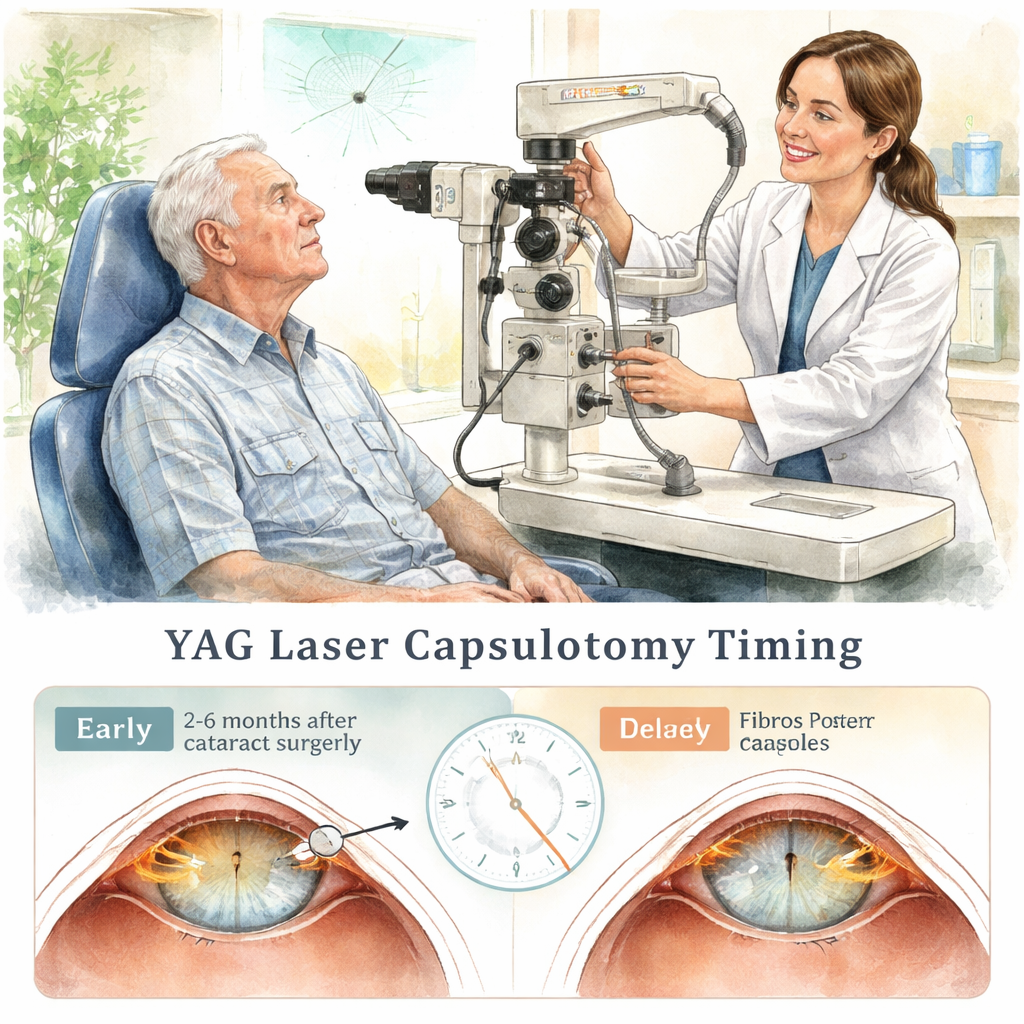
When you finally sit down to decide how to clear that cloudy capsule, you’ll discover there isn’t a one‑size‑fits‑all answer. The two main routes are a standard YAG laser capsulotomy performed shortly after the clouding becomes noticeable, or a delayed approach where we wait a few weeks to see if the opacity stabilises on its own. Both have pros and cons, and the timing you choose can change how quickly you get back to reading the paper or gardening in the backyard.
In our Sydney clinic, we often start by asking you how disruptive the clouding is in daily life. If you’re squinting at the TV or struggling to recognise faces, we usually recommend an early capsulotomy – the laser can be ready within a week of your consult. If the blur is mild, we might suggest a watch‑and‑wait plan, especially if you’ve just had recent retinal work where we prefer a gentler pressure environment.
Option 1: Immediate YAG capsulotomy
What does “immediate” really mean? Typically we schedule the laser within 3‑7 days of the decision. The procedure itself still takes under five minutes, but the overall experience, from check‑in to checkout, stretches to about 30‑45 minutes. The biggest upside is rapid visual recovery – most patients notice a clearer view within a few hours and full stability by the next day.
One real‑world example: 68‑year‑old Maya, a Sydney‑based graphic designer, came in complaining that the clouding made colour‑matching a nightmare. We performed an immediate YAG capsulotomy, and she was back to editing photos by the evening. The trade‑off? A slightly higher chance of a transient intra‑ocular pressure (IOP) spike, which we monitor for an hour post‑laser.
Option 2: Delayed capsulotomy
With a delayed approach we give the eye a 2‑4 week window to see if the capsule clears on its own or if inflammation settles after another procedure (like a macular injection). The laser session itself is identical, but you’ll spend a bit more time living with the haze.
Consider Tom, a 60‑year‑old accountant who just finished a series of macula injections. His surgeon advised waiting three weeks before the capsulotomy to avoid compounded IOP fluctuations. When the laser finally took place, the visual jump was the same, but Tom appreciated the smoother pressure profile during his follow‑up.
Key factors that tip the scale
Severity of vision loss:If it’s affecting work or safety, act fast.
Recent ocular procedures:Recent retina work or injections favor a short delay.
IOP history:Patients with glaucoma may benefit from a staggered plan.
Personal schedule:Some folks prefer to bundle the capsulotomy with a routine eye‑check to minimise trips.
Below is a quick side‑by‑side comparison to help you decide which path aligns with your lifestyle and eye health.
Factor | Immediate YAG | Delayed Capsulotomy |
Time to clearer vision | Hours to 1 day | 1‑2 weeks (after eventual laser) |
Risk of IOP spike | Slightly higher (managed with post‑laser drops) | Lower – pressure stabilises from prior procedures |
Number of clinic visits | One (plus optional follow‑up) | Two – initial monitoring + later laser |
So, how do you pick? Start with a quick self‑audit: “Can I tolerate a blurry view for a few weeks?” If the answer is no, schedule the laser soon. If you’re comfortable waiting and have recent retinal work, ask your surgeon about a delayed slot.
Here’s a simple three‑step action plan you can follow right now:
Rate your current visual discomfort on a scale of 1‑10.
Check your recent eye‑procedure history (any injections, retinal laser, or surgery in the past 30 days?).
Call our clinic with those two pieces of info – we’ll recommend either an immediate appointment or a short watch‑and‑wait period.
In practice, most of our Sydney patients end up choosing the immediate route because the benefit of instantly sharper vision outweighs the modest uptick in IOP risk, which we easily control with a quick drop after the laser. For those with complex histories, a delayed approach can be just as effective without adding extra stress.
Want a deeper dive into recovery timelines after the laser? Our comprehensive guide on Laser Retinopexy Success Rate: A Practical Guide for Patients and Clinicians walks you through what to expect in the days following any laser procedure.
Bottom line: there’s no “right” answer that fits everyone. By weighing severity, recent procedures, and your own patience level, you can choose the timing that gives you the clearest sight when you need it most.
Conclusion
So, you’ve walked through the whole timeline – from the quick consult, the few‑minute laser flash, to the days of gentle after‑care. If you’re still wondering “how long does YAG laser capsulotomy take,” the short answer is: the laser itself is over in under five minutes, but you should budget about 30‑45 minutes at the clinic and a 24‑48 hour window for sunglasses, drops and a brief pressure check.
What matters most isn’t the clock on the procedure, but how you manage the minutes before and after. In our Sydney practice we’ve seen patients who arrive relaxed, follow the post‑laser checklist, and enjoy crystal‑clear vision by the next morning. Others who skip the UV‑blocking glasses often notice lingering glare for a day or two.
Here’s a quick recap you can copy into your phone:
Arrive 10 minutes early, bring ID and eye‑drop bottle.
Laser pulse: < 5 minutes.
Stay for 30‑90 minutes for pressure monitoring.
Wear sunglasses for 24‑48 hours, use preservative‑free tears as needed.
Schedule a brief follow‑up call the next day.
Does that give you confidence to schedule your capsulotomy? If you’re ready to clear the cloud and get back to reading, gardening or work, give our clinic a call. We’ll help you pick a slot that fits your calendar and walk you through every step.
FAQ
How long does YAG laser capsulotomy take from the moment I walk in?
In our Sydney clinic the whole visit usually runs about 30‑45 minutes. The actual laser pulses last under two minutes, but you’ll spend a few minutes on check‑in, another 10‑15 minutes for pre‑procedure eye drops to work, and 15‑20 minutes for post‑laser pressure checks and paperwork. So the clock you see on the wall isn’t the whole story – it’s the surrounding steps that fill the time.
Which part of the appointment is the biggest time‑consumer?
The pre‑procedure drops are the longest single block. We instil a dilating drop and a numbing drop, then wait about 10‑15 minutes for the pupil to open fully. That pause lets the laser hit the capsule safely and gives you a clear view. The laser itself is over in a flash, but those drops are what give you the smooth, painless experience.
Do I need to allow extra time for the eye‑drop waiting period?
Absolutely. Plan on at least 15 minutes for the drops to take effect. If you arrive a little early you can relax, grab a coffee, or review the after‑care sheet we hand you. Rushing through this step can mean the pupil isn’t fully dilated, which could extend the laser time or require a second visit.
How long should I expect to stay at the clinic after the laser fires?
After the laser we monitor intra‑ocular pressure for roughly 20‑30 minutes. Most patients stay another 5‑10 minutes to receive the post‑laser anti‑inflammatory drop and to pick up their sunglasses and eye‑drop bottle. In total you’ll leave the clinic with about 30‑45 minutes of your day booked, not counting travel.
When am I safe to drive home and get back to my normal routine?
Because we use only topical drops, there’s no sedation and you can drive as soon as you feel steady – typically within an hour of finishing the laser. The real limitation is light sensitivity, so keep UV‑blocking sunglasses handy for the next 24‑48 hours. Most people return to work or errands the same afternoon, just avoiding bright screens for a few hours.
What follow‑up timeline should I plan after the capsulotomy?
We schedule a quick phone check‑in the next morning to confirm your vision is improving and pressure is stable. If everything looks good, the next in‑person visit is usually a week later, just to make sure the capsule stays clear and you have no lingering glare. You can safely resume full activities – gardening, reading, screen work – after that first 24‑hour window, provided you keep using the prescribed tears.
Comments