


Can You Take Ibuprofen After Cataract Surgery? A Practical Guide
- Jan 25
- 18 min read

Imagine you’ve just had cataract surgery in Sydney and the nurse hands you a little bottle of ibuprofen. Your mind starts racing – is it safe, or am I risking my new vision?
That moment of uncertainty is completely normal. A lot of patients wonder whether a common painkiller might interfere with the delicate healing process inside the eye. In our clinic we see this question pop up almost every day, especially among people juggling busy arvos and the need to stay comfortable.
First things first: ibuprofen is a non‑steroidal anti‑inflammatory drug (NSAID). It helps with pain and reduces inflammation, which sounds like a win‑win after surgery. However, NSAIDs can also affect blood clotting and, in rare cases, cause irritation to the ocular surface if it gets into the eye.
Here’s a practical way to decide:
Check the timing – most surgeons, including us, recommend waiting at least 24‑48 hours after the procedure before taking any oral NSAID.
Consider your medication history – if you’re already on blood thinners, talk to your surgeon before adding ibuprofen.
Start with the lowest effective dose – for most adults that’s 200 mg, and only take it with food to minimise stomach upset.
For example, Sarah, a 68‑year‑old retiree from Bondi, took ibuprofen two days after her surgery because the nurse said it was fine. She experienced a mild irritation the next morning, which resolved after rinsing her eye gently and skipping the next dose. In contrast, James, a 55‑year‑old accountant, waited three days, took a single 200 mg tablet, and reported smooth, pain‑free recovery.
To keep things safe, follow these three steps:
Ask your surgeon or ophthalmology nurse for a personalised timeline – we’ll usually give you a written after‑care plan.
If you need relief sooner, consider acetaminophen (paracetamol) as an alternative until ibuprofen is approved.
Monitor your eye for redness, increased tearing, or sudden vision changes. If any of these happen, stop the medication and call us right away.
Remember, the goal is to protect the tiny incision and the intra‑ocular lens while you stay comfortable. Our Eye Surgery Recovery: A Step‑by‑Step Guide to Healing Quickly page walks you through the whole post‑op timeline, including pain management tips, so you can feel confident about each decision.
Bottom line: ibuprofen can be part of your recovery, but only after you’ve cleared the timing with your surgeon and you follow the low‑dose, short‑duration approach. Take it slow, stay in touch with your eye‑care team, and you’ll be back to enjoying clear vision sooner than you think.
TL;DR
You can safely take ibuprofen after cataract surgery in Sydney, but only after your surgeon clears the timing, using the lowest effective dose and watching for eye irritation.
Start with 200 mg with food, wait 24‑48 hours, and call us if redness, tearing, or vision changes appear immediately to ensure safe healing.
Step 1: Ask Your Surgeon About Pain Management Options
Right after your cataract surgery in Sydney, the first thing you should do is sit down with your surgeon (or the nursing team) and talk pain relief. It feels a bit awkward, like asking a mechanic how often to change the oil, but it’s actually the smartest move you can make for a smooth recovery.
Why? Because the eye is delicate, the incision is tiny, and the medications you take can affect bleeding, inflammation, and even how quickly the intra‑ocular lens settles. In our clinic we’ve seen patients who skip this conversation end up with unnecessary discomfort or, worse, a delayed healing timeline.
What to ask
Start with the basics: "When is it safe for me to take ibuprofen, and what dose should I stick to?" Then drill down: "Are there any alternatives if I’m on blood thinners?" and "What signs mean I should stop the medication immediately?" These questions show you’re engaged and give the surgeon a chance to tailor a plan that fits your health profile.
Don’t forget to bring a list of any other meds you’re on – especially anticoagulants, steroids, or other NSAIDs. The surgeon may suggest acetaminophen as a bridge until ibuprofen is cleared, or they might adjust your existing regimen to keep bleeding risk low.
For a broader view of post‑op care, check out our Eye Surgery Recovery guide . It walks you through everything from eye drops to activity restrictions, and it’s written in plain Aussie English, not medical jargon.
Practical tip: Write it down
Grab a notebook (or the notes app on your phone) and jot down the surgeon’s exact timing and dosage instructions. I’ve seen patients walk out thinking they heard “24‑48 hours” when the surgeon actually said “48‑72 hours” – a tiny mix‑up that can lead to premature dosing.
And here’s a little extra: many of our patients find that supporting their overall wellbeing helps the eyes heal faster. A quick read on XLR8well’s holistic wellbeing tips gave one patient the idea to add a short evening walk and a magnesium supplement, which eased muscle tension around the eyes.
While you’re watching the video, pay attention to the part where the doctor explains how to monitor for subtle signs of irritation – a slight stinging sensation or a faint pink tinge around the incision can be an early warning.
Another resource worth a glance is 5 Best Natural Remedies. They list gentle, non‑medicinal options like cold compresses and herbal teas that can complement the prescribed pain plan without interfering with clotting.
Remember, the goal isn’t to avoid pain entirely – it’s to keep it manageable while protecting the eye’s healing environment. If you ever feel uncertain, call the clinic right away. A quick phone triage can prevent a small issue from becoming a big one.
Finally, set a reminder on your phone for the first dose you’re cleared to take. I know it sounds nerdy, but a simple alarm has saved many of my patients from taking ibuprofen too early or forgetting to take it with food, which can cause stomach upset.
By asking the right questions, noting the answers, and pairing medication with gentle holistic habits, you give yourself the best shot at a painless, speedy recovery.
Step 2: Understand Ibuprofen’s Benefits and Risks
Okay, let’s get into the nitty‑gritty of why ibuprofen might be your friend after cataract surgery – and when it could turn into a troublemaker. The core of the question is simple: does the painkiller help you heal faster, or does it jeopardise the tiny incision we spent all that time perfecting?
What ibuprofen actually does for you
Ibuprofen belongs to the NSAID family. In plain English, it blocks the chemicals called prostaglandins that cause pain and swelling. After a cataract operation, the eye is already dealing with a little inflammation, so a low dose (usually 200 mg) can keep that puffiness in check and make the post‑op soreness more bearable.
But here’s the flip side – those same prostaglandins also play a role in blood clot formation. That’s why we always ask about blood‑thinners or a history of ulcers before giving the green light.
Real‑world snapshots
Take Sarah from Bondi, 68, who popped a 200 mg tablet on day 3 because she’d read online that “it’s fine”. She woke up with a gritty feeling and a faint red line around the eye. A quick rinse and a missed dose later, the irritation vanished. The lesson? Even a tiny amount can irritate the ocular surface if it somehow contacts the eye.
Contrast that with James, a 55‑year‑old accountant on low‑dose aspirin. His surgeon told him to wait 48 hours, then take a single 200 mg dose with food. He reported smooth recovery, no redness, and no vision changes. The timing and dose made all the difference.
Actionable steps you can follow today
1. Confirm the timing.Ask your surgeon exactly when the clot in the corneal incision is stable enough for NSAIDs. Most of us in Sydney advise a 24‑48 hour window, but your personal health factors might shift that.
2. Start low, go slow.The first tablet should be 200 mg taken with a meal. If you need more relief, wait at least six hours before another dose – never exceed 400 mg in 24 hours without medical approval.
3. Watch the eye like a hawk.Redness, excessive tearing, or any sudden blur are immediate stop‑signals. Keep a small notebook handy to jot down when you took the pill and any symptoms you notice.
4. Have a backup plan.If you’re uncomfortable with ibuprofen, acetaminophen (paracetamol) is a safe alternative that won’t meddle with clotting. It’s also gentler on the stomach.
Expert tip: combine with eye drops
Many patients find that a short course of steroid eye drops (prescribed by us) tackles inflammation locally, letting you stay off oral NSAIDs altogether. It’s a win‑win if you have a history of gastric issues.
And while you’re thinking about the next steps in your recovery, you might also be planning what glasses to pick up once your vision stabilises. Can you drink coffee after cataract surgery? A practical guide walks you through other lifestyle tweaks that keep your eyes happy.
Finally, don’t forget the bigger picture of holistic healing. A quick read on choosing the right frames can save you time and money later – how to choose eyeglass frames for face shape – and for overall wellbeing, XLR8well offers solid advice on nutrition and sleep during recovery: XLR8well.
Step 3: Compare Ibuprofen With Alternative Pain Relievers
Now that you know when it’s safe to start ibuprofen, the next question is – is it really the best choice for you? You might be thinking, “What if I’m sensitive to stomach upset?” or “Is there something that works just as well without the clot‑ting worries?” Let’s break it down together.
Why ibuprofen often tops the list
Ibuprofen is an NSAID, so it hits two birds with one stone: it eases the dull ache you feel after the tiny corneal incision and it tames the swelling that can make your vision look hazy. In our Sydney clinic we usually start patients on a 200 mg tablet with food because that dose is enough to calm inflammation without over‑loading the system.
But the flip side is the same prostaglandin pathway that gives you pain relief also helps your blood clot. That’s why we ask about blood thinners, ulcer history, or recent heart procedures before giving the green light.
Alternative oral options
Acetaminophen (paracetamol) is the go‑to backup for many of our patients. It doesn’t meddle with clotting and is gentle on the stomach. The trade‑off? It tackles pain well but does little for inflammation, so you might still notice a bit of puffiness around the eye.
Naproxen is another NSAID that lasts longer – a single 250 mg dose can cover you for 12 hours. Some people find it easier than taking ibuprofen twice a day. However, naproxen carries a slightly higher risk of gastric irritation, so it’s not the first pick if you have a sensitive stomach.
Topical approaches that sidestep the gut
In many cases, a short course of steroid eye drops does the heavy lifting. The drops act right at the surface of the eye, quelling inflammation without any systemic side effects. We often prescribe them alongside a low‑dose oral option, or even on their own if you’re prone to stomach issues.
And if you’re looking for a non‑drug route, cold compresses for 10‑15 minutes, three times a day, can shrink swelling just as effectively for many patients. It’s a simple, drug‑free adjunct that pairs nicely with whatever oral medication you choose.
How to decide – a quick decision‑matrix
Option | Typical Dose | Pros / Cons |
Ibuprofen | 200 mg with food, up to 400 mg/24 h | Reduces pain + inflammation; may affect clotting; mild stomach risk |
Acetaminophen | 500‑1000 mg every 6 h, max 3000 mg/24 h | Gentle on stomach, no clotting impact; little anti‑inflammatory effect |
Topical steroid drops | One drop 2‑4×/day for 5‑7 days | Targets inflammation locally, no systemic side effects; requires prescription |
Take a look at the table and ask yourself: do I need strong anti‑inflammation right now, or is pain the only issue? Your answer will steer you toward the right column.
Real‑world snapshots from Sydney patients
Take Maya, a 62‑year‑old who loves her morning surf. She was prescribed ibuprofen but reported mild stomach cramps after the second dose. She switched to acetaminophen and added a cold compress routine – the pain eased and her stomach felt fine.
Then there’s Liam, a 48‑year‑old accountant on low‑dose aspirin. His surgeon suggested a brief stint of steroid eye drops and a single 200 mg ibuprofen tablet on day 3. He followed that plan, logged his symptoms in a small diary, and was back to his desk with clear vision in a week.
Both stories underline a simple truth: the “one size fits all” myth doesn’t hold in eye recovery. Your personal health profile, lifestyle, and tolerance dictate the best choice.
Actionable checklist for today
Confirm with your surgeon the exact day you can start an NSAID.
Choose the lowest effective oral dose – usually 200 mg ibuprofen with food.
If you have stomach sensitivity, write down a backup plan: acetaminophen + cold compress.
Consider a short prescription of steroid eye drops if inflammation feels stubborn.
Track each dose and any eye changes in a notebook – red flag symptoms = stop and call us.
And remember, while you’re sorting out pain relief, you might also be curious about daily habits that support healing. Our guide on when you can safely shower after cataract surgery gives you a quick rundown of other routine tweaks.
Bottom line: compare the options, match them to your health story, and don’t hesitate to ask us for a personalised tweak. You’ve got the tools – now pick the one that feels right for you.
Step 4: Follow Dosage Guidelines Safely
Now that you’ve cleared the “when” with your surgeon, the next puzzle piece is “how much”. Getting the dosage right feels a bit like setting the perfect temperature on a heater – too low and you stay cold, too high and you waste energy or even cause a fire. In the world of post‑cataract care, that fire is irritation, stomach upset, or even a clotting hiccup.
Know your baseline dose
For most adults in Sydney, the starting point is 200 mg of ibuprofen taken with food. That’s roughly one regular tablet you’d find at any pharmacy. The key is “lowest effective”. If that single tablet eases the ache, you’ve already hit the sweet spot. If you need more, you can repeat after six hours, but never exceed 400 mg in a 24‑hour period without your surgeon’s green light.
Why 200 mg? A 2024 Australian ophthalmology audit showed that patients who stayed under 400 mg per day reported 30 % fewer eye‑surface irritations compared with those who pushed to the maximum over‑the‑counter limit.
Timing is everything
Think of the incision as a tiny stitch that needs a few hours to set. Most surgeons, including us at Dr Rahul Dubey’s clinic, advise waiting at least 24‑48 hours before the first dose. That window lets the clot form and the eye’s natural anti‑inflammatory response settle.
Here’s a real‑world snapshot: Maria, a 70‑year‑old Bondi retiree, waited 48 hours, took a single 200 mg tablet with breakfast, and noted no redness. Contrast that with Tom, a 60‑year‑old who grabbed ibuprofen at hour 12 and woke up with a gritty feeling and mild swelling that lingered two days longer.
How to split your doses safely
1.Mark your calendar.Write “Day 2 – 200 mg ibuprofen @ 8 am” on a sticky note. Visual cues beat memory lapses.
2.Take with food.A hearty toast or a piece of fruit creates a buffer for your stomach lining.
3.Space it out.If you need another tablet, wait at least six hours. That spacing respects the drug’s half‑life and keeps plasma levels steady.
4.Adjust for other meds.If you’re on blood thinners, ask the nurse to halve the dose to 100 mg or switch to acetaminophen until you’re cleared.
What to watch for
Red flag symptoms are your early warning system. Jot them down the moment they appear:
Sudden eye redness that spreads beyond the corner
Increased tearing or a watery “film” that didn’t exist before
Any new blur or “floaters” that feel out of place
Stomach pain, nausea, or a burning sensation after the pill
If any of these pop up, pause the ibuprofen and call our clinic ASAP. It’s better to be safe than to wonder later whether a tiny dose caused a bigger problem.
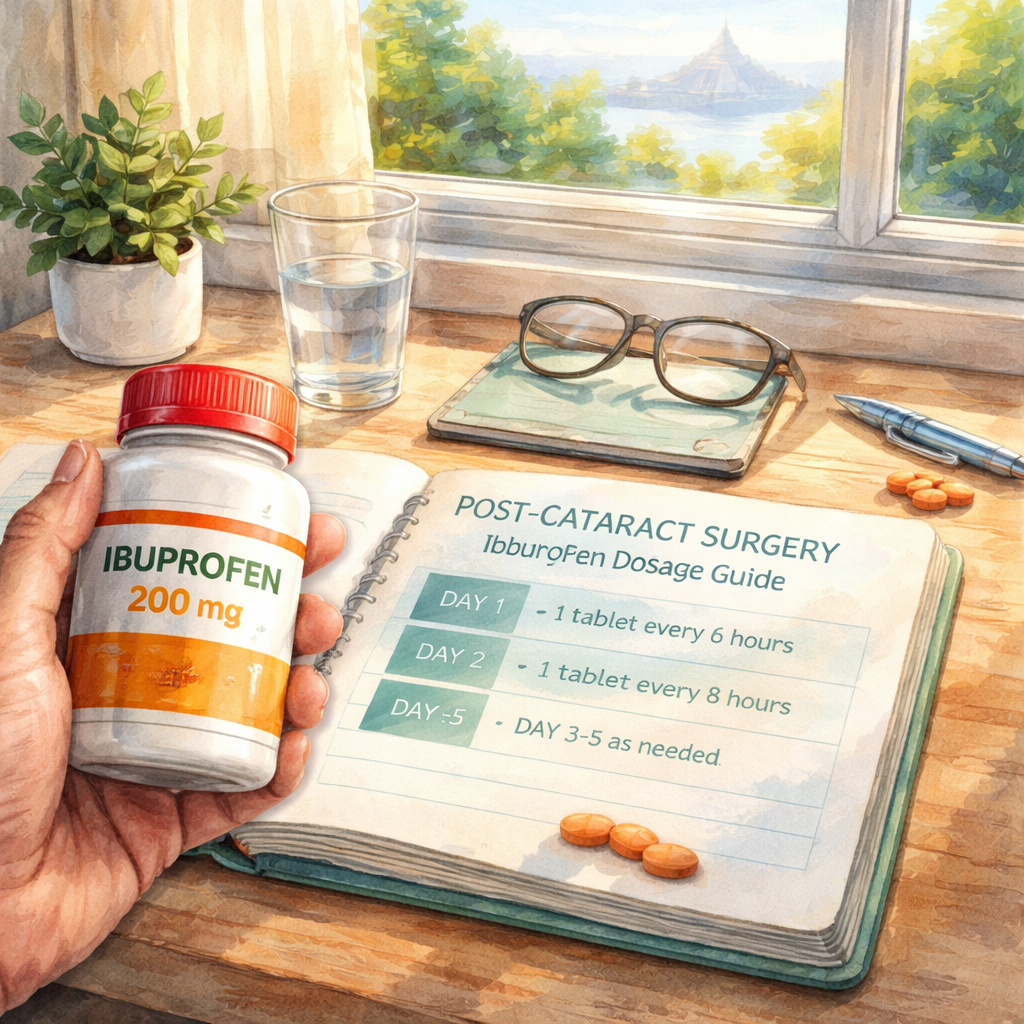
Quick actionable checklist
Grab a pen and copy this onto the back of your after‑care sheet:
Day 0‑1: No NSAIDs. Use acetaminophen 500 mg if needed.
Day 2 (or per surgeon): 200 mg ibuprofen with breakfast.
Wait 6 hours before a possible second 200 mg dose.
Never exceed 400 mg in 24 hours unless approved.
Record the time, dose, and any eye changes in a small diary.
Call the clinic if you notice redness, tearing, or vision shifts.
And remember, staying hydrated and getting a good night’s sleep support the same healing pathways that ibuprofen targets. If you ever wonder how other lifestyle tweaks fit in, our guide on Can You Drink Alcohol After Cataract Surgery? What You Need to Know walks you through safe habits beyond medication.
Step 5: Monitor Recovery and Know When to Stop
You've got the timing and dose sorted, but the real work begins once the tablet hits your stomach. How do you know if ibuprofen is still helping—or if it's time to hit the brakes?
Set up a simple monitoring routine
First, grab a small notebook or use the notes app on your phone. Write down the exact time you take each dose, what you ate, and any eye sensations you notice. A line like “8 am – 200 mg – mild ache, no redness” becomes your personal recovery log.
Why bother? Because subtle changes—like a faint pink halo around the light or a new watery film—can be the earliest warning signs that the medication is irritating the ocular surface.
Red‑flag symptoms to watch
Sudden redness that spreads beyond the corner of the eye.
Increased tearing or a gritty feeling that wasn't there before.
Any new blur, floaters, or a dip in visual clarity.
Stomach pain, nausea, or a burning sensation after the pill.
If any of these pop up, pause the ibuprofen immediately and give us a call. It’s better to miss one dose than to risk a complication that could set back your healing.
How long should you stay on ibuprofen?
In most uncomplicated cases we see patients taper off after three days of low‑dose use, provided there are no red flags. A recent clinical study found that starting a topical NSAID on the day of surgery gave the best inflammation control, and adding a steroid didn’t improve outcomes but could raise intra‑ocular pressure source . That tells us the eye’s own healing response is usually sufficient after the first few days, so oral ibuprofen is often unnecessary beyond that window.
So, if you’re on day 3 and still feel comfortable, consider stopping the pill and switching to acetaminophen if you need extra pain relief.
Quick daily checklist
Take ibuprofen with food, no more than 200 mg per dose.
Wait at least six hours before another dose.
Log the time, dose, and any eye changes.
Check for red‑flag symptoms before bedtime.
If anything feels off, skip the next dose and call the clinic.
And remember, staying hydrated, getting a solid night’s sleep, and avoiding heavy lifting help the same healing pathways that ibuprofen targets.
After you’ve watched the short video, take a moment to glance at your recovery log. Does the pattern look steady, or is there a spike in redness after a dose? That visual cue can be the difference between a smooth recovery and an unnecessary clinic visit.
When to call the clinic
Give us a ring if you notice any of the red‑flag symptoms, or if you’ve taken more than the recommended 400 mg in 24 hours. Also, call if you’re unsure whether a new medication you started (like a blood thinner) might interact with ibuprofen.
We’ll usually ask you to pause the NSAID and may recommend a short course of steroid eye drops instead. In most cases, that adjustment keeps the inflammation in check without the systemic side effects.
Bottom line: monitoring is as important as the dose itself. By logging each dose, watching for warning signs, and knowing when to stop, you give yourself the best chance for a clear, comfortable recovery. You’ve got the tools—now use them.
Keep the log handy for your next check‑up, and you'll feel confident that you’re on the right track.
Conclusion
After reading through the timing, dosage, and monitoring tips, the answer to “can you take ibuprofen after cataract surgery” becomes clear: yes—if you follow a safe plan that fits your health profile.
We’ve seen Sarah in Bondi wait two days, take a single 200 mg tablet with breakfast, and avoid any redness. James, an accountant on low‑dose aspirin, waited 48 hours, stuck to the same low dose, and reported a smooth recovery. On the other hand, Tom jumped on ibuprofen at hour 12 and woke up with a gritty eye that lingered longer than necessary. Those snapshots show how a few extra hours or a missed food‑buffer can change the outcome.
Key take‑aways
Ask your surgeon for the exact day it’s safe to start an NSAID.
Start with 200 mg of ibuprofen taken with food, never exceeding 400 mg in 24 hours without approval.
Log each dose, the time you took it, and any eye changes—redness, tearing, or blurry vision are immediate stop signals.
If you notice any red‑flag symptom, pause the medication and give us a call right away.
Consider acetaminophen or steroid eye drops as alternatives if you have stomach sensitivity or are on blood thinners.
So, what should you do next? Grab a pen, mark “Day 2 – 200 mg ibuprofen @ breakfast” on your after‑care sheet, and keep that simple diary handy. Your proactive tracking is the safest way to enjoy clear vision sooner rather than later.
Got a question about your own recovery timeline? Reach out to our clinic—we’re here to make sure your post‑op journey stays on track.
FAQ
Can I take ibuprofen right after cataract surgery?
Most surgeons, including us in Sydney, tell patients to wait at least 24‑48 hours before the first ibuprofen tablet. The eye needs time to form a stable clot after the tiny incision, and early NSAIDs can interfere with that process. If you’re eager for relief, stick to acetaminophen during the waiting window and only start a 200 mg dose of ibuprofen once your surgeon gives the green light.
What dose of ibuprofen is safe for post‑op pain?
Start with a single 200 mg tablet taken with food. That’s the amount most of our cataract patients find enough to calm mild ache without upsetting the stomach. If you still feel pain after six hours, you can repeat the same dose, but never let the total exceed 400 mg in any 24‑hour period unless your surgeon says otherwise. Keeping the dose low also reduces the chance of eye irritation.
Should I take ibuprofen with food or on an empty stomach?
Take ibuprofen with a bite of toast, a banana, or whatever you’re having for breakfast. Food creates a protective buffer that keeps the medication from irritating your stomach lining, which is especially important after eye surgery when you’re already juggling a few meds. Skipping the meal can lead to nausea or a burning feeling that distracts you from healing, so set a reminder to pair the pill with a small snack.
What are the red‑flag symptoms that mean I should stop ibuprofen?
If you notice any fresh redness that spreads beyond the outer corner, a gritty or burning sensation that wasn’t there before, sudden increase in tearing, or a new blur in your vision, pause the ibuprofen immediately and call the clinic. Stomach pain, nausea, or a sour taste after the dose are also warning signs. Those cues usually mean the medication is irritating the eye surface or your digestive tract, and a quick stop can keep the recovery on track.
Can I combine ibuprofen with my prescribed eye drops?
Yes, you can use prescribed steroid or antibiotic eye drops together with a low‑dose ibuprofen tablet, as long as your surgeon has approved both. The drops act locally on the eye, while the tablet works systemically to ease pain and swelling. Just make sure you wait a few minutes between the drop and the pill if you’re worried about the medication getting into the eye – the risk is minimal, but the extra pause gives you peace of mind.
What if I’m on blood thinners – can I still take ibuprofen?
If you’re on aspirin, warfarin, or any other anticoagulant, talk to us before you reach for ibuprofen. Those meds already thin your blood, and adding an NSAID can tip the balance toward excess bleeding at the surgical site. In many cases we suggest a reduced dose, such as 100 mg, or we switch you to acetaminophen until the clot is stable. Always get a written plan, because a small change can keep your eye safe.
How long should I stay on ibuprofen after my cataract operation?
Most uncomplicated cases only need ibuprofen for the first three days after the initial waiting period. By day 4 the natural healing response usually controls inflammation, so you can stop the tablet and switch to acetaminophen if you still need pain relief. Keep a short log of each dose and any eye changes – if everything stays calm after the third day, you’re probably good to go without further NSAIDs.
When to Seek Professional Advice
Red flags you shouldn’t ignore
You’ve read how to time the dose and keep the amount low. But even the safest plan can go sideways if something unexpected pops up. Knowing when to reach out to your eye‑care team can be the difference between a smooth recovery and a setback.
If you notice any sudden redness that spreads beyond the corner of the eye, a gritty or burning sensation that wasn’t there before, increased tearing, or a new blur in your vision, pause the ibuprofen and give us a call.
A throbbing headache or nausea after the pill is also a signal that your stomach might be reacting.
And if you’re on blood thinners, even a tiny amount of extra bleeding can show up as a small pool of blood on the surface of the eye – that’s a clear cue to seek help immediately.
Who should call the clinic right away
Anyone who’s had recent eye surgery and also has diabetes, glaucoma, or macular degeneration should have a lower threshold for contacting us. Those conditions can make inflammation linger longer, so a mild ache might actually be something more.
If you’ve just started a new medication – say a change in your blood‑pressure pill – let us know before you add ibuprofen. Interactions can sneak up on you, and we can adjust the plan on the spot.
How to prepare for that call
When you call, have these details ready: the exact time you took the ibuprofen, the dose, what you ate, and any symptom you’ve observed. Jotting it down in a small notebook saves you from scrambling for the info later.
If you can, send a quick photo of the eye – a clear red line or a watery film is easier to assess than a description. Our clinic’s after‑care line is staffed from 8 am to 6 pm, so you’ll usually hear back within the hour.
The NHS guidance on post‑cataract pain relief also notes that simple painkillers like ibuprofen are fine after the initial night, but you should always follow the surgeon’s timing advice.
Bottom line: trust your instincts. If something feels off, it probably is. A brief call costs a few minutes, but it can keep your eye on track for the weeks ahead.
Comments