Dilated eye examination
The vitreous and visible retina are examined to locate the source.
Assessment and treatment of bleeding into the vitreous.
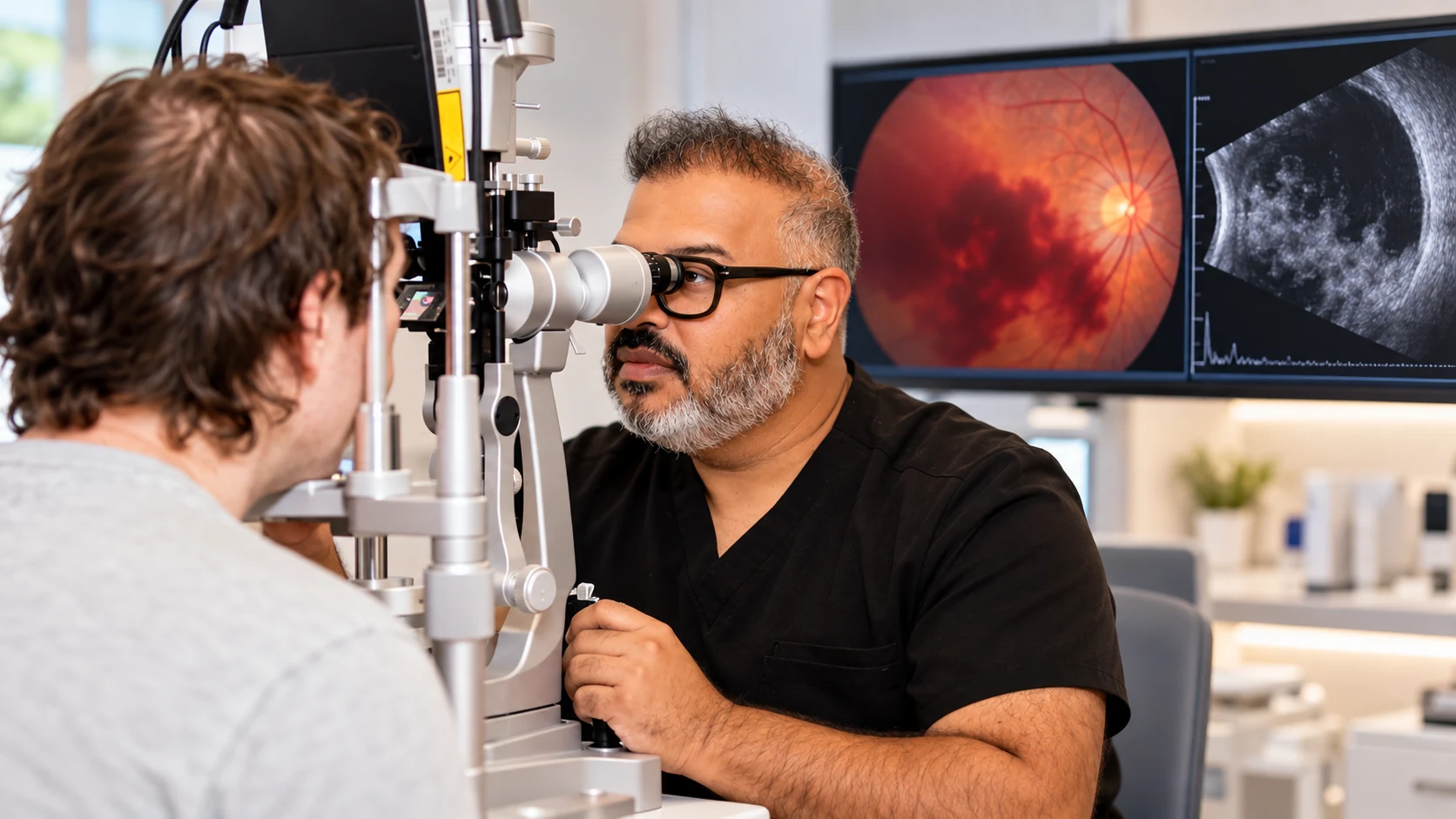
Vitreous haemorrhage can produce sudden floaters, haze or vision loss.

Every examination and treatment plan is shaped around your symptoms, test results and individual needs. The equipment shown is part of our real clinical environment; the tests you need are selected after assessment.
See inside the practice ↗Symptoms vary between people, and some conditions cause no early warning. A specialist examination is needed for an accurate diagnosis.
A sudden shower of dark floaters
Cobwebs, haze or a reddish tint
Shadows moving through vision
Painless reduction in vision
Vision that varies as blood settles
A visual summary of the condition, including common symptoms, risk factors, assessment and available treatment approaches. This guide supports—but does not replace—a specialist examination.
View full-size guide ↗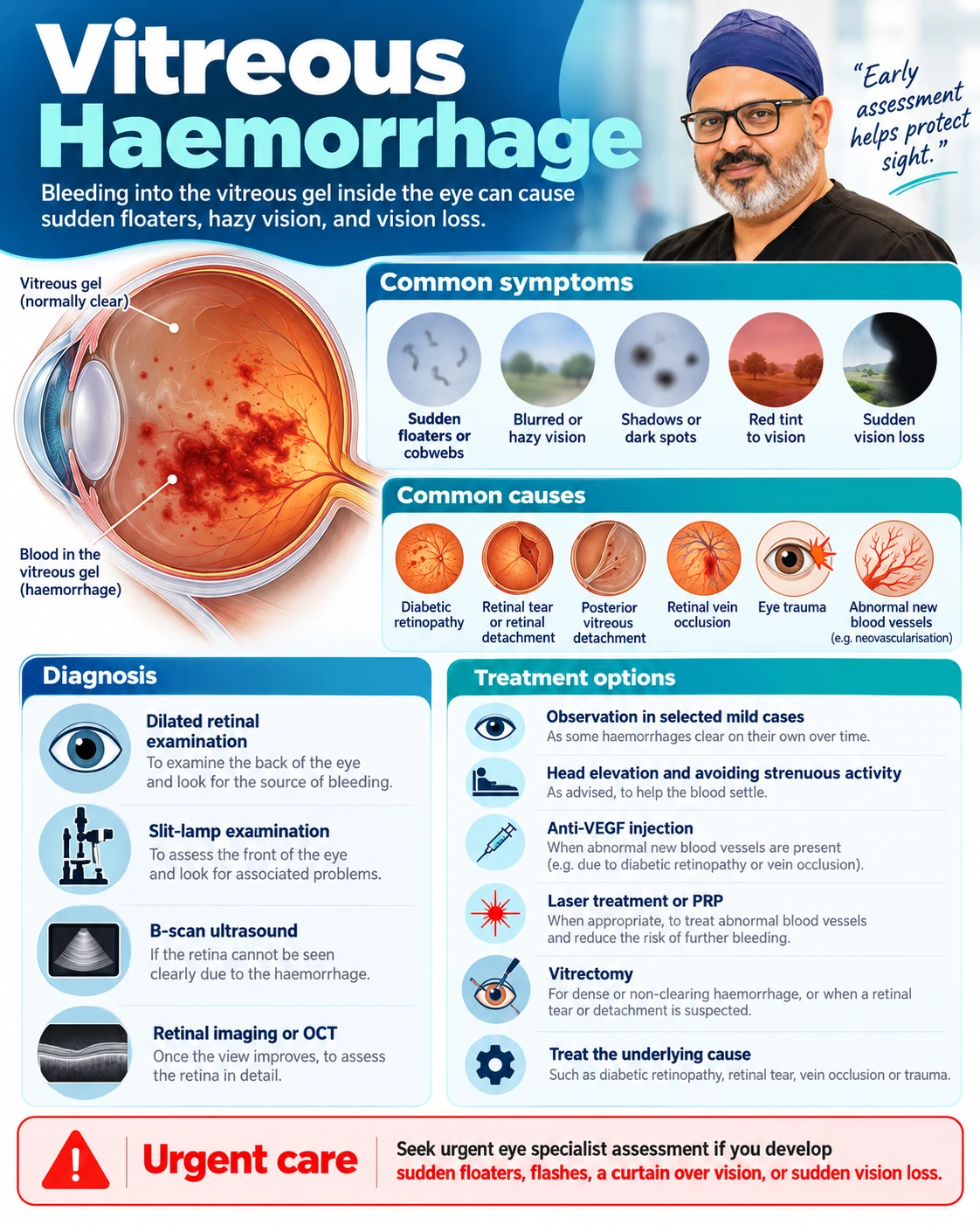
Having a risk factor does not confirm the condition. Your history and examination are considered together.
The vitreous and visible retina are examined to locate the source.
If blood blocks the view, ultrasound checks for retinal tear, detachment or other pathology.
OCT, photography or angiography may be used when the view permits.
Diabetes, vascular disease, medicines and recent injury help guide urgency and investigation.
Keep the recommended posture and activity advice while blood is clearing.
Control diabetes and vascular risks with your medical team.
Attend repeat examinations because the retina may initially be obscured.
Seek urgent care for a curtain, flashes, worsening vision or pain.
These answers are general. Your own care plan may differ after examination.
Some haemorrhages clear over weeks or months, but the cause must first be identified and treated when necessary.
It can show whether the retina is detached when blood prevents direct examination.
Vitrectomy is considered for non-clearing or recurrent blood and when retinal pathology needs repair.
No. Vitreous haemorrhage is often painless but can be caused by a retinal tear or other sight-threatening condition.