Symptom history
Timing, number, flashes and any missing vision help determine urgency.
Assessment of drifting dots, threads or cobweb-like shadows.
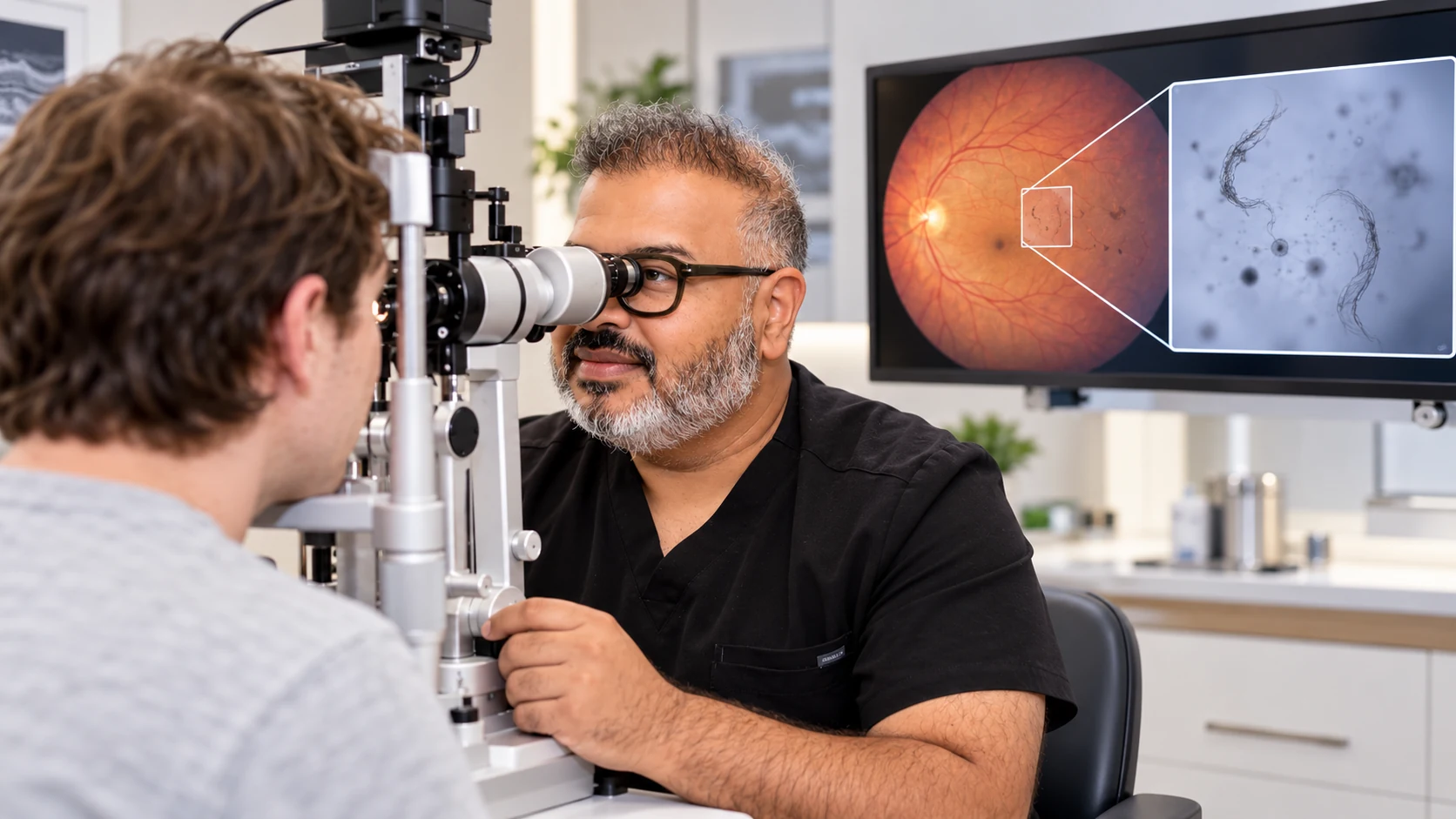
Floaters often relate to age-related vitreous change but sudden symptoms need assessment.

Every examination and treatment plan is shaped around your symptoms, test results and individual needs. The equipment shown is part of our real clinical environment; the tests you need are selected after assessment.
See inside the practice ↗Symptoms vary between people, and some conditions cause no early warning. A specialist examination is needed for an accurate diagnosis.
Moving dots, threads or cobweb-like shadows
Shapes that drift when the eye moves
Greater visibility against bright or plain backgrounds
Occasional flashes with vitreous separation
Hazy vision when floaters are dense
Having a risk factor does not confirm the condition. Your history and examination are considered together.
Timing, number, flashes and any missing vision help determine urgency.
The vitreous and peripheral retina are examined for tears, bleeding or detachment.
Photography or OCT may document associated retinal findings.
Ultrasound can assess the retina if dense opacity prevents a clear view.
Follow the recommended review interval after new-onset symptoms.
Return urgently if floaters increase or flashes, a curtain or visual loss develops.
After any procedure, follow drops, activity and travel instructions carefully.
Do not assume a future sudden change is caused by the same benign floaters.
These answers are general. Your own care plan may differ after examination.
No. Most are benign, but sudden new floaters can accompany a retinal tear or bleeding.
They may persist but often become less noticeable as they move or the brain adapts.
Laser is suitable only in selected situations and is not the standard choice for every floater.
Only when symptoms remain significantly disabling and the expected benefit justifies surgical risks.