Slit-lamp examination
The front and middle of the eye are examined for inflammatory cells and associated changes.
Specialist assessment and treatment for inflammation affecting the eye.

Uveitis describes inflammation inside the eye. It can affect the front, middle or back of the eye and may be associated with autoimmune disease, infection, injury or no identifiable cause.
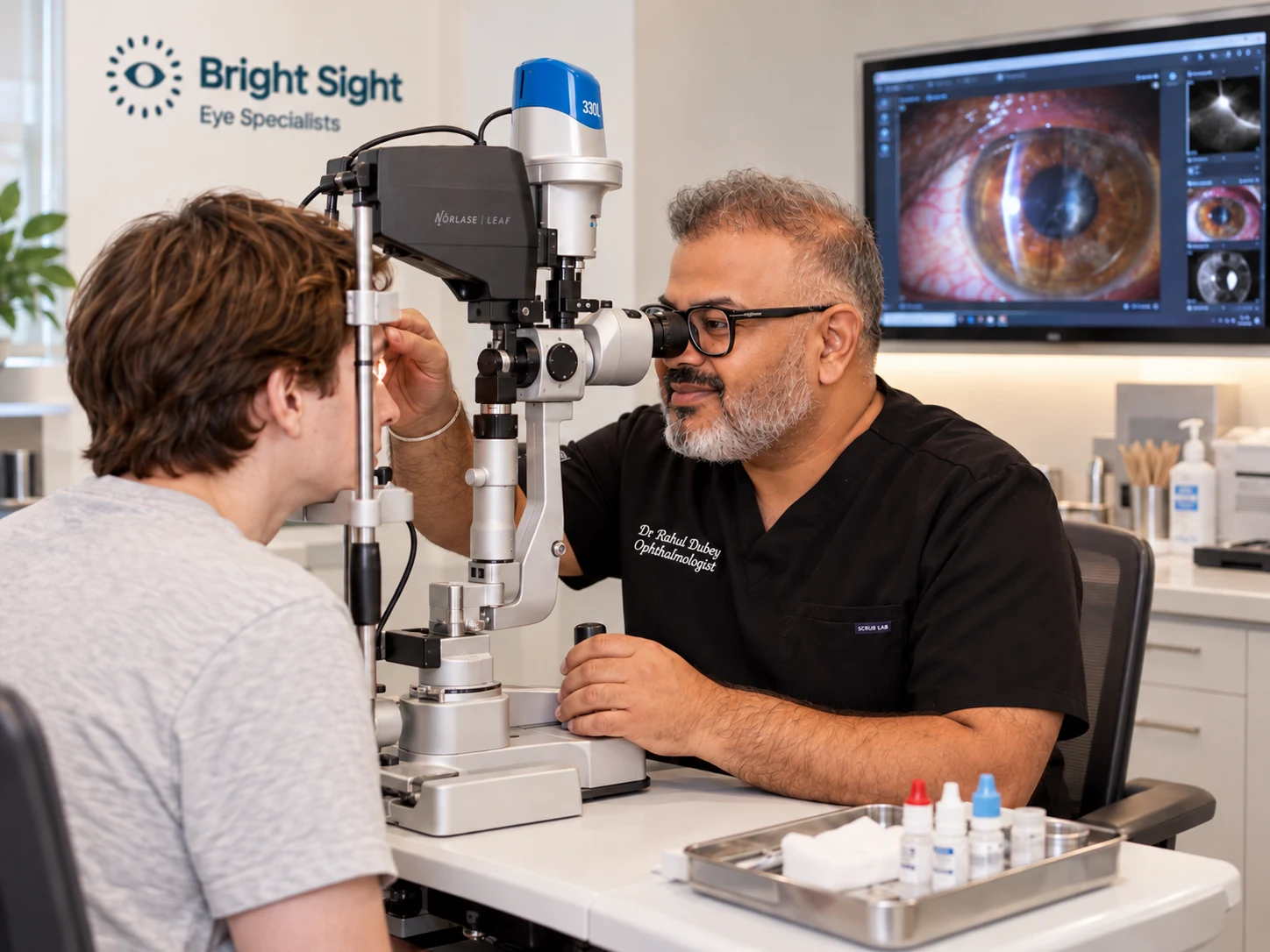
Every examination and treatment plan is shaped around your symptoms, test results and individual needs. The equipment shown is part of our real clinical environment; the tests you need are selected after assessment.
See inside the practice ↗Uveitis and other ocular inflammation may cause blur, haze, light sensitivity, floaters or reduced vision. This image is a symptom illustration only and cannot diagnose the cause. A painful red eye or sudden vision change needs prompt specialist assessment.
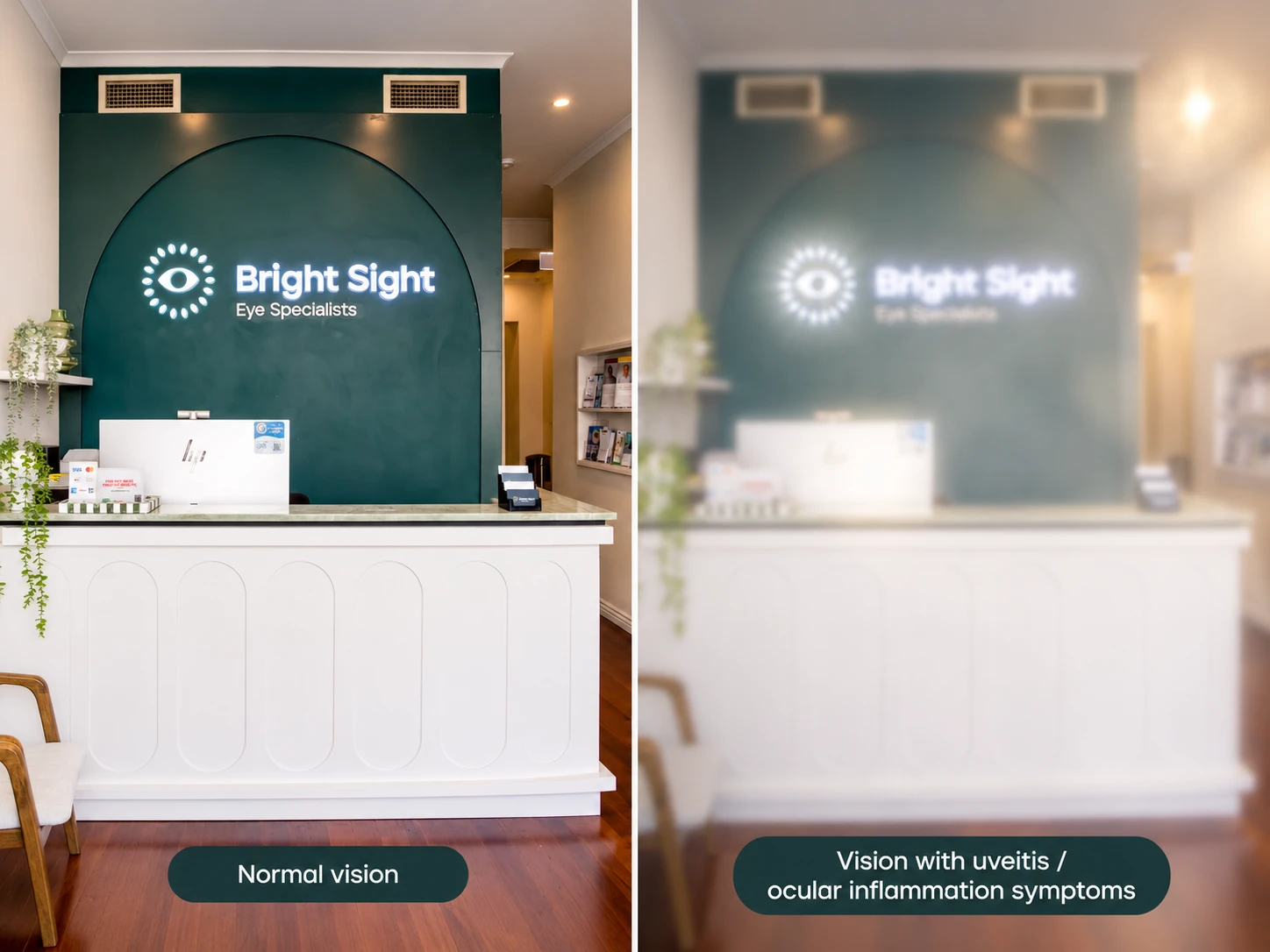
Symptoms vary between people, and some conditions cause no early warning. A specialist examination is needed for an accurate diagnosis.
Eye redness
Eye pain or aching
Sensitivity to light
Blurred or reduced vision
Floaters or flashes
A visual summary of the condition, including common symptoms, risk factors, assessment and available treatment approaches. This guide supports—but does not replace—a specialist examination.
View full-size guide ↗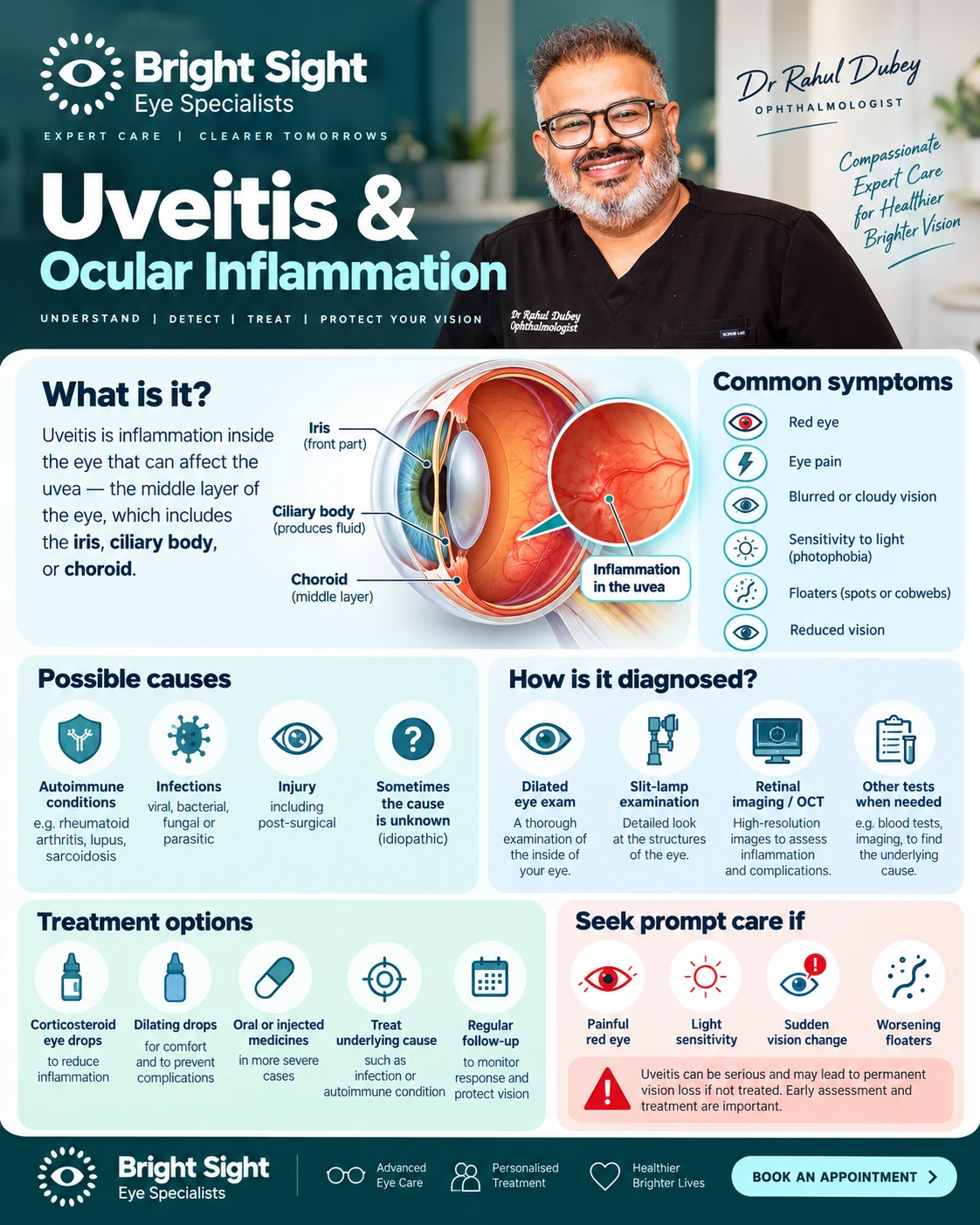
Having a risk factor does not confirm the condition. Your history and examination are considered together.
The front and middle of the eye are examined for inflammatory cells and associated changes.
The vitreous, retina, blood vessels and optic nerve are assessed when posterior inflammation is possible.
Blood tests, imaging or collaboration with another specialist may be recommended when the history or examination suggests an underlying cause.
Findings are explained in context so the recommended next step reflects your eyes, health and visual needs.
Use prescribed medicine exactly as directed and do not stop steroid treatment abruptly unless instructed.
Attend follow-up even if symptoms improve, because inflammation can recur or persist without obvious symptoms.
Report worsening pain, redness, light sensitivity or vision promptly.
Continue care for any associated systemic condition with the relevant medical team.
These answers are general. Your own care plan may differ after examination.
No. It may be related to immune conditions, infection, injury or no identifiable cause. The distinction matters because treatment differs.
Inflammation, treatment effects and complications can change over time and may not always cause immediate symptoms.
Some types can recur. Your care plan will include warning signs and the appropriate monitoring schedule.
Yes. The recommendations, timing and follow-up are based on your examination, imaging, general health and visual priorities.