Dilated retinal examination
The target area, retinal health and suitability for laser are assessed.
Targeted laser treatment for selected retinal tears, abnormal blood vessels and retinal disorders.
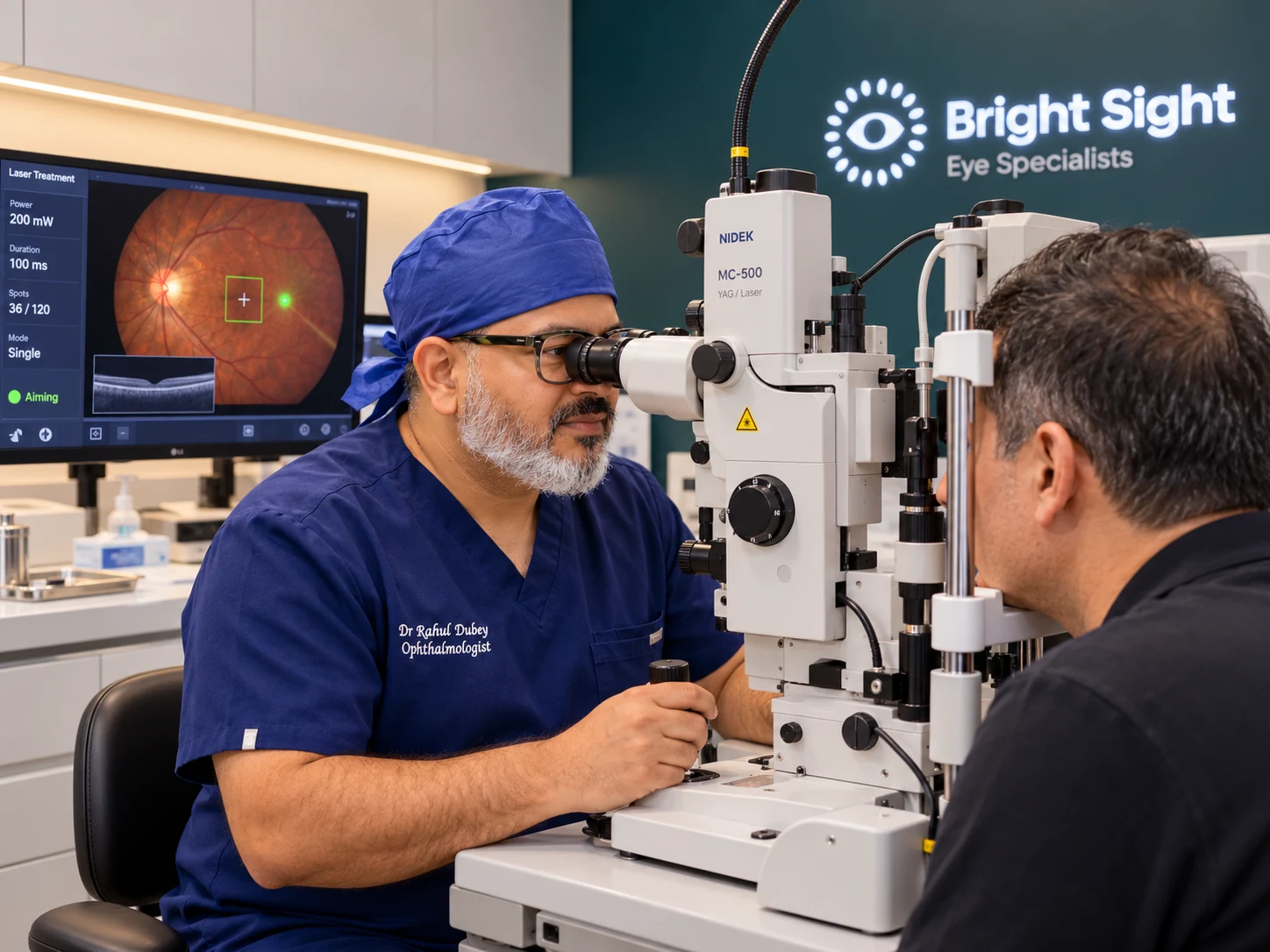
Retinal laser creates small, controlled treatment spots. Depending on the diagnosis, it may help seal around a retinal tear or treat areas of abnormal or poorly perfused retina.
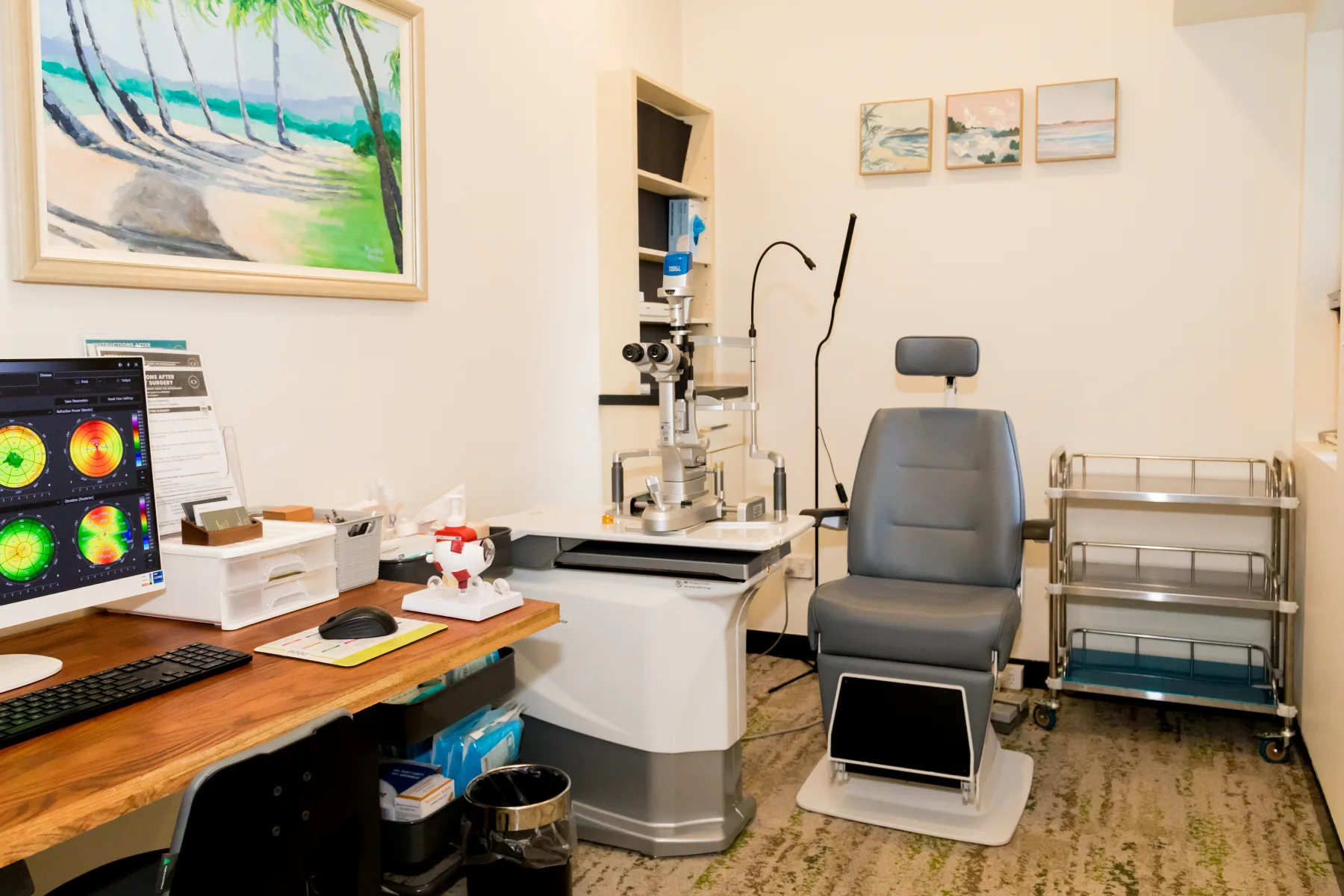
Every examination and treatment plan is shaped around your symptoms, test results and individual needs. The equipment shown is part of our real clinical environment; the tests you need are selected after assessment.
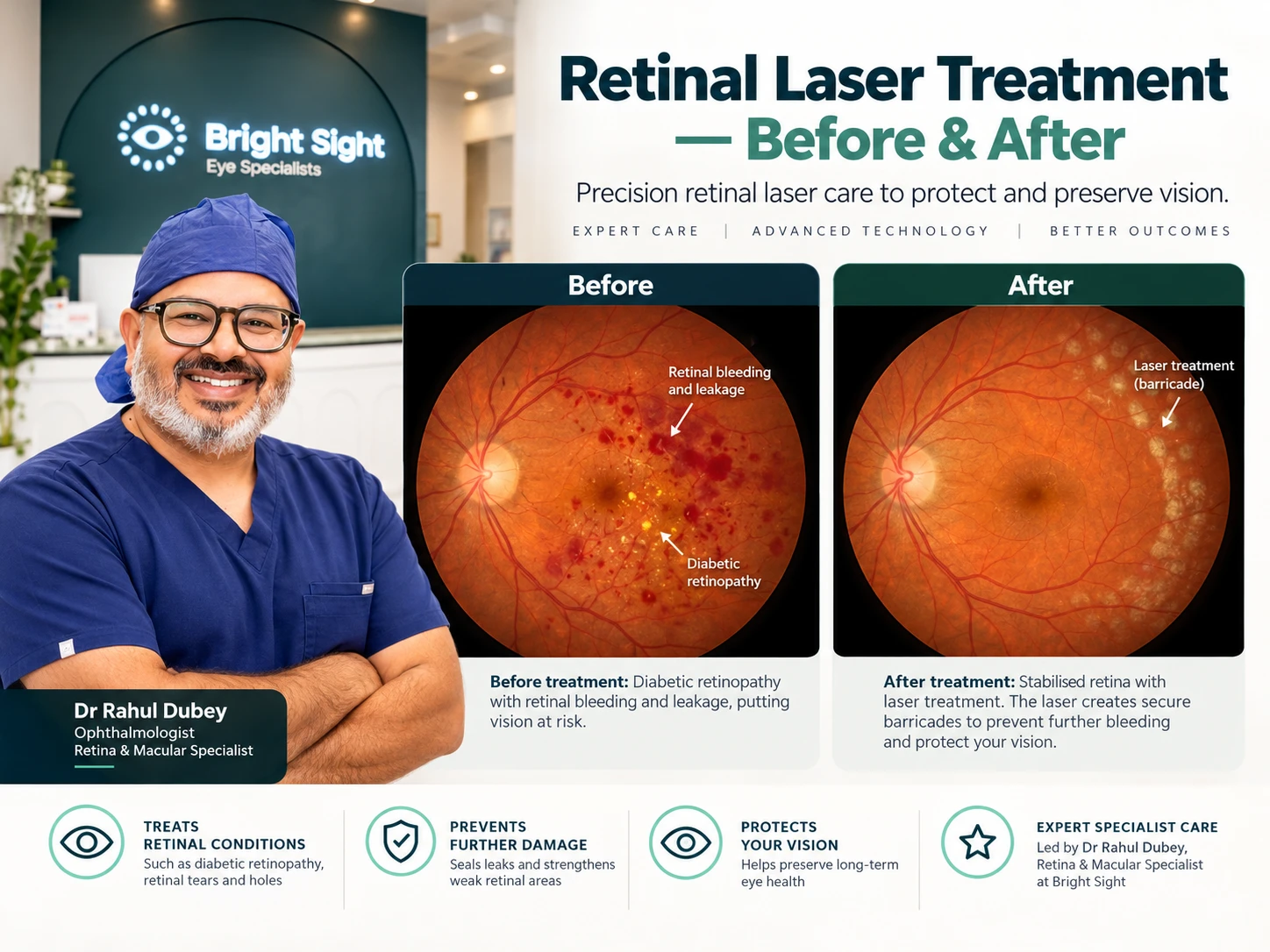
See inside the practice ↗Retinal laser treatment can seal retinal tears, reduce leakage or treat abnormal blood vessels in selected conditions. This comparison is illustrative only and does not promise a particular result. The purpose, response and follow-up plan vary according to the condition and the individual eye.
Symptoms vary between people, and some conditions cause no early warning. A specialist examination is needed for an accurate diagnosis.
Laser treatment is recommended after examination rather than from symptoms alone
New flashes or floaters may indicate a tear requiring assessment
Blurred vision may occur with diabetic or vascular retinal disease
Peripheral visual change can accompany retinal pathology
A visual summary of the condition, including common symptoms, risk factors, assessment and available treatment approaches. This guide supports—but does not replace—a specialist examination.
View full-size guide ↗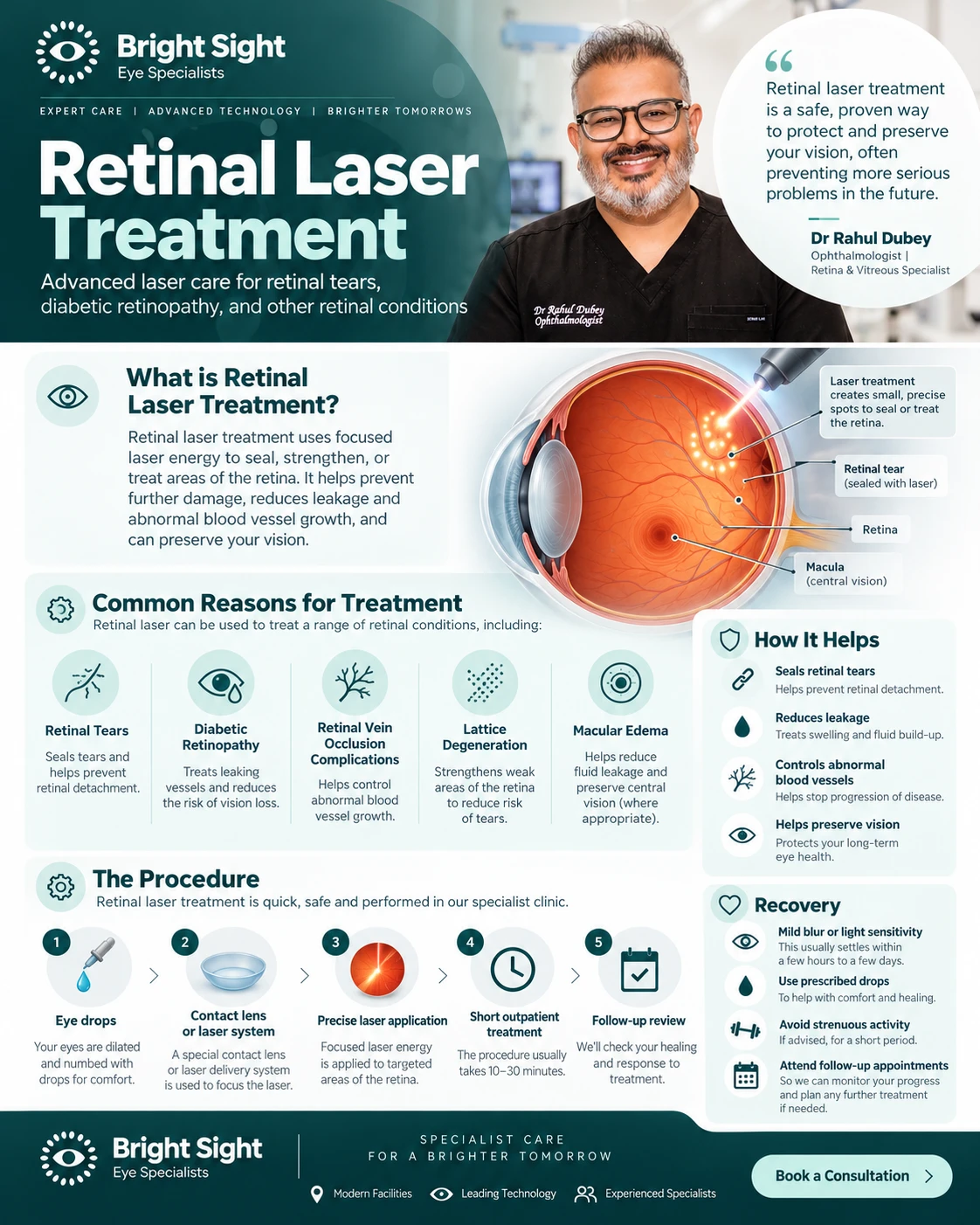
Having a risk factor does not confirm the condition. Your history and examination are considered together.
The target area, retinal health and suitability for laser are assessed.
OCT, photography or angiographic imaging may be used depending on the condition.
The intended benefit, alternatives, limitations and possible need for further treatment are discussed.
Findings are explained in context so the recommended next step reflects your eyes, health and visual needs.
Vision can be temporarily blurred and the eye may be light-sensitive after dilation and treatment.
Follow advice about driving, activity and eye care on the day of treatment.
Attend the planned retinal review; laser does not prevent every future tear or retinal problem.
Seek urgent review for a curtain, sudden loss of vision or rapidly increasing flashes and floaters.
These answers are general. Your own care plan may differ after examination.
No. Laser location, pattern and intended benefit differ according to the diagnosis.
Laser reduces risk for suitable tears but cannot eliminate every possibility, so warning symptoms and follow-up remain important.
Dilating drops and treatment can blur vision temporarily. Confirm the advice for your appointment and arrange transport if recommended.
Yes. The recommendations, timing and follow-up are based on your examination, imaging, general health and visual priorities.