Urgent symptom assessment
The onset and pattern help identify possible retinal tear or detachment.
Urgent specialist treatment for separation of the retina.
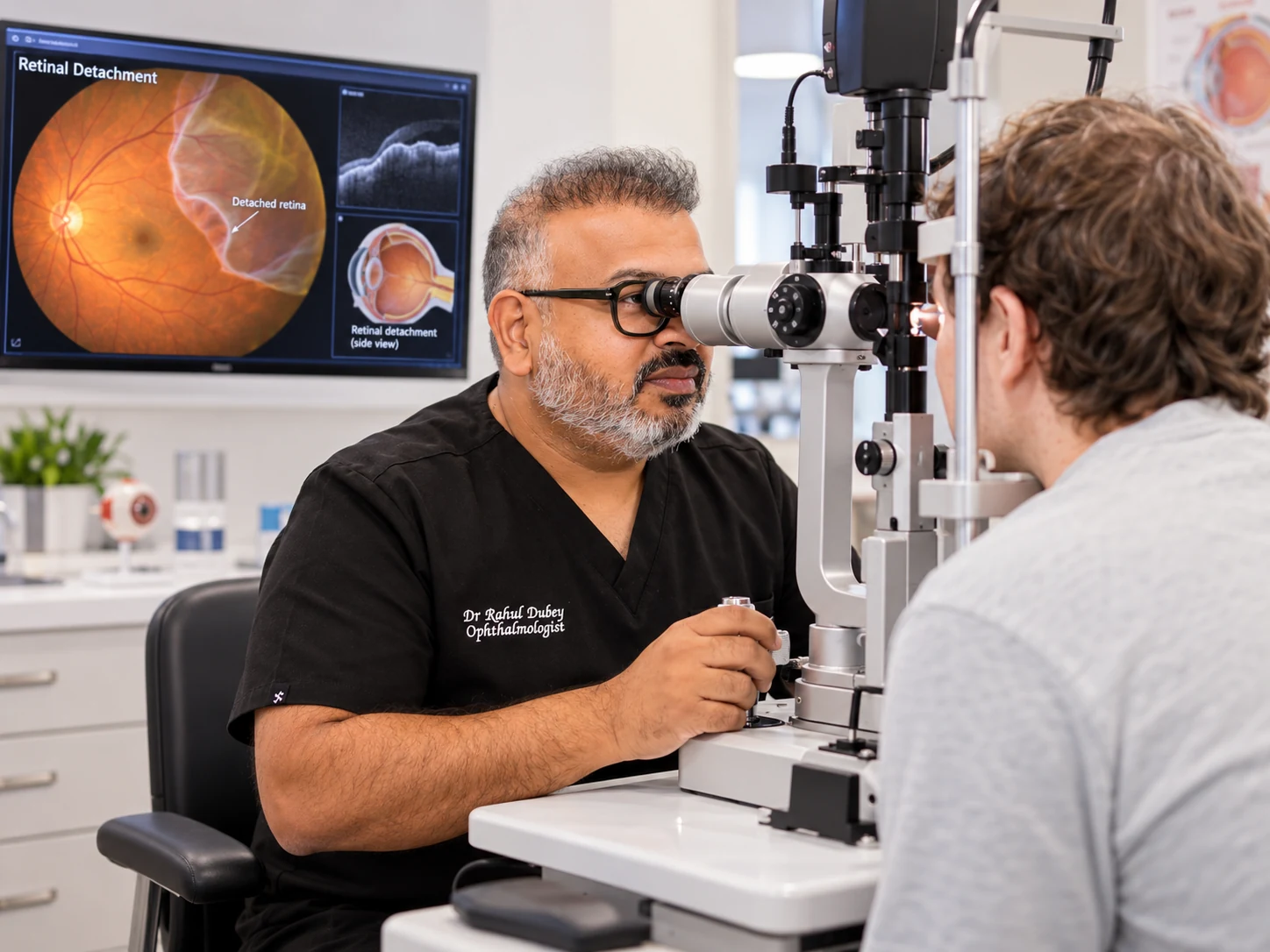
Retinal detachment is sight-threatening and requires urgent assessment.
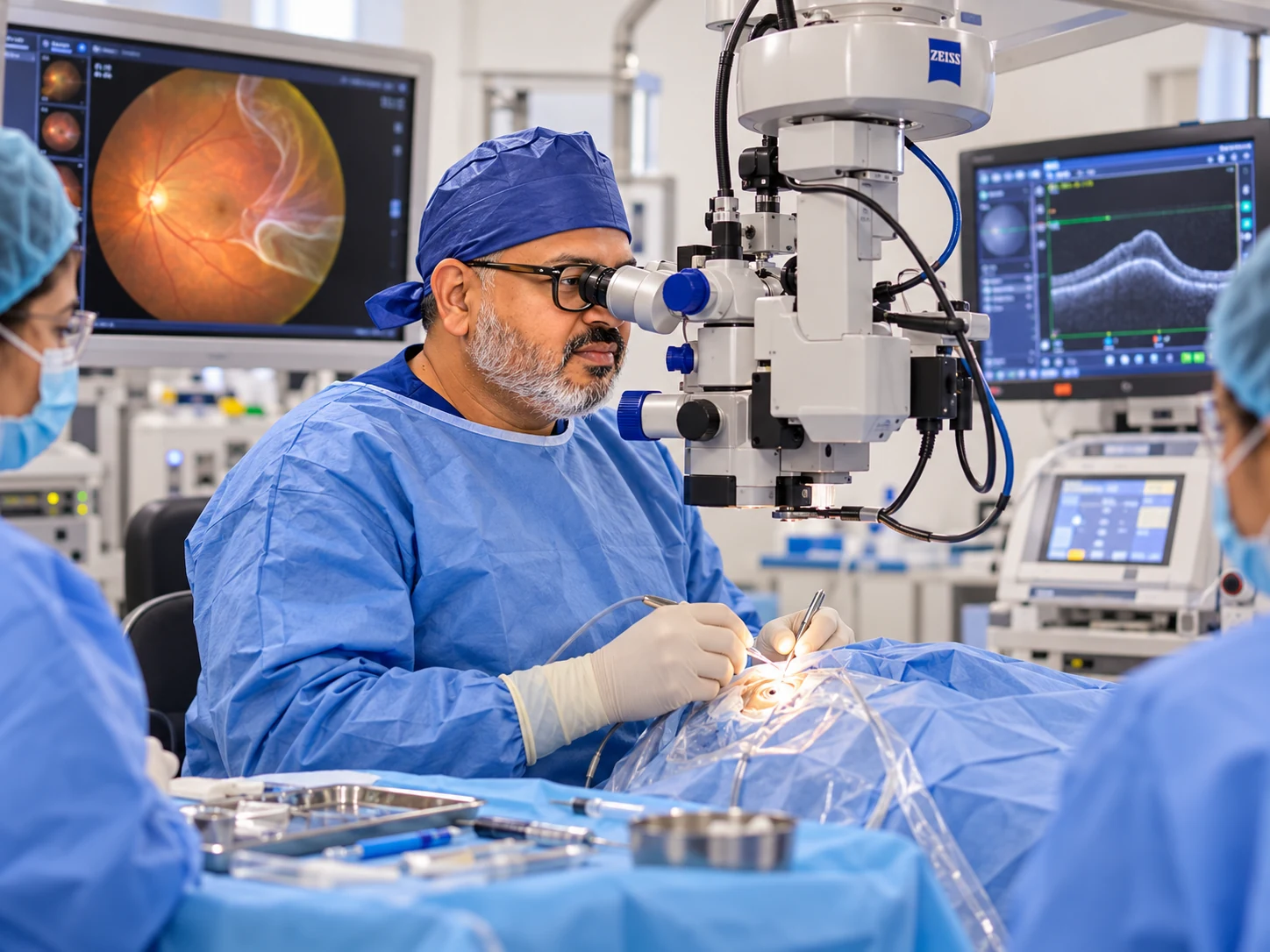
Every examination and treatment plan is shaped around your symptoms, test results and individual needs. The equipment shown is part of our real clinical environment; the tests you need are selected after assessment.
See inside the practice ↗Symptoms vary between people, and some conditions cause no early warning. A specialist examination is needed for an accurate diagnosis.
A dark curtain or shadow moving across vision
Sudden increase in floaters
Flashes of light, often at the side of vision
Missing peripheral vision
Sudden painless reduction in vision
A visual summary of the condition, including common symptoms, risk factors, assessment and available treatment approaches. This guide supports—but does not replace—a specialist examination.
View full-size guide ↗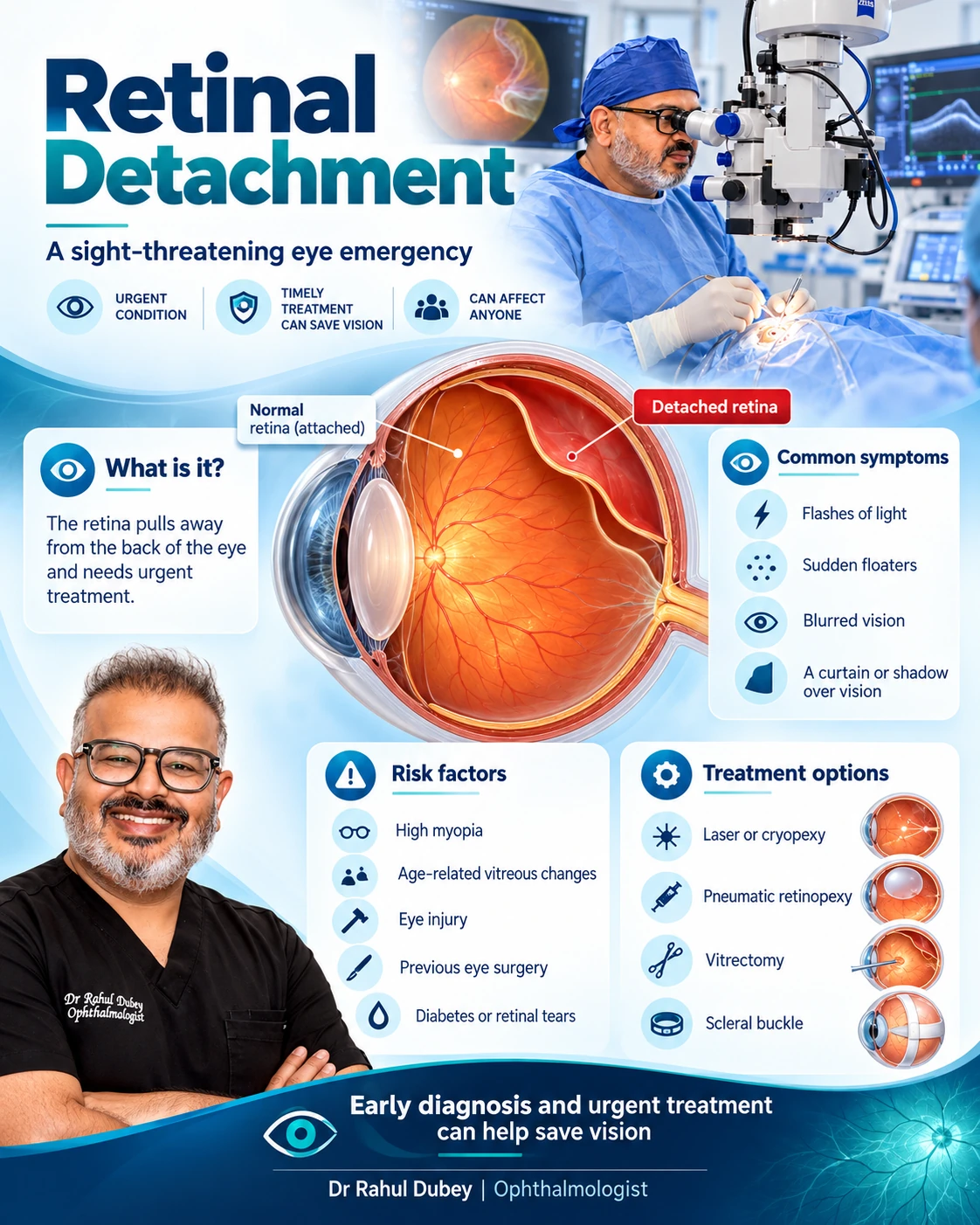
Having a risk factor does not confirm the condition. Your history and examination are considered together.
The onset and pattern help identify possible retinal tear or detachment.
The peripheral retina is examined to find breaks and map the detached area.
Photography can help document the detachment and associated tears.
Ultrasound is used if cataract, blood or another opacity blocks the retinal view.
Follow positioning instructions exactly if gas or oil is used.
Do not fly or travel to high altitude while an intraocular gas bubble remains.
Use drops, protect the eye and attend every scheduled postoperative review.
Report increasing pain, redness, nausea or worsening vision immediately.
These answers are general. Your own care plan may differ after examination.
Yes. New symptoms require urgent assessment because timing can affect the chance of preserving vision.
The approach depends on the tear location, extent, lens status and individual eye.
Outcome depends on duration, macular involvement and retinal health; anatomical repair does not guarantee normal vision.
Yes. Further treatment can occasionally be required, and the fellow eye may also need monitoring.