Dilated retinal examination
Dilating drops allow careful examination of the peripheral retina for a tear, bleeding or early detachment.
Careful peripheral retinal examination for new flashes, floaters and suspected retinal tears.
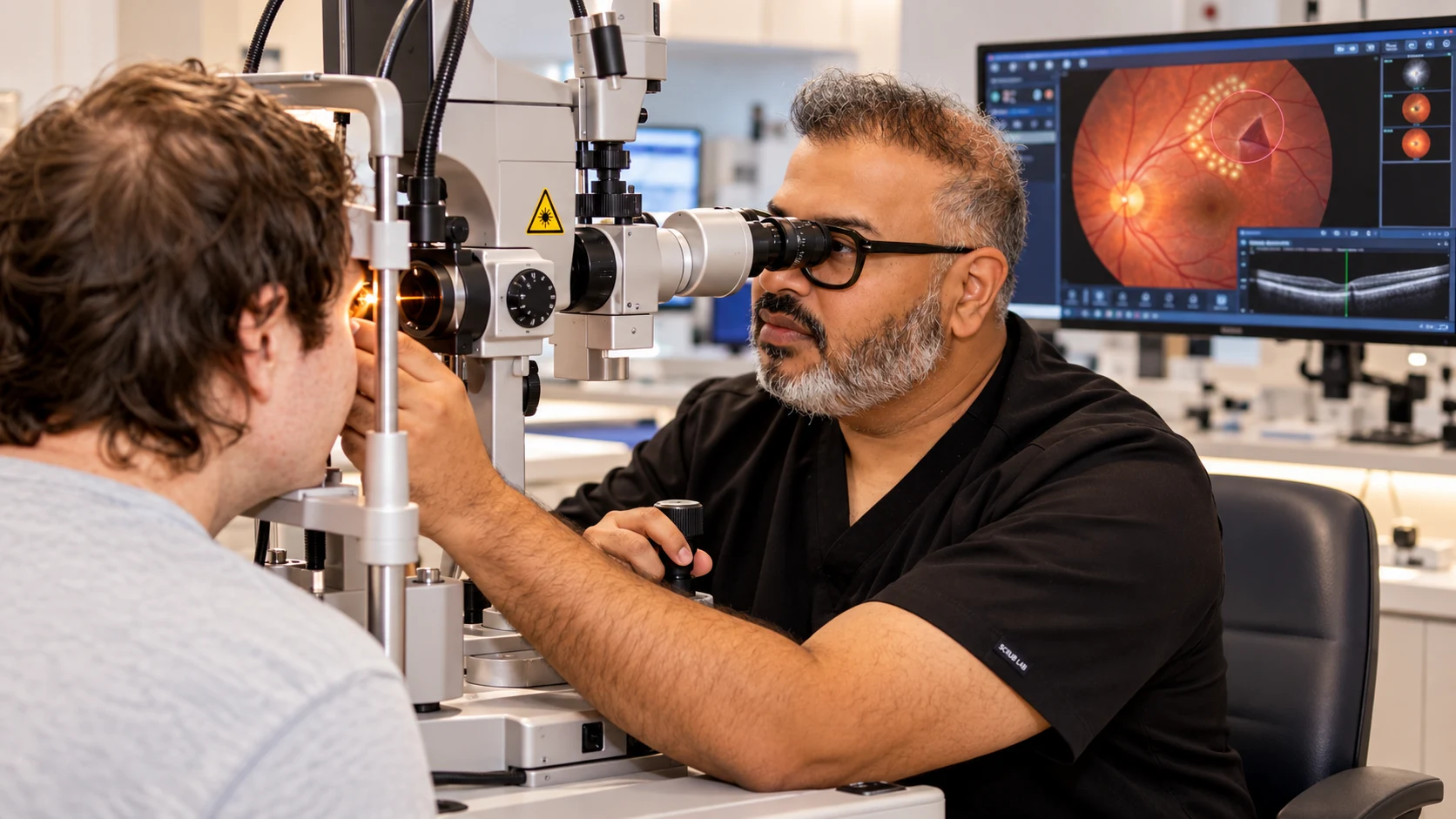
Posterior vitreous detachment is a common age-related separation of the vitreous gel from the retina. Most cases do not require treatment, but an associated retinal tear must be identified promptly because it can progress to retinal detachment.
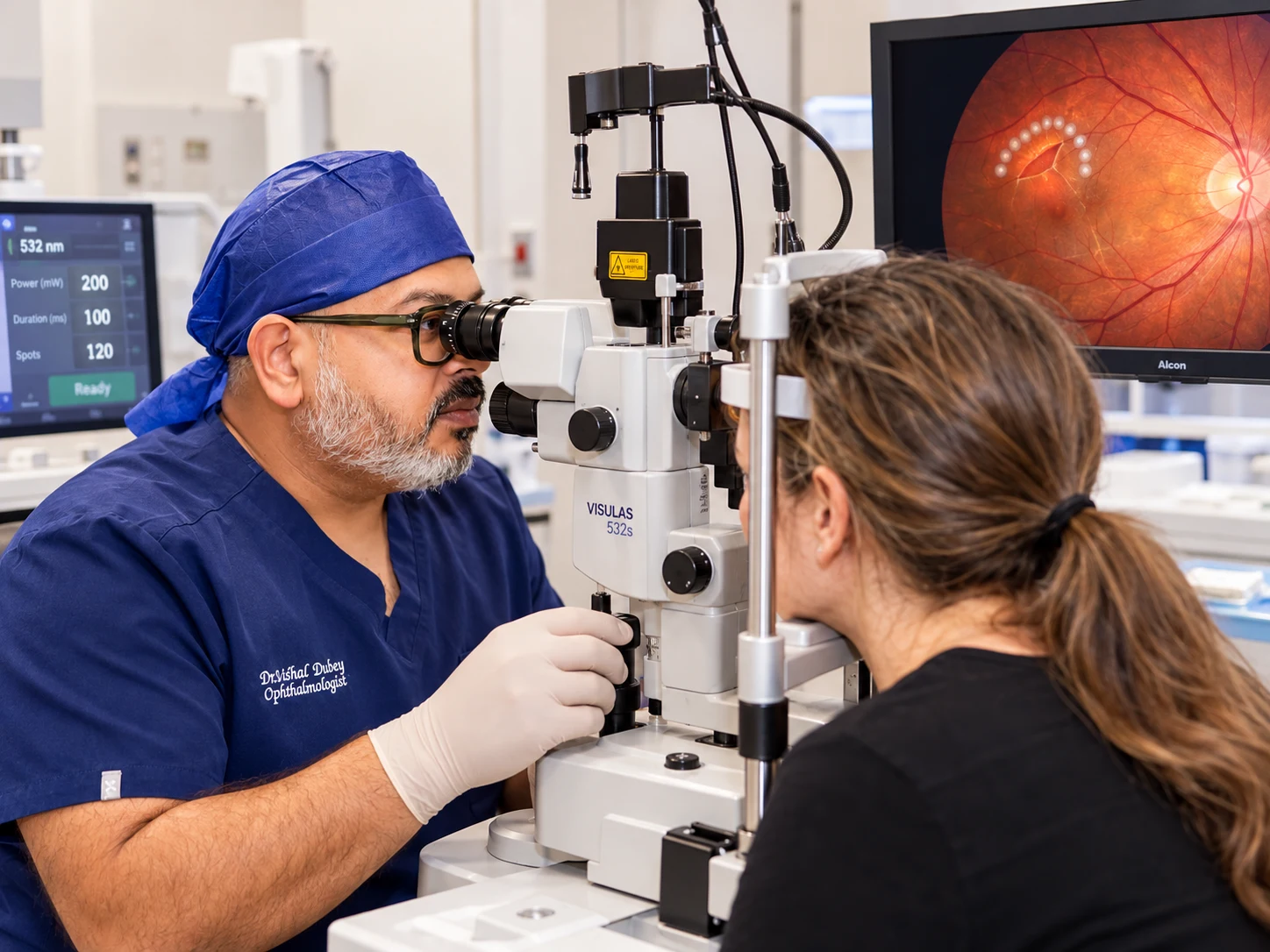
Every examination and treatment plan is shaped around your symptoms, test results and individual needs. The equipment shown is part of our real clinical environment; the tests you need are selected after assessment.
See inside the practice ↗Posterior vitreous detachment and retinal tears may cause new floaters, flashes or a curtain-like shadow. This image is an illustration only and cannot diagnose the cause. New or worsening symptoms need prompt specialist assessment.
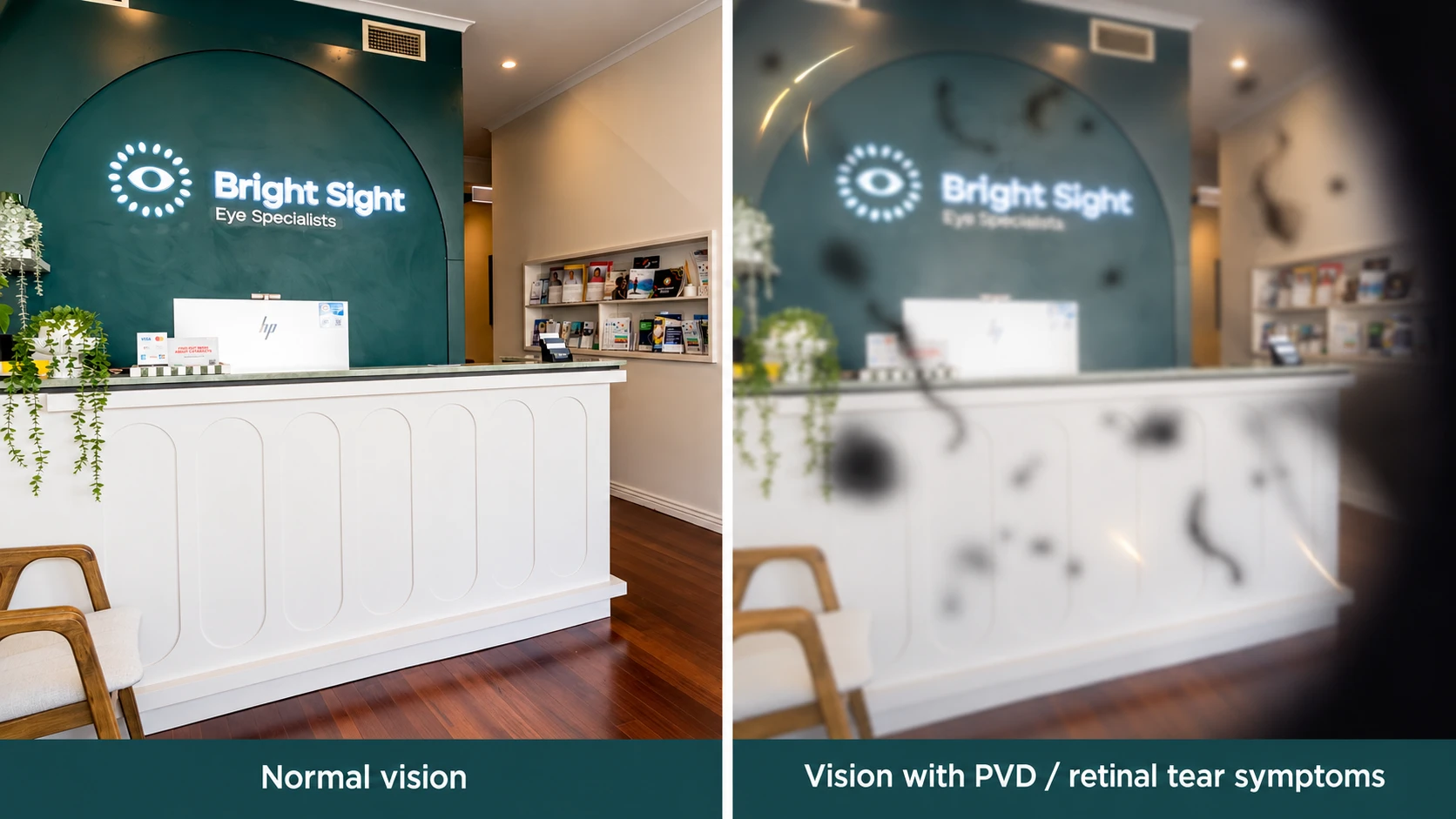
Symptoms vary between people, and some conditions cause no early warning. A specialist examination is needed for an accurate diagnosis.
A sudden increase in floaters
Flashes or arcs of light, often at the side of vision
Cobweb-like shadows moving with the eye
Blurred vision if bleeding is present
A visual summary of the condition, including common symptoms, risk factors, assessment and available treatment approaches. This guide supports—but does not replace—a specialist examination.
View full-size guide ↗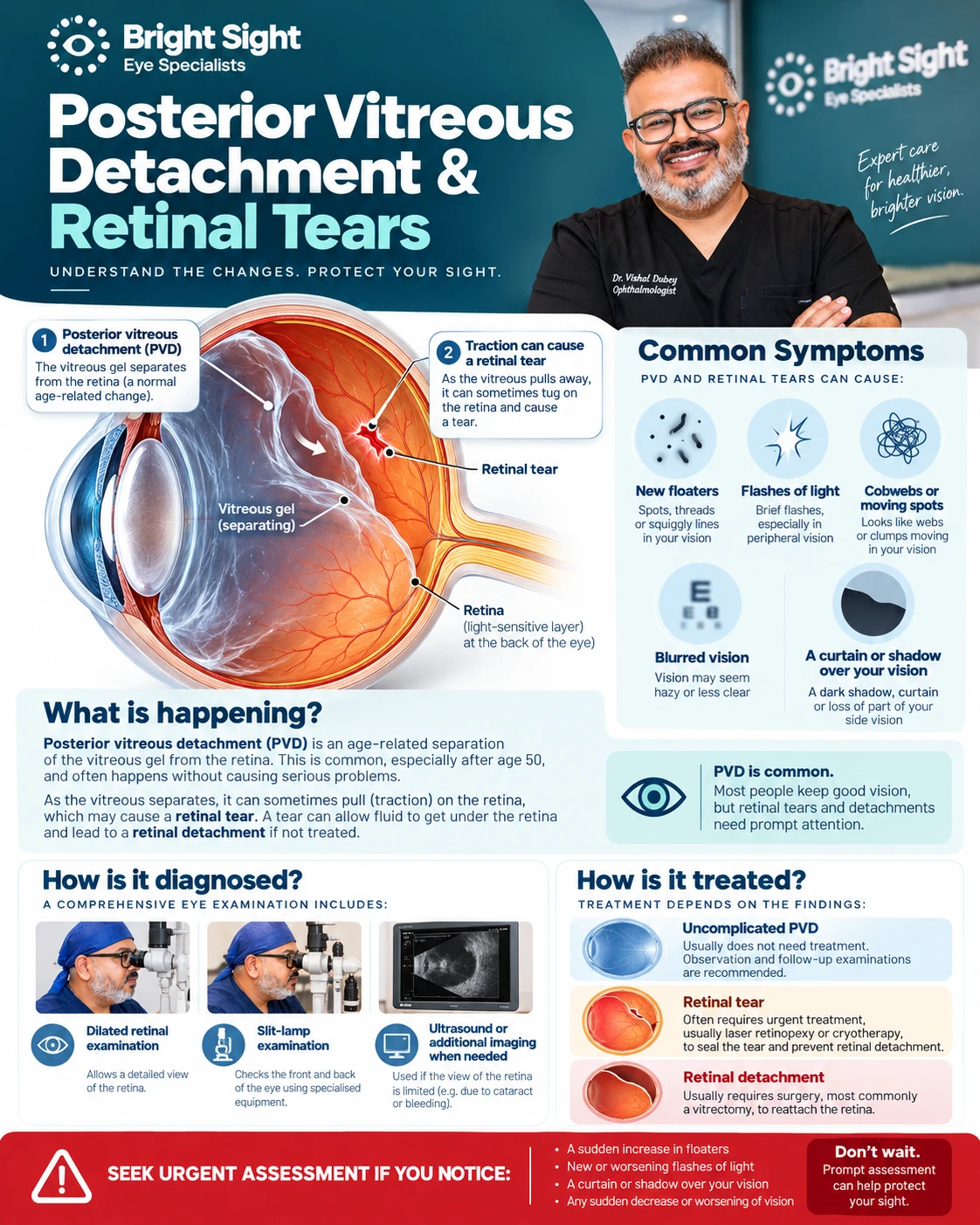
Having a risk factor does not confirm the condition. Your history and examination are considered together.
Dilating drops allow careful examination of the peripheral retina for a tear, bleeding or early detachment.
Photography or OCT may document associated findings, although a peripheral examination remains important.
Ultrasound may be used when bleeding or another opacity prevents a clear view of the retina.
Findings are explained in context so the recommended next step reflects your eyes, health and visual needs.
Follow the timing of review recommended after an acute PVD.
Report any increase in flashes or floaters, a curtain or worsening vision immediately.
After laser or cryotherapy, follow activity and review instructions provided by the treating team.
Keep scheduled follow-up so healing and treatment response can be assessed.
These answers are general. Your own care plan may differ after examination.
No. Many PVDs are observed, but a prompt dilated examination is important to exclude a retinal tear.
Many suitable retinal tears can be sealed with laser or cryotherapy. Treatment choice depends on the tear and surrounding retina.
A tear can occasionally develop after the first assessment, so follow-up and urgent return precautions are important.
Yes. The recommendations, timing and follow-up are based on your examination, imaging, general health and visual priorities.