Vision and Amsler testing
Central clarity and distortion are assessed in each eye.
Specialist diagnosis and keyhole retinal surgery for a central macular opening.
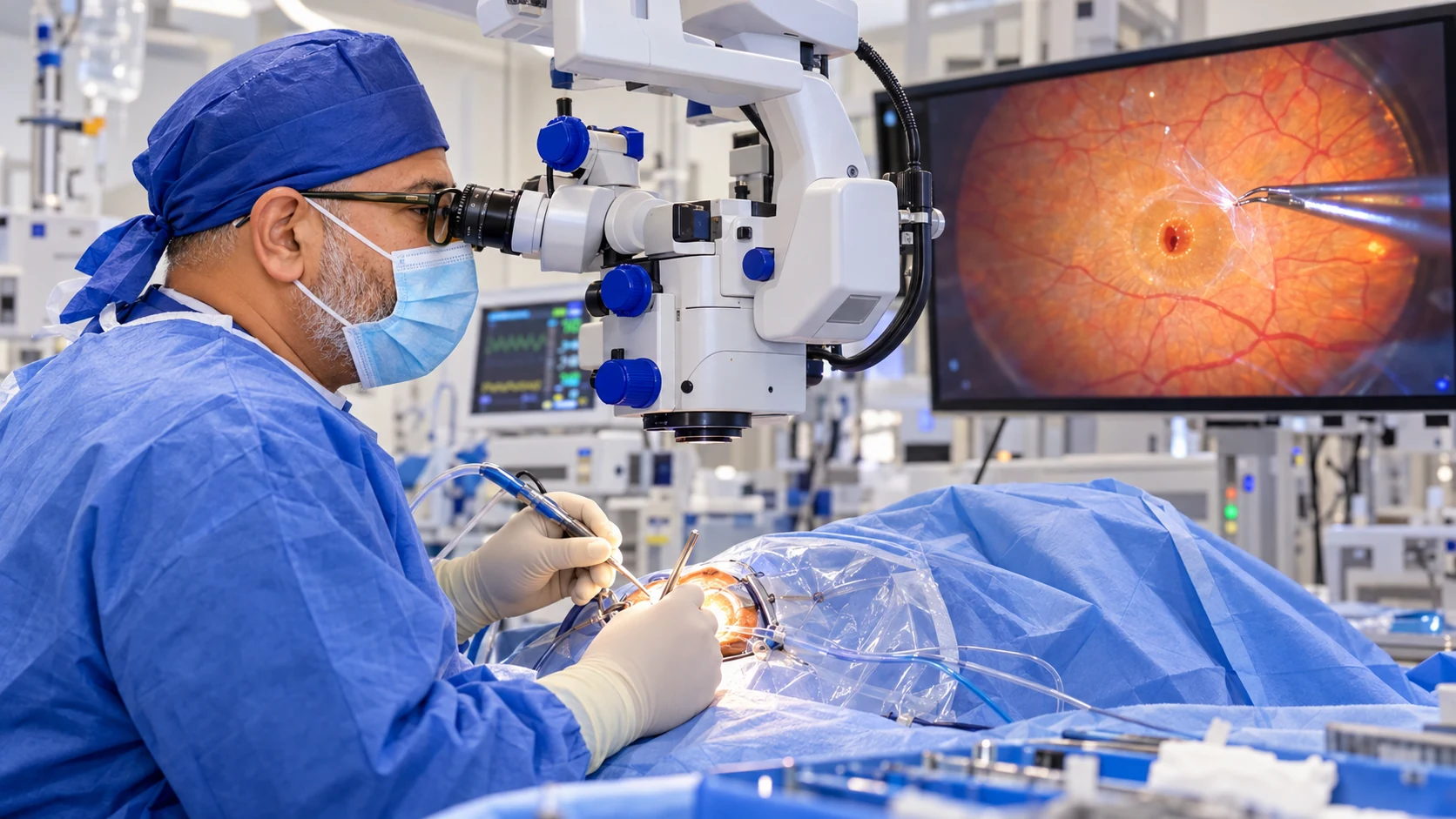
A macular hole is a small opening in the central retina that affects detailed vision.
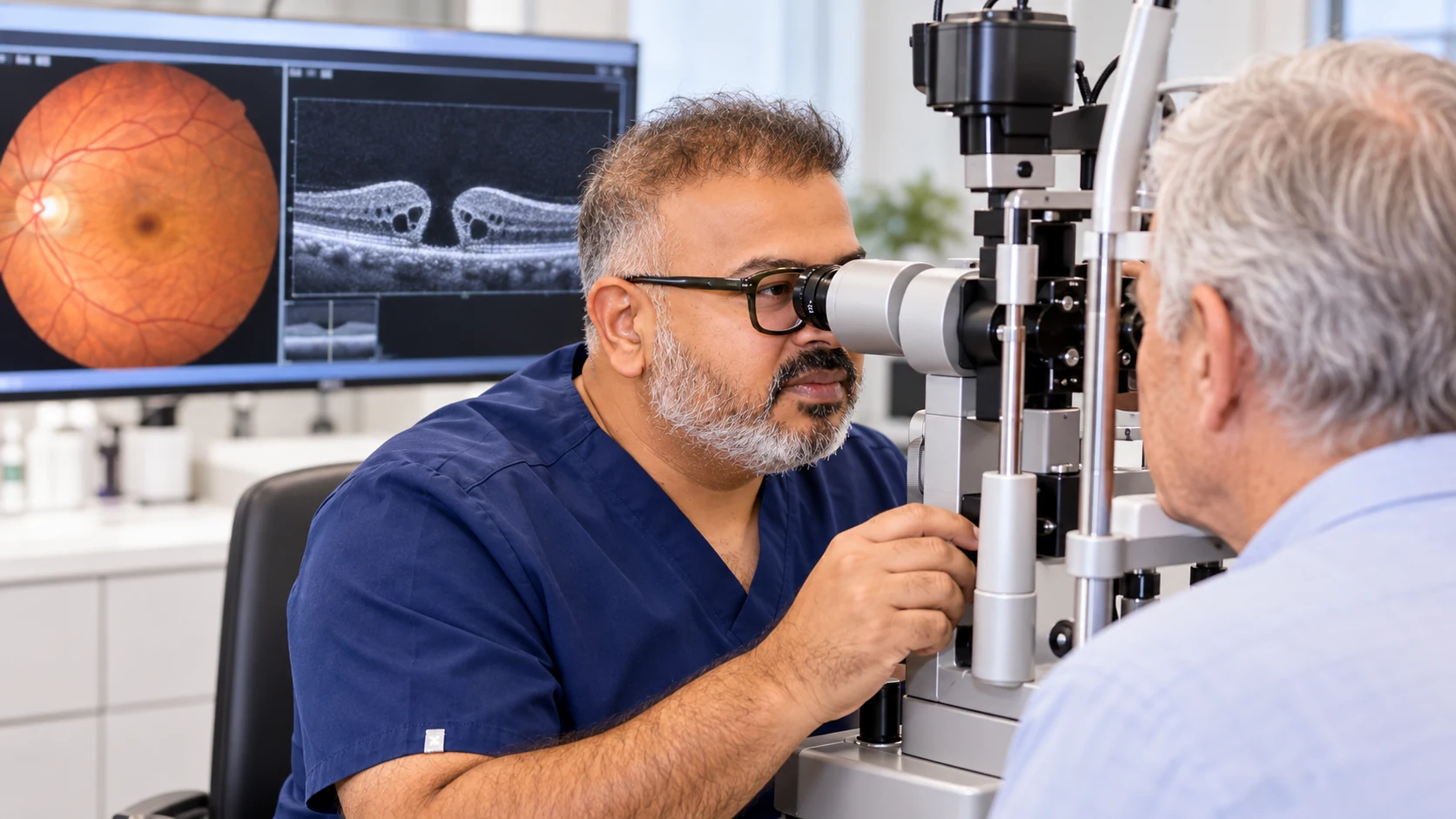
Every examination and treatment plan is shaped around your symptoms, test results and individual needs. The equipment shown is part of our real clinical environment; the tests you need are selected after assessment.
See inside the practice ↗Symptoms vary between people, and some conditions cause no early warning. A specialist examination is needed for an accurate diagnosis.
Blurred central vision in one eye
Straight lines appearing bent or broken
A small central missing or dark spot
Difficulty reading or recognising faces
Reduced fine-detail vision
Having a risk factor does not confirm the condition. Your history and examination are considered together.
Central clarity and distortion are assessed in each eye.
The macula and surrounding retina are examined carefully.
High-resolution cross-sections confirm the hole and show its size and stage.
The other eye is checked for vitreomacular traction or related macular change.
Vision is blurred while a gas bubble remains and usually improves gradually after it absorbs.
Follow any face-positioning instruction exactly as prescribed.
Do not fly or travel to altitude while gas remains in the eye.
Use drops, attend reviews and report increasing pain, redness or worsening vision promptly.
These answers are general. Your own care plan may differ after examination.
Some small early holes can close, but most full-thickness holes require surgery for the best chance of closure.
It provides temporary internal support while the macula heals.
Closure rates are high, but visual recovery varies with size, duration and retinal health.
Not while an intraocular gas bubble remains. Your surgeon must confirm when flying is safe.