Vision assessment
Vision is checked before treatment and monitored over the course.
Targeted retinal medicines delivered through a controlled procedure.

Intravitreal injections deliver medicine directly to the retina for several conditions.
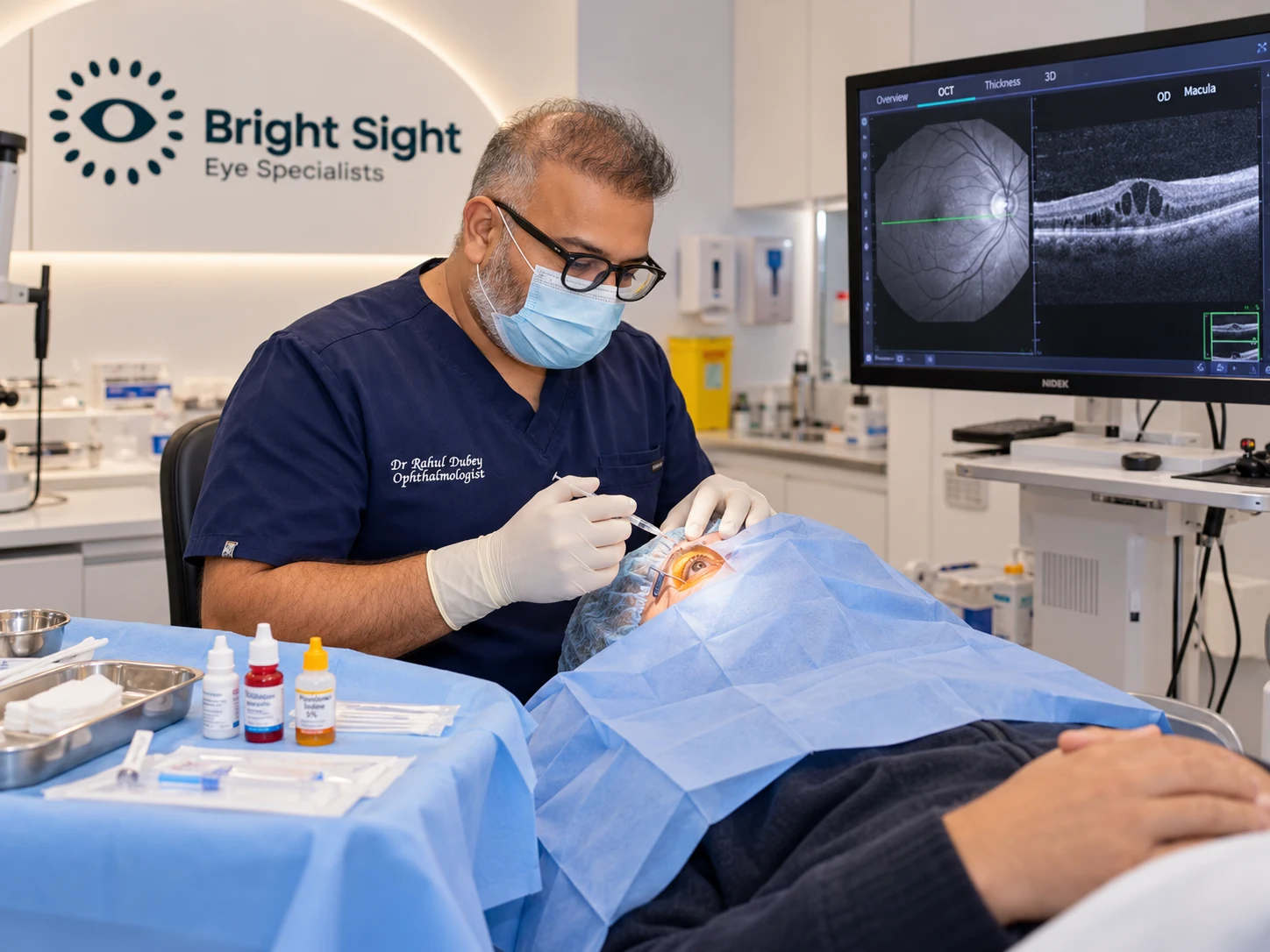
Every examination and treatment plan is shaped around your symptoms, test results and individual needs. The equipment shown is part of our real clinical environment; the tests you need are selected after assessment.
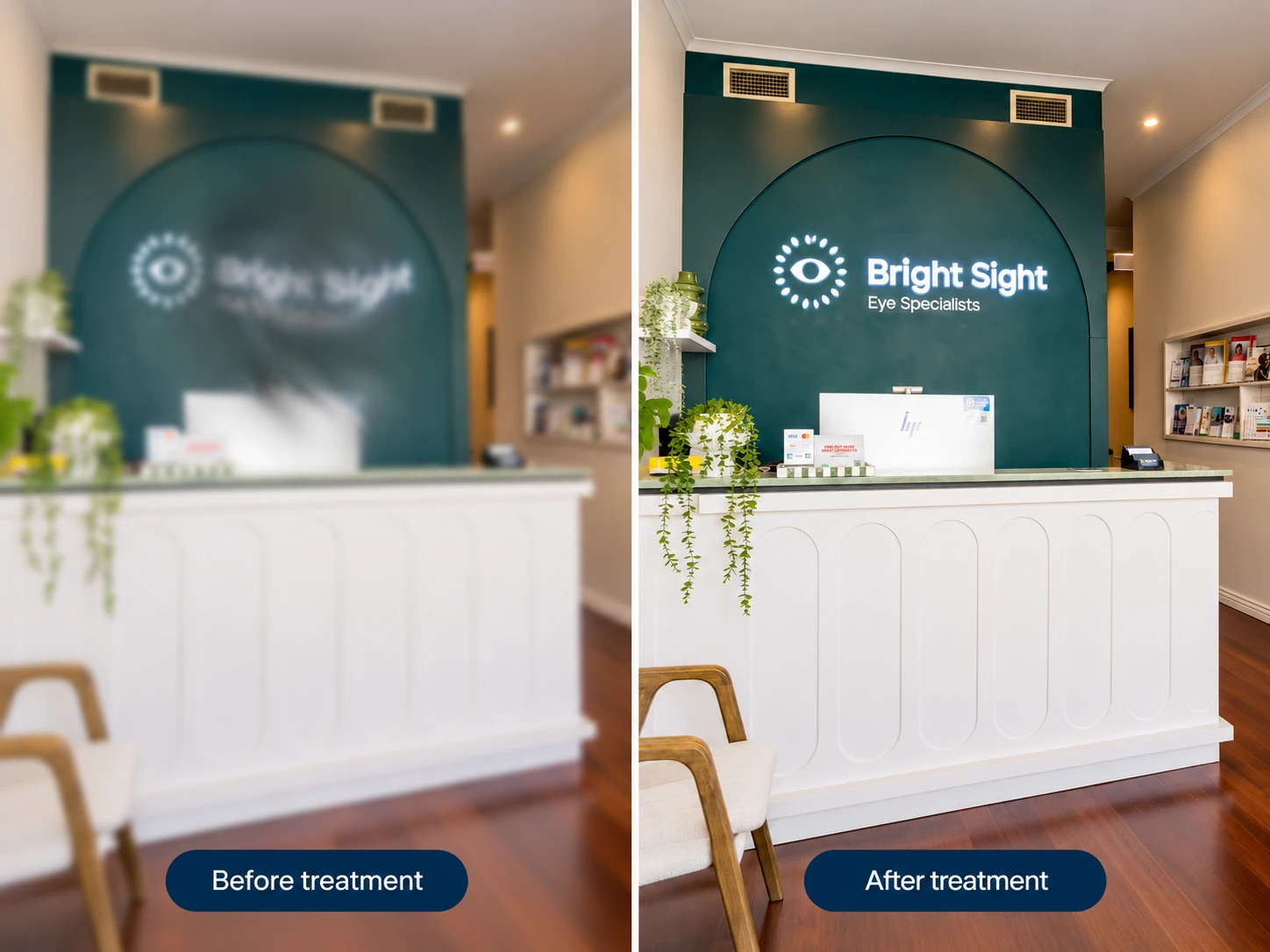
See inside the practice ↗Intravitreal injections are used to reduce retinal swelling or leakage in selected conditions. This comparison is illustrative only and does not promise a particular result. Response, number of injections and timing vary according to the condition and the individual eye.
Symptoms vary between people, and some conditions cause no early warning. A specialist examination is needed for an accurate diagnosis.
Injections are prescribed for a diagnosed retinal condition
Central blur from macular fluid or bleeding
Distortion such as wavy lines
Reduced vision from wet AMD, diabetic oedema or vein occlusion
Visual change monitored with OCT
A visual summary of the condition, including common symptoms, risk factors, assessment and available treatment approaches. This guide supports—but does not replace—a specialist examination.
View full-size guide ↗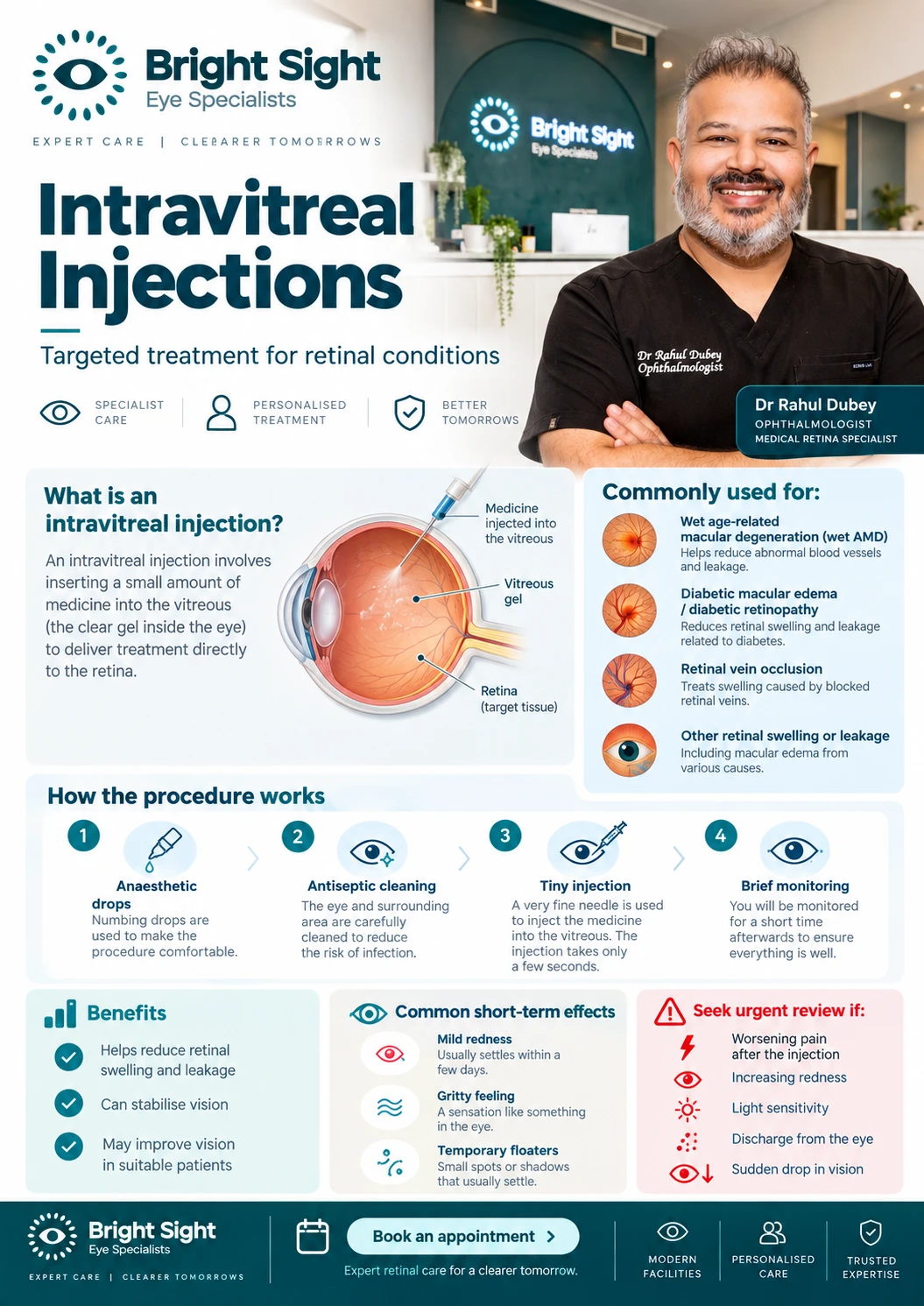
Having a risk factor does not confirm the condition. Your history and examination are considered together.
Vision is checked before treatment and monitored over the course.
Retinal fluid and thickness guide treatment timing and response.
The retina is checked for bleeding, active disease and other changes.
Medicine choice, interval, benefits and uncommon risks are reviewed before consent.
Mild grittiness, watering or a small surface blood spot can occur after treatment.
Avoid rubbing or contaminating the eye and follow the provided aftercare advice.
Small bubbles or floaters may be noticed briefly, but worsening vision needs assessment.
Seek urgent help for increasing pain, redness, discharge or marked light sensitivity.
These answers are general. Your own care plan may differ after examination.
Numbing drops are used. Pressure or brief discomfort may be felt, but the injection itself is very quick.
Many retinal diseases are controlled rather than permanently cured, so treatment is adjusted to ongoing activity.
Vision may be blurred by drops or treatment. Follow the clinic’s advice and arrange transport when recommended.
Increasing pain, redness, light sensitivity, discharge or deteriorating vision require prompt contact.