Dilated retinal examination
The retina is examined for leaking vessels, bleeding and abnormal new vessels.
Protecting sight through early detection and treatment of diabetes-related retinal changes.
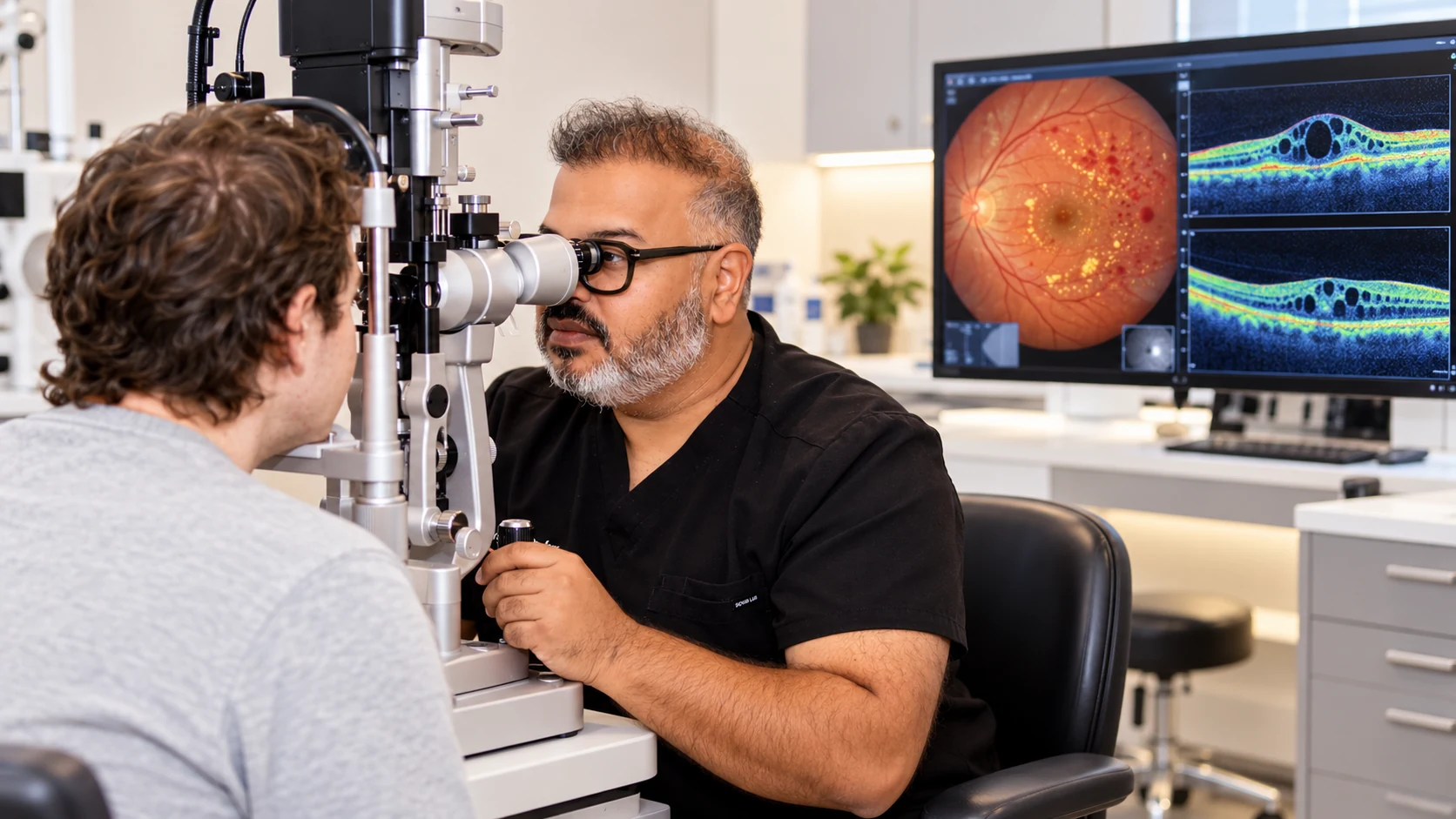
Diabetes can damage the small blood vessels of the retina. Early disease may not cause noticeable symptoms, making regular examination important.

Every examination and treatment plan is shaped around your symptoms, test results and individual needs. The equipment shown is part of our real clinical environment; the tests you need are selected after assessment.
See inside the practice ↗Symptoms vary between people, and some conditions cause no early warning. A specialist examination is needed for an accurate diagnosis.
Blurred or fluctuating vision
Difficulty reading or recognising fine detail
Dark spots, strings or floaters
Colours appearing faded or washed out
Sudden loss of part or all of the vision
Having a risk factor does not confirm the condition. Your history and examination are considered together.
The retina is examined for leaking vessels, bleeding and abnormal new vessels.
Cross-sectional imaging measures swelling and structural change at the macula.
Detailed photographs document the extent of retinopathy and changes over time.
When required, dye imaging maps leakage, circulation and areas needing treatment.
Keep all scheduled retinal reviews even when vision feels unchanged.
Use prescribed drops or medicines exactly as directed after treatment.
Expect temporary blur after dilation, injection or laser and follow driving advice.
Report increasing pain, redness, discharge or worsening vision promptly.
These answers are general. Your own care plan may differ after examination.
Yes. Sight can feel normal while early retinal changes are present, which is why regular screening matters.
It may reduce further risk but does not always reverse established retinal change; eye-specific treatment may still be needed.
No. Treatment depends on the type, location and severity of disease and may include observation, injections, laser or surgery.
Your interval depends on retinal findings, diabetes control and other health factors. The specialist will recommend a schedule.