Vision assessment
Distance and near vision are measured to understand the practical impact.
Clear guidance on cataract symptoms, lens choices, surgery and recovery.
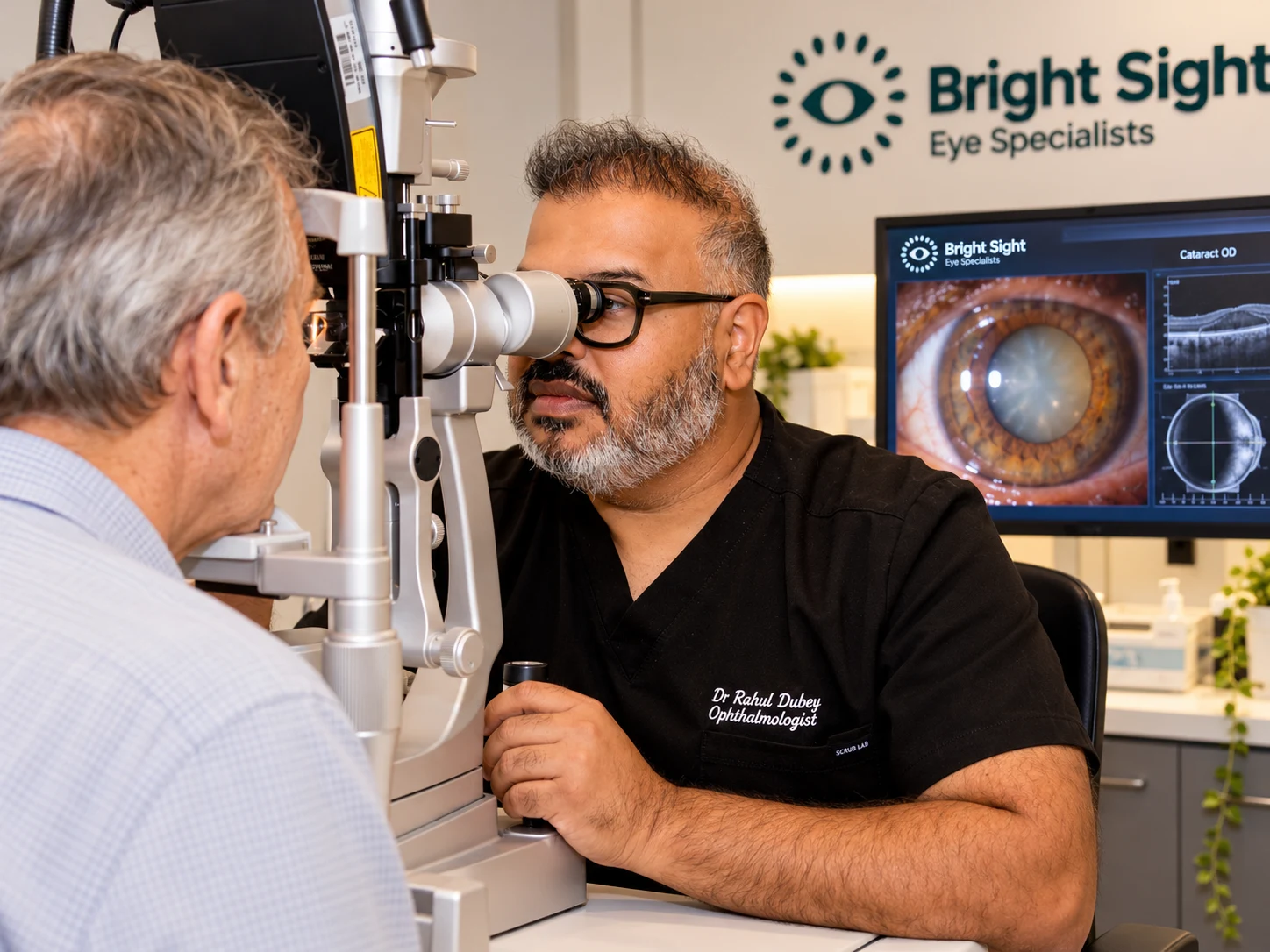
A cataract is clouding of the eye’s natural lens. Surgery replaces the cloudy lens when symptoms interfere with daily life.
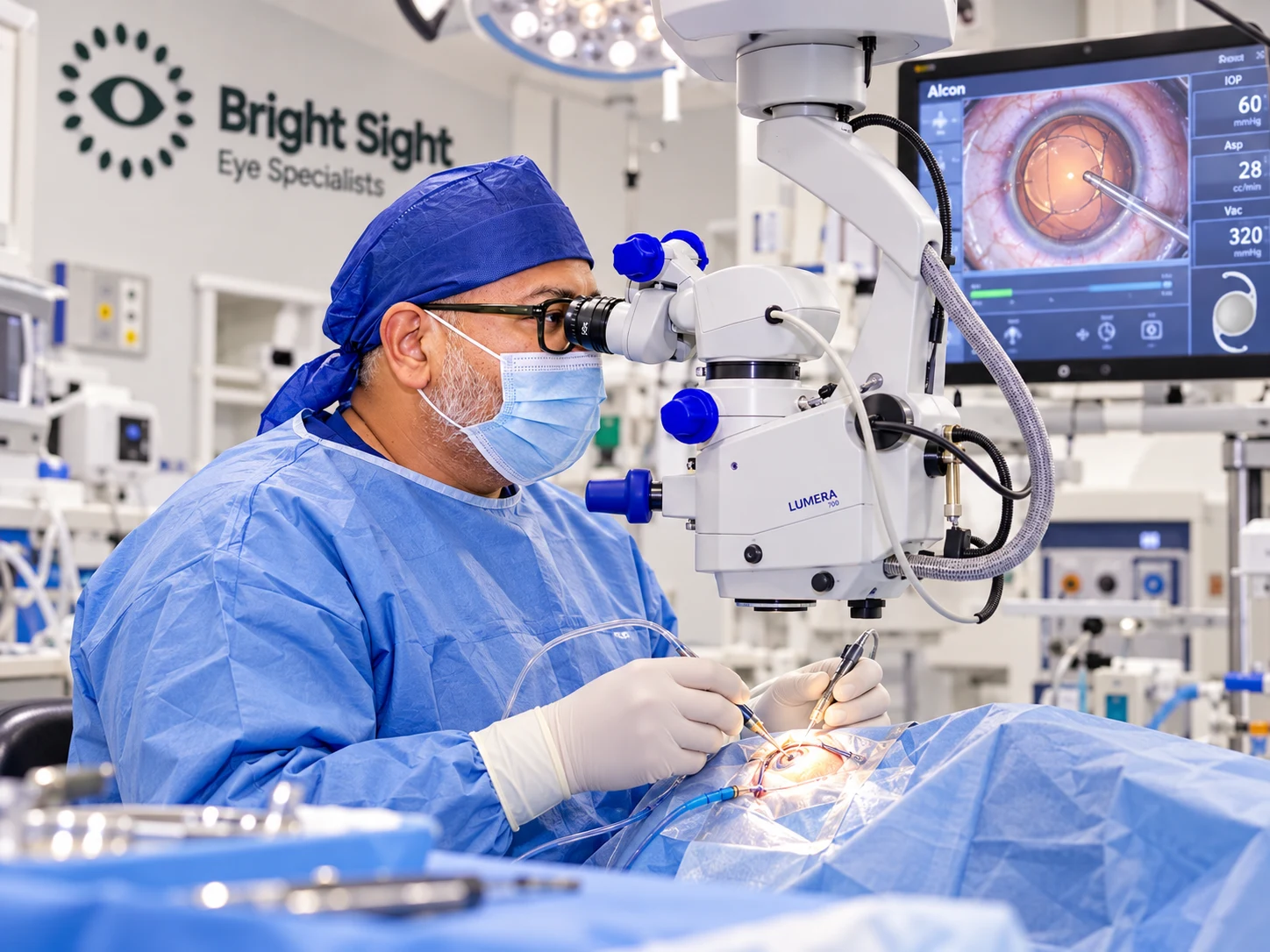
Every examination and treatment plan is shaped around your symptoms, test results and individual needs. The equipment shown is part of our real clinical environment; the tests you need are selected after assessment.
See inside the practice ↗Cataracts can make vision appear cloudy, blurred, faded or affected by glare. This image is a symptom illustration only and cannot show the severity of an individual cataract. A comprehensive eye examination is needed for diagnosis and treatment planning.
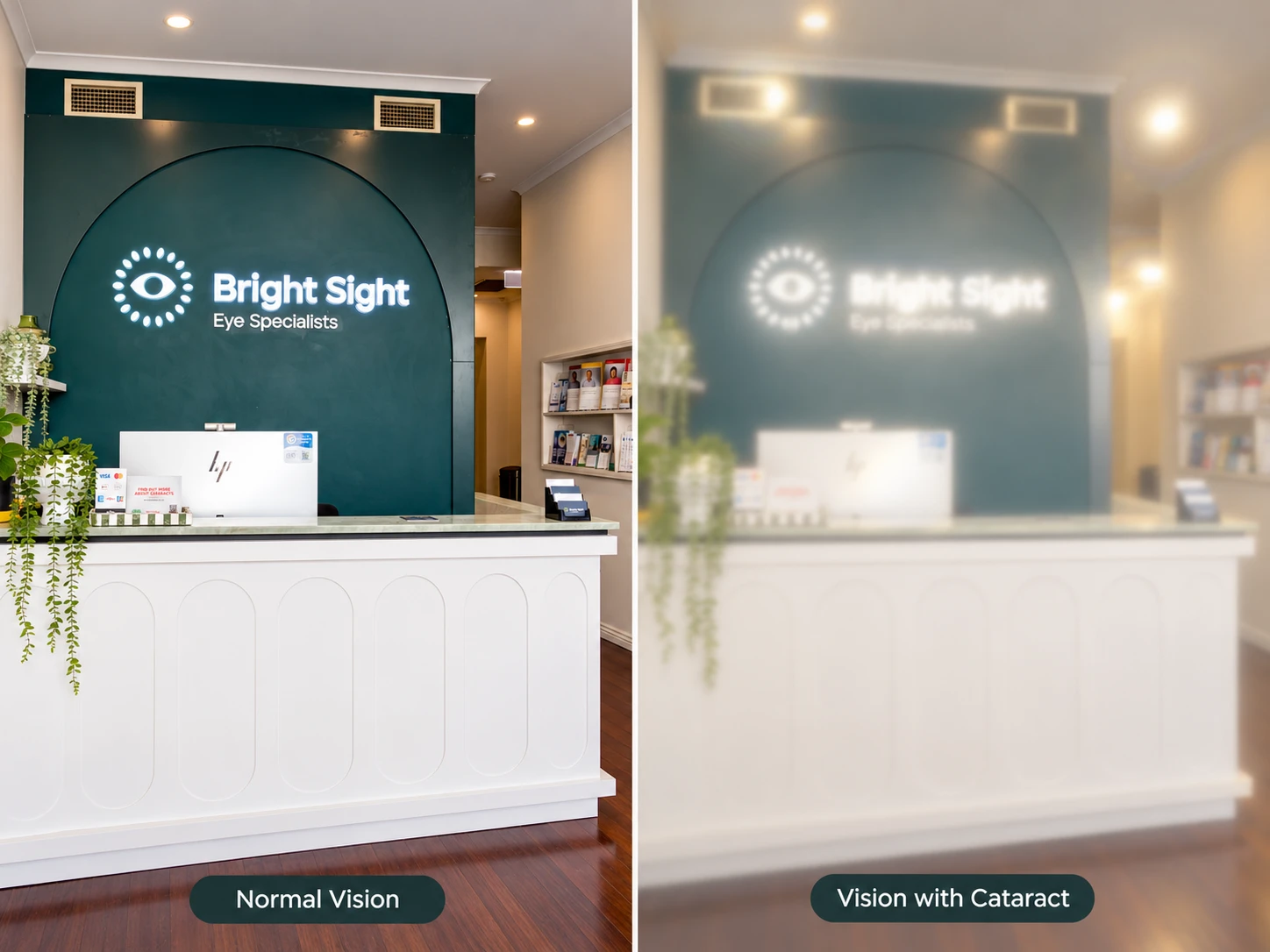
Symptoms vary between people, and some conditions cause no early warning. A specialist examination is needed for an accurate diagnosis.
Blurred, cloudy or misty vision
Glare or halos, especially around lights at night
Colours appearing duller or more yellow
Frequent changes in glasses prescription
Difficulty reading or seeing in low light
A visual summary of the condition, including common symptoms, risk factors, assessment and available treatment approaches. This guide supports—but does not replace—a specialist examination.
View full-size guide ↗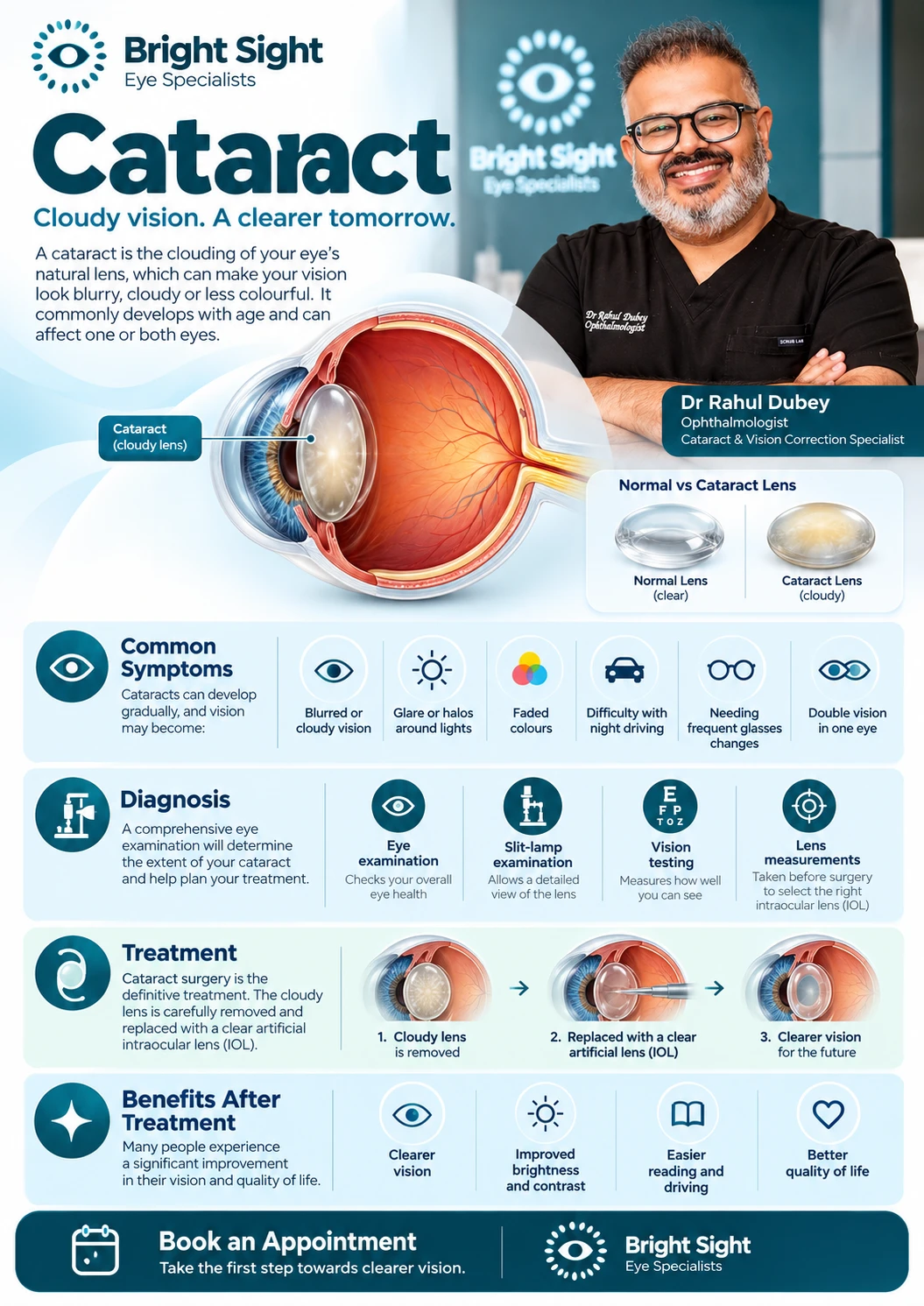
Having a risk factor does not confirm the condition. Your history and examination are considered together.
Distance and near vision are measured to understand the practical impact.
The lens and other front-of-eye structures are examined under magnification.
The retina and optic nerve are checked for other causes of reduced vision.
If surgery is planned, precise measurements guide the strength and type of lens implant.
Use postoperative drops and eye protection exactly as directed.
Avoid rubbing the eye and follow the surgeon’s advice about water, lifting and exercise.
Vision often changes during early healing, and the final glasses check is usually later.
Seek prompt advice for increasing pain, redness, discharge, flashes, floaters or worsening vision.
These answers are general. Your own care plan may differ after examination.
Usually when cataract affects daily activities or prevents adequate examination or treatment of another eye condition.
That depends on the selected lens, eye health and visual goals. No lens can guarantee complete freedom from glasses.
It is commonly planned one eye at a time, with timing based on recovery and individual needs.
Many people notice early improvement, but healing and visual stabilisation vary. Your surgeon will explain what is realistic for your eyes.